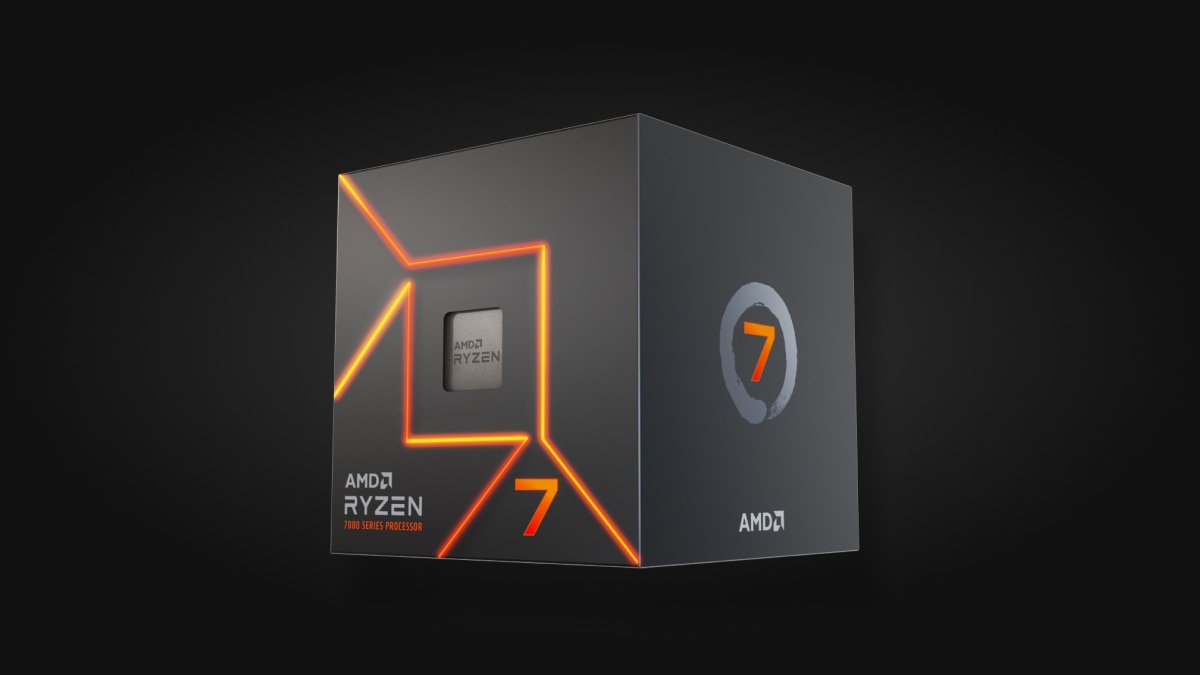
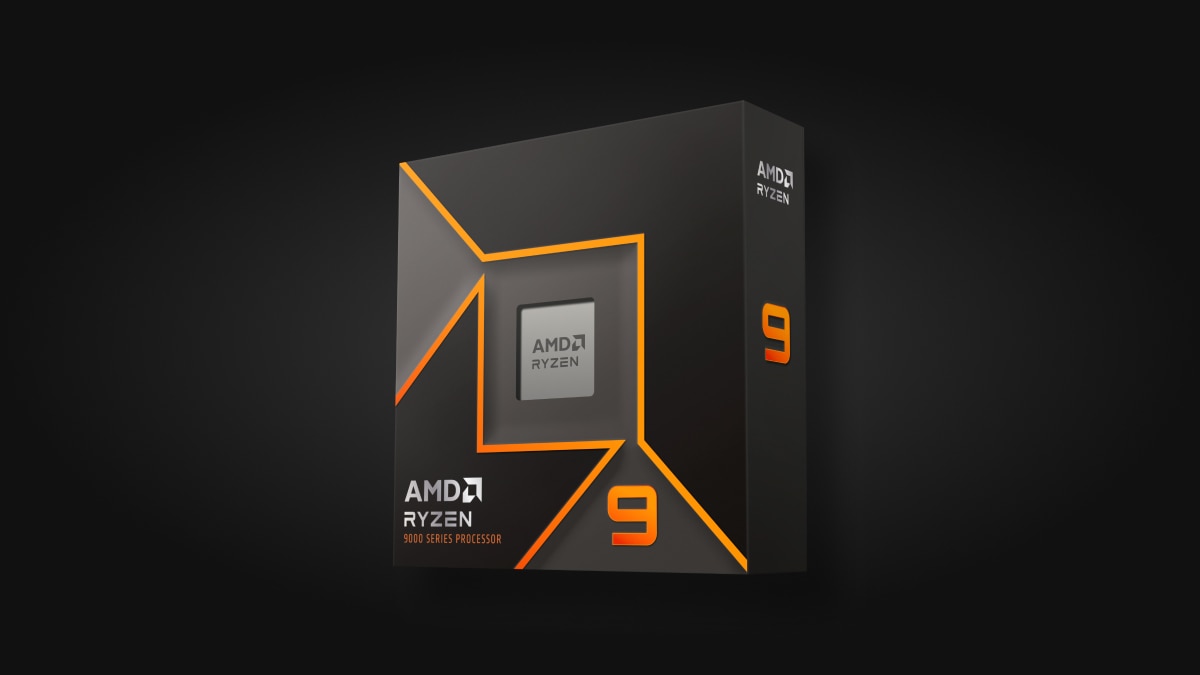
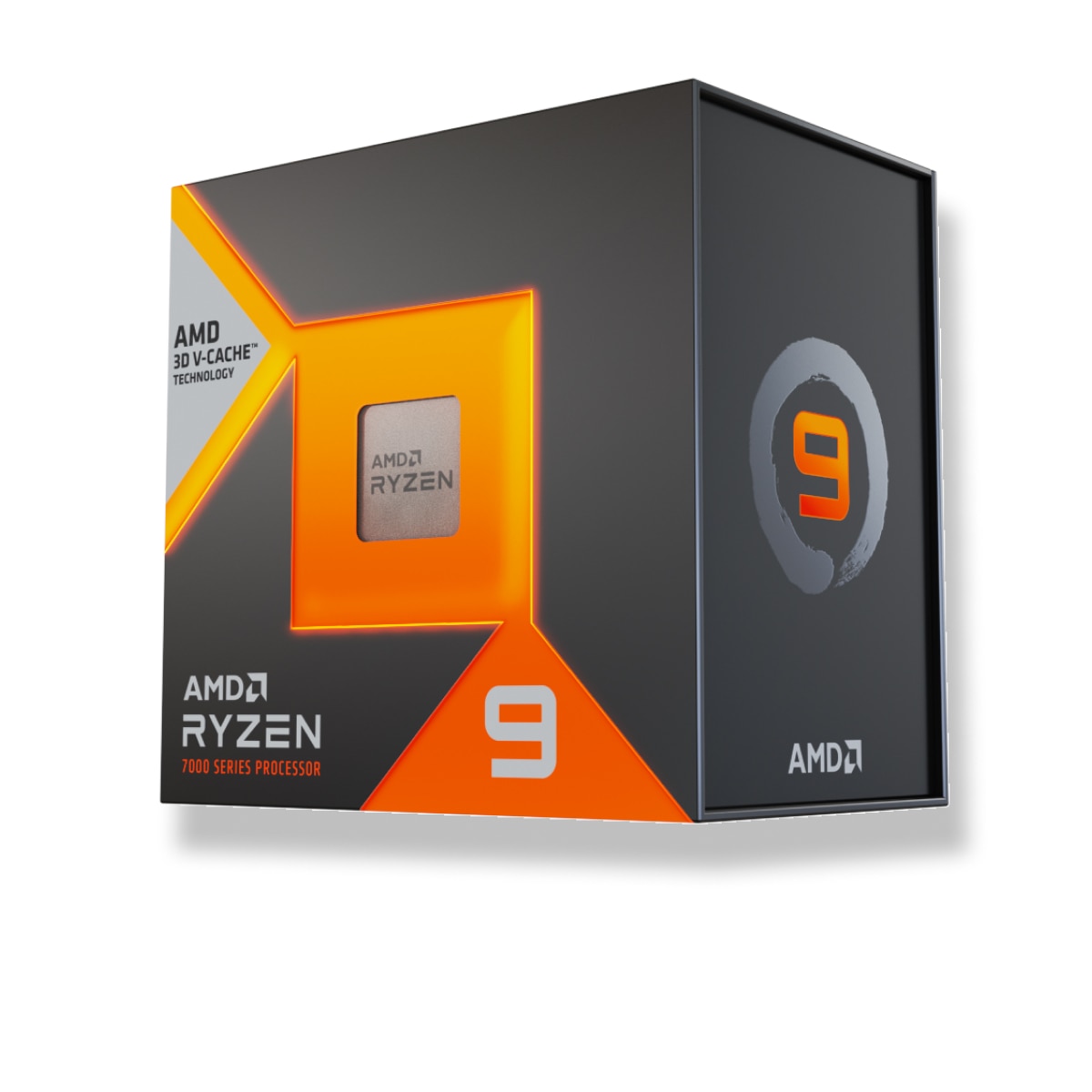
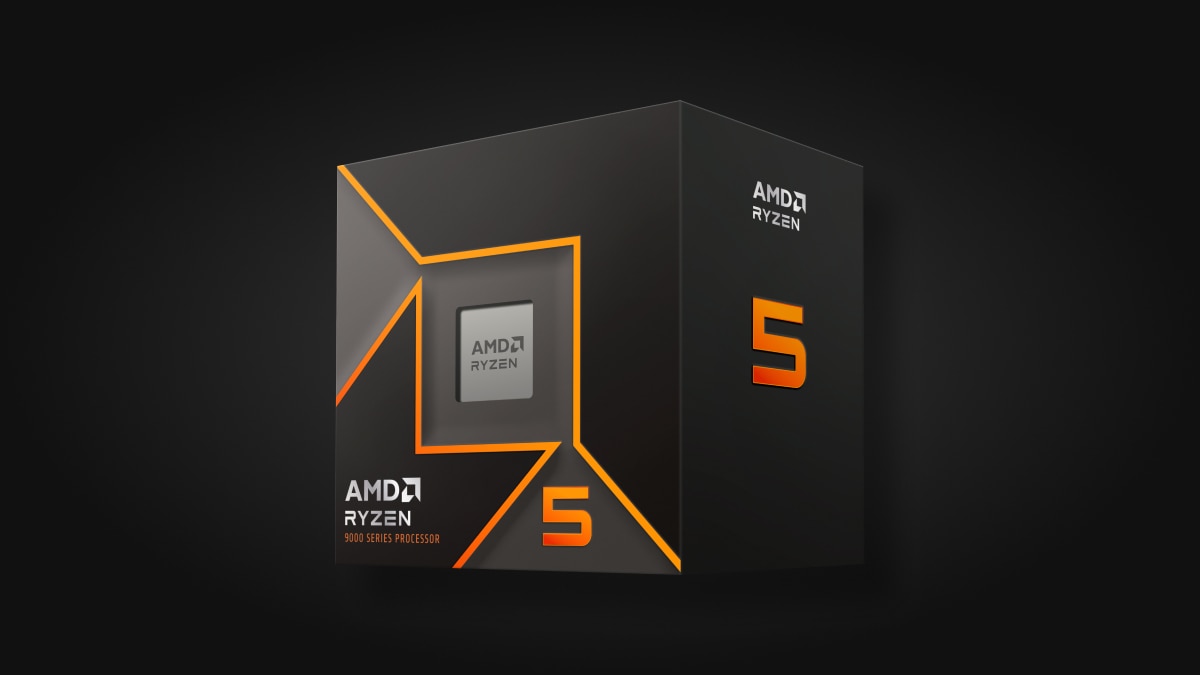
AMD Ryzen 5 9600
A 6-core, 12-thread Zen 5 AM5 processor with a 3.8 GHz base clock, up to 5.2 GHz boost, 32 MB of L3 cache, a 65 W default TDP and a Wraith Stealth cooler in the box, launched on 19 February 2025.
Full Specification Sheet
| Architecture | Zen 5 (codename Granite Ridge) |
|---|---|
| Cores / Threads | 6 / 12 |
| Base Clock | 3.8 GHz |
| Max Boost Clock | Up to 5.2 GHz |
| L1 Cache | 480 KB |
| L2 Cache | 6 MB |
| L3 Cache | 32 MB |
| Default TDP | 65 W |
| Process | TSMC 4nm FinFET (CPU cores), TSMC 6nm FinFET (I/O die) |
| Socket | AM5 |
| Memory | DDR5, 2 channels, up to 256 GB, DDR5-5600 (2 x 1R) |
| PCIe | PCIe 5.0, 28 lanes (24 usable) |
| Integrated Graphics | AMD Radeon Graphics, 2 cores, 2200 MHz |
| Cooler Included | AMD Wraith Stealth |
| Max Operating Temperature | 95 C |
The AMD Ryzen 5 9600 is a six-core desktop processor for the AM5 socket. It belongs to the Ryzen 9000 Series, is built on the Zen 5 architecture (former codename Granite Ridge) and carries a launch date of 19 February 2025 on AMD's product page. AMD's short description is that it offers gaming performance for everyone, a six-core processor capable of great gaming and productivity. It is sold as a boxed processor in the enthusiast desktop segment. This page walks through the specification AMD publishes, explains what each figure means for someone choosing parts, and leaves out everything the manufacturer page does not state. There are no benchmarks and no test results here, and every number is a manufacturer specification unless it is marked as simple arithmetic. AMD's page does not list a price, so none is given.
Cores, threads and clocks
AMD lists six CPU cores with simultaneous multithreading, so the operating system sees twelve threads. The base clock is 3.8 GHz, the average effective base frequency of all cores according to AMD, and the maximum boost clock is up to 5.2 GHz. As always, AMD explains that the boost figure is the highest frequency a single core can reach on a bursty single-threaded workload and that it varies with thermal paste, system cooling, motherboard design and BIOS, the latest chipset driver and operating-system updates. The gap between base and boost is 1.4 GHz (arithmetic from AMD's two figures). Next to the Ryzen 5 9600X in our database, whose AMD figures are 3.9 GHz base and 5.4 GHz boost, the 9600 runs 0.1 GHz lower at base and 0.2 GHz lower at boost with the same six cores and the same 65 W default TDP; the two chips are close relatives, and you can put them next to each other in our side-by-side comparison. For a broader view of how cores and clocks trade off, see our guide to core count versus clock speed, and for what the twelve threads mean, our explainer on SMT and Hyper-Threading.
Cache
AMD lists 480 KB of L1 cache, 6 MB of L2 cache and 32 MB of L3 cache. Dividing the totals across six cores gives 80 KB of L1, 1 MB of L2 and about 5.3 MB of L3 per core (arithmetic from AMD's totals). The L1 total is larger than the 384 KB AMD lists for the six-core Ryzen 5 7600X, and the L3 is the same 32 MB, which means each of the six cores has a proportionally generous slice of the big shared cache. AMD does not describe how the cache is arranged on the die on this page, so this page does not either.
Power, thermals and the box cooler
The default TDP is 65 W, well below the 105 W of the Ryzen 5 7600X, and the maximum operating temperature (Tjmax) is 95 degrees Celsius. The thermal solution is listed as the AMD Wraith Stealth, which means the boxed processor comes with a cooler and can be used without buying one separately, a difference from the 7600X page, where the thermal solution is not included. AMD does not state how far the Wraith Stealth can sustain the boost clock, so the page gives no basis to say whether a larger cooler would improve behaviour; that is a question for testing and not for this specification page. The processor is unlocked for overclocking, and AMD lists support for AMD EXPO memory overclocking, Precision Boost Overdrive, Curve Optimizer voltage offsets and AMD Ryzen Master, along with its usual note that the AMD warranty does not cover damage caused by overclocking. For how AMD's automatic boost tools differ from Intel-style power limits, see our guide to PL1, PL2 and AMD PBO.
Process and package
The CPU cores are built on TSMC's 4nm FinFET process and the I/O die on TSMC 6nm FinFET, in a package with two dies. The 7600X, by comparison, uses a 5nm process for its cores, so the 9600 combines a newer architecture with a newer manufacturing node. AMD does not list die sizes for this model, so this page does not give any. The instruction set is x86-64 with the extensions AES, AMD-V, AVX512, AVX2, AVX, FMA3, MMX-plus, SHA, SSE2, SSE4.2, SSE4A, SSE4.1, SSE3, SSSE3, SSE and x86-64.
Memory
The processor supports DDR5 in two channels, up to 256 GB, with UDIMM modules. AMD's maximum memory speeds are DDR5-5600 with two modules of one rank each, DDR5-5600 with two modules of two ranks each, and DDR5-3600 with four modules of either rank. That is a step up from the DDR5-5200 and 128 GB that AMD lists for the 7600X. As arithmetic, DDR5-5600 gives a theoretical peak of about 44.8 GB/s per 64-bit channel and 89.6 GB/s across two channels, not a measured figure. Filling all four slots lowers the officially supported speed to DDR5-3600, so a two-module kit is the natural choice. ECC support is listed as yes, with the condition that the motherboard supports it.
Platform, chipsets and connectivity
The socket is AM5. AMD's page lists supporting chipsets A620, X670E, X670, B650E, B650, X870E and X870; the B840 and B850 chipsets do not appear in this list, even though motherboard makers list Ryzen 9000 support on B850 boards, such as the ASUS TUF GAMING B850-PLUS WIFI in our database, so check the motherboard maker's CPU support list for your exact board. The processor provides PCIe 5.0 with 28 native lanes, of which 24 are usable. Native USB is four USB 3.2 Gen 2 (10 Gbps) ports and one USB 2.0 port, with no native SATA. NVMe support includes boot, RAID 0, RAID 1, RAID 5 and RAID 10. AMD's stated operating systems are Windows 11 and Windows 10 64-bit, RHEL and Ubuntu. For how AM5 relates to the other current sockets, read our platform guide covering AM4, AM5 and LGA1700.
Integrated graphics
The processor includes AMD Radeon Graphics with two graphics cores at 2,200 MHz, and USB Type-C DisplayPort Alternate Mode is listed as supported. That is a basic display output for setup, troubleshooting or office use, not a replacement for a graphics card. If you want integrated graphics that can carry light gaming, AMD's Ryzen 8000G line, such as the Ryzen 7 8700G in our database, is the family designed for that. The boxed product ID is 100-100000718BOX and the tray product ID is 100-000000718.
Where it fits
The 9600 is the value entry to the Zen 5 desktop lineup, at six cores, twelve threads, 65 W and with a cooler. It is a reasonable match for a budget-focused build, for which our budget gaming PC build guide lists the other decisions that matter. Every value on this page comes from AMD's product page and is a specification and not a measurement. Real-world performance depends on the graphics card, the memory, the cooler and the software you run, and this page can say nothing about it.
What the page does not say
AMD's page does not state a price, does not publish any test results for this model, does not list die sizes and gives no memory latency figures. Before buying, confirm that your motherboard's BIOS supports the processor, decide whether the included cooler is enough for your case and expectations, and choose a two-module DDR5 kit.