AM4 vs AM5 vs LGA1700: Choosing a Motherboard Platform in 2026

Picking a motherboard platform is really picking a multi-year relationship with an upgrade path, not just a single CPU purchase, and the three platforms most builders weigh against each other today — AMD's legacy AM4, AMD's current AM5, and Intel's LGA1700 — each represent a genuinely different point in that lifecycle.
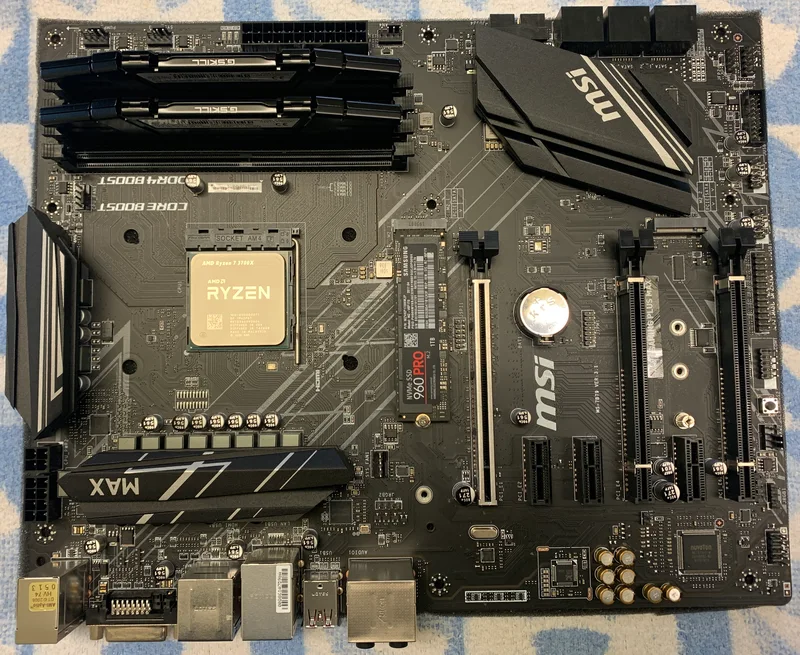
The MSI X470 Gaming Plus MAX represents AM4 at a mature, deeply discounted stage of its life: an AMD X470 chipset, AM4 socket, support for up to 64GB of DDR4 across four DIMM slots, in a standard ATX form factor with two PCIe 3.0 x16 slots and two M.2 slots for storage. AM4's defining feature was always longevity — it supported multiple Ryzen generations across roughly half a decade — but that runway is now effectively at its end, with AMD's current development focused entirely on AM5. Buying AM4 today means buying a known, fully mapped-out, and usually inexpensive platform, not a growth path.
The ASUS ROG Strix Z390-H Gaming sits on the Intel side of a similar life stage: a Z390 chipset built for 9th and 8th generation Intel CPUs on the LGA1151 socket, four DDR4 DIMM slots supporting up to 64GB with overclocking headroom past 4266MHz on suitable memory, and a similar ATX layout with two PCIe 3.0 x16 slots plus a x1 slot and two M.2 slots. Like the X470, this represents a mature, fully-supported-but-not-growing platform — an excellent, often keenly priced choice for building around an already-owned or budget-sourced CPU from that generation, not a platform to buy into expecting future CPU upgrades.
Current flagship CPUs, by contrast, sit on two actively developed platforms: Intel's LGA1700, home to the current 14th-generation lineup including chips like the Core i9-14900K, and AMD's AM5, home to the current Ryzen lineup including chips like the Ryzen 9 7950X. Both are DDR5-native platforms — a clean break from the DDR4 boards discussed above — and both represent the actual growth edge of each manufacturer's roadmap, which is the more relevant comparison for anyone building a genuinely new system rather than working around older hardware already on hand.
The practical decision tree looks like this. If you already own a working AM4 or older-generation Intel DDR4 CPU and motherboard, and it still meets your performance needs, there is little reason to replace it purely for platform novelty — boards like the X470 Gaming Plus MAX or the Z390-H Gaming remain entirely capable for their era's CPUs and represent excellent value if you need a direct, low-cost replacement or a budget secondary build. If you are buying a CPU from that same older generation secondhand or at clearance pricing to build a budget system, these boards are the correct, cost-effective pairing.
If you are building fresh with no existing platform investment and want access to current and reasonably near-future CPU releases, the choice narrows to LGA1700 or AM5, and at that point the decision comes down to which current CPU generation's specific chips fit your budget and workload best, plus how much weight you put on AM5's longer stated multi-generation support runway versus LGA1700's currently mature, fully-realized peak. Neither current platform is a wrong choice; they simply represent different bets on how a future CPU upgrade, several years from now, is likely to play out.
BIOS and firmware maturity is worth a direct mention for anyone considering an older platform like AM4 or early LGA1151 boards. Both platforms have had years to iron out firmware quirks, meaning compatibility issues that were common at launch — memory kits refusing to run at rated speed, certain CPU and board combinations needing manual tuning — have largely been resolved through years of BIOS updates, making a mature-platform purchase today a genuinely lower-risk proposition than buying the same board would have been at its original launch.
Expansion headroom differs meaningfully between older and current platforms in ways that matter for specific use cases. Current AM5 and LGA1700 boards generally offer more, and faster, PCIe lanes and M.2 slots than their AM4 and older-Intel counterparts, which matters directly for buyers planning multiple high-speed NVMe drives, a high-end sound card, or other add-in cards alongside a GPU — a consideration easy to overlook when focused purely on CPU performance.
A common question worth a direct answer: is it worth buying a new AM4 or older-Intel board today rather than a used one, given the platform is not actively developed further? For most buyers, a lightly-used board from a reputable seller offers essentially the same experience for less money, since these platforms are not receiving meaningful new feature updates regardless of purchase date — the main reason to buy new is warranty coverage and confidence in the board's history, not access to anything a used equivalent lacks.
The bottom line: platform choice should follow from what CPU you already own or plan to buy, not the reverse — figure out the CPU generation and manufacturer that fits your budget and workload first, and the correct motherboard platform, current or mature-and-discounted, follows directly from that decision.
One last practical note: check specific chipset driver and BIOS update availability directly from the manufacturer's support page before finalizing a purchase on any board, mature or current, since a board that has stopped receiving updates entirely can eventually become a compatibility bottleneck of its own — particularly relevant for older AM4 and LGA1151 boards being bought secondhand today, where confirming the last BIOS update date is a quick, worthwhile check.
Chipset feature differences between these mature platforms and their current counterparts extend beyond raw PCIe lane count into everyday quality-of-life territory worth knowing about directly. Older chipsets like the X470 and Z390 generally lack some of the more recent platform-level conveniences now standard on current boards — faster native USB standards without needing an add-in controller chip, more robust native power delivery for higher core-count CPUs, and in some cases more modern audio codec standards. None of this makes an older board a poor choice for its intended CPU generation, but it is worth knowing these small conveniences are part of what a platform upgrade brings beyond raw CPU performance, for anyone weighing a full platform change against simply keeping an older, still-capable system running as-is.
Resale and secondhand market value also differs meaningfully by platform maturity, worth a brief practical mention for budget-conscious builders. Mature, no-longer-actively-developed platforms like AM4 and older Intel sockets tend to have a well-established, liquid secondhand market with predictable pricing, since enough units exist in circulation that buyers and sellers have converged on realistic fair-value pricing — a genuine advantage for anyone building a tight-budget system today who wants to shop confidently in the secondhand market without guessing at fair pricing for an unfamiliar or newly-released component.