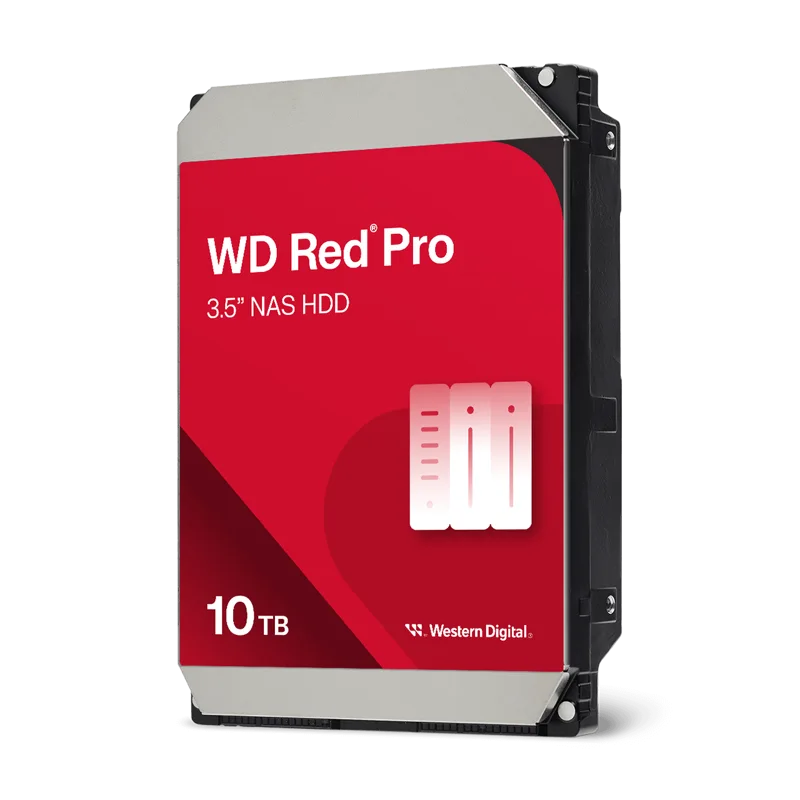
Western Digital WD Red Pro NAS Hard Drive (4TB-26TB)
A family of 3.5-inch 7200 RPM CMR NAS hard drives from 4 TB to 26 TB with NASware tuning, TLER, vibration safeguards, up to 287 MB/s, a 550 TB per year workload rating, up to 2.5 million hours MTBF and a five-year warranty.
Full Specification Sheet
| Type | Internal HDD, NAS-optimized |
|---|---|
| Capacities | 4, 6, 8, 10, 12, 14, 16, 18, 20, 22, 24, 26 TB |
| Interface | SATA |
| Form Factor | 3.5-inch |
| Spindle Speed | 7200 RPM |
| Recording Technology | CMR |
| Cache | 256 MB (4, 6, 8 TB) or 512 MB (10 TB and above) |
| Transfer Rate | Up to 217 to 287 MB/s depending on capacity |
| Workload Rate | Up to 550 TB/year |
| MTBF | Up to 2.5 million hours (projected values per footnote) |
| Technologies | NASware, OptiNAND, ArmorCache, TLER |
| Warranty | 5-year limited |
| Dimensions | 147 x 101.6 x 26.1 mm |
| Weight | 670 to 750 g depending on capacity |
| Model Numbers | WD4006FFBX, WD6006FFBX, WD8006FFBX, WD103KFBX, WD122KFBX, WD142KFGX, WD161KFGX, WD181KFGX, WD202KFGX, WD221KFGX, WD241KFGX, WD260KFGX |
The WD Red Pro is Western Digital's high-performance NAS hard drive family. The page describes it as enterprise-class storage ideal to power AI NAS at every scale, with capacities from 2 TB to 26 TB in its marketing copy, and as built for high-intensity, 24-hours-a-day, multi-user NAS environments and RAID-optimised systems. The specification table we read lists twelve models from 4 TB to 26 TB, so this entry is a family row: the capacity and model number identify the drive you buy. The page lists no price and no launch date, so we give neither. We have not tested the drives. Everything below is the manufacturer's published information, plus a few marked pieces of arithmetic, and we point out where the page is soft or inconsistent.
What the drive is for
Western Digital says Red Pro is purpose-built for multi-user NAS environments where the workload is mixed storage and access, such as file sharing, backups, virtualisation and collaboration. The tuning that makes it a NAS drive is NASware, which the page says fine-tunes drive parameters for NAS systems to improve performance and compatibility. The drive also supports Time-Limited Error Recovery (TLER), which keeps RAID-powered NAS systems running without interruption. The page says it is proven in tower and rack-mount NAS with any number of bays. If you are planning a home or small-office build, our guide on how many drives a home NAS needs helps size the array, and the explainer on RAID levels for NAS describes the trade-offs between capacity and redundancy.
Speed, cache and recording
Every model is a 3.5-inch SATA drive using conventional magnetic recording (CMR) at 7200 RPM. The cache is 256 MB on the 4, 6 and 8 TB models and 512 MB on 10 TB and above. The maximum transfer rate rises with capacity: 217 MB/s on 4 TB, 238 MB/s on 6 TB, 235 MB/s on 8 TB, 267 MB/s on 10 and 12 TB, 255 MB/s on 14 TB, 259 MB/s on 16 TB, 272 MB/s on 18 and 26 TB, 285 MB/s on 20 TB, 265 MB/s on 22 TB and 287 MB/s on 24 TB. These are maximum sequential figures, not averages, and they are best read as a ladder rather than a promise. Simple arithmetic shows what capacity means for time: a full pass over a 4 TB model at 217 MB/s takes about 5.1 hours, while a full pass over a 26 TB model at 272 MB/s takes about 26.5 hours (capacity divided by transfer rate, ideal conditions). That is why rebuild times grow with capacity and why many people choose a RAID level with extra redundancy for the largest drives.
Endurance and warranty
Western Digital rates the family for workloads of up to 550 TB per year, a mean time between failures of up to 2.5 million hours and a five-year limited warranty. The footnote for the MTBF is labelled projected values: the figures are based on a sample population and statistical estimates under typical conditions of a 220 TB per year workload and a drive temperature of 40 degrees Celsius, and they are derated above those parameters up to 550 TB per year. The company states that MTBF does not predict an individual drive's reliability and is not a warranty. Workload rate is defined as the user data transferred to or from the drive, annualised. For scale, 550 TB per year is about 1.5 TB per day (arithmetic). The page's FAQ compares Red Pro with WD Red Plus: Red Plus typically runs at 5400 to 5640 RPM, is rated for 180 TB per year with a three-year warranty and targets lighter one-to-eight-bay setups, while Red Pro runs at 7200 RPM with the heavier rating and warranty and includes rotational vibration sensors for larger, busier multi-bay RAID systems.
Vibration, firmware and protection
The page says WD Red Pro includes Rotational Vibration Safeguards, which counteract vibration in multi-drive systems, plus multi-axis shock sensors with dynamic fly-height adjustment that help maintain performance, reduce wear and protect data integrity in dense NAS enclosures. The technology list in the table reads NASware, OptiNAND and ArmorCache. The page does not explain ArmorCache for this family in the feature text, only lists it, so we do not describe how it behaves. Western Digital also describes a durable build for rigorous, continuous operation. For a deeper explanation of why NAS drives get their own firmware and why a regular desktop drive is a poor match for a multi-bay chassis, our comparison of SSDs and hard drives in 2026 covers the broader storage choice.
Physical data
The table lists dimensions of 147 by 101.6 by 26.1 mm, the standard 3.5-inch drive footprint. The weight varies by capacity: 715 grams for 4, 6 and 8 TB, 750 grams for 10 and 12 TB, 690 grams for 14, 16, 18 and 20 TB, and 670 grams for 22, 24 and 26 TB. That trend, where heavier smaller-capacity models give way to lighter high-capacity ones, shows how the internal designs differ between generations, but the page does not explain it, so we do not either. The page does not list power consumption, noise levels or operating temperature ranges for this family, which matters in a small enclosure; check the datasheet or support page for your capacity before choosing a chassis with limited airflow.
Models
The listed model numbers are WD4006FFBX (4 TB), WD6006FFBX (6 TB), WD8006FFBX (8 TB), WD103KFBX (10 TB), WD122KFBX (12 TB), WD142KFGX (14 TB), WD161KFGX (16 TB), WD181KFGX (18 TB), WD202KFGX (20 TB), WD221KFGX (22 TB), WD241KFGX (24 TB) and WD260KFGX (26 TB). The copy mentions a 2 TB capacity, but no 2 TB model appears in the table or the model list we read, so we do not list one. For a buyer, the sweet spot depends on the array: more smaller drives give more spindles and speed for a given capacity, while fewer large drives save bays and power but make rebuilds longer.
Where it sits in our database
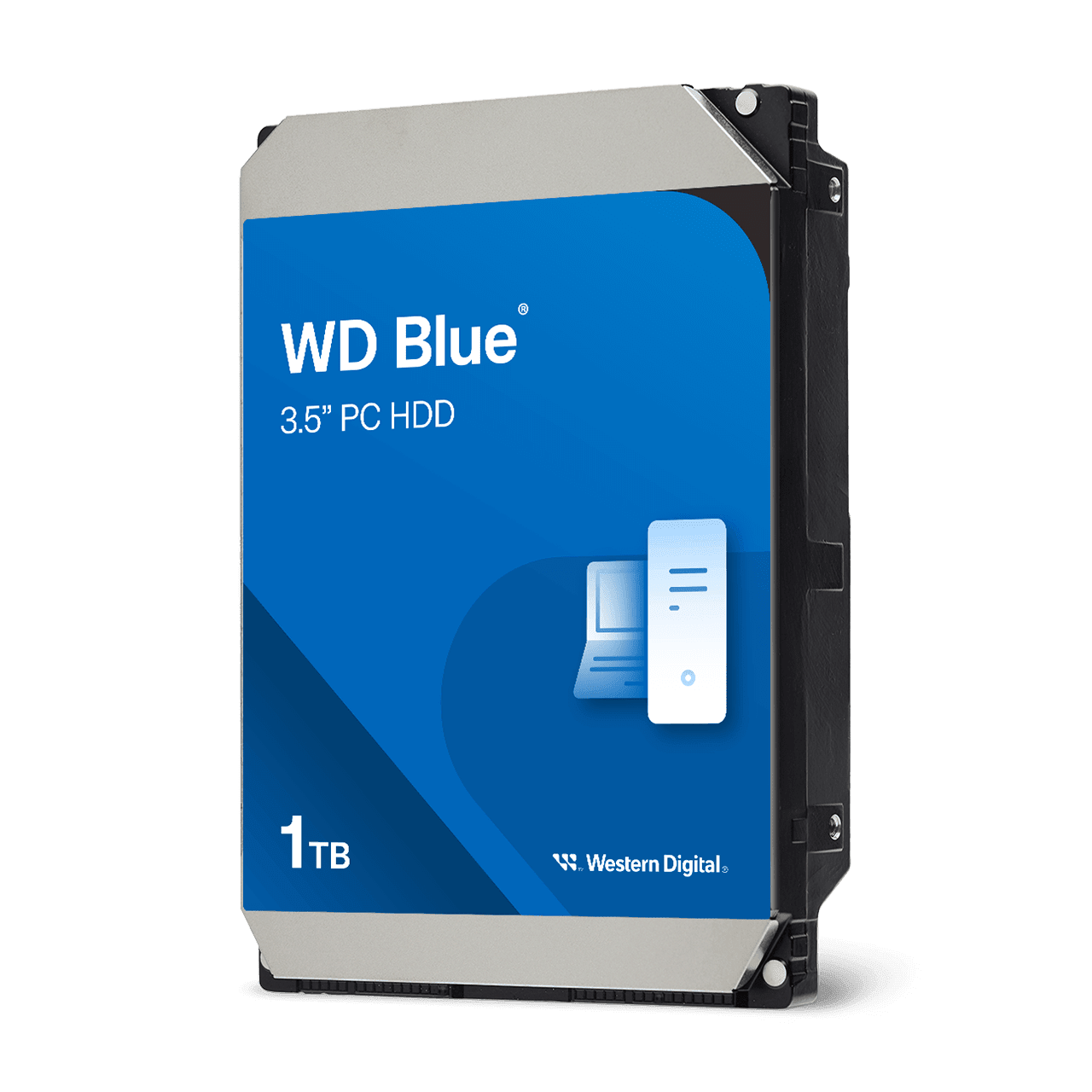
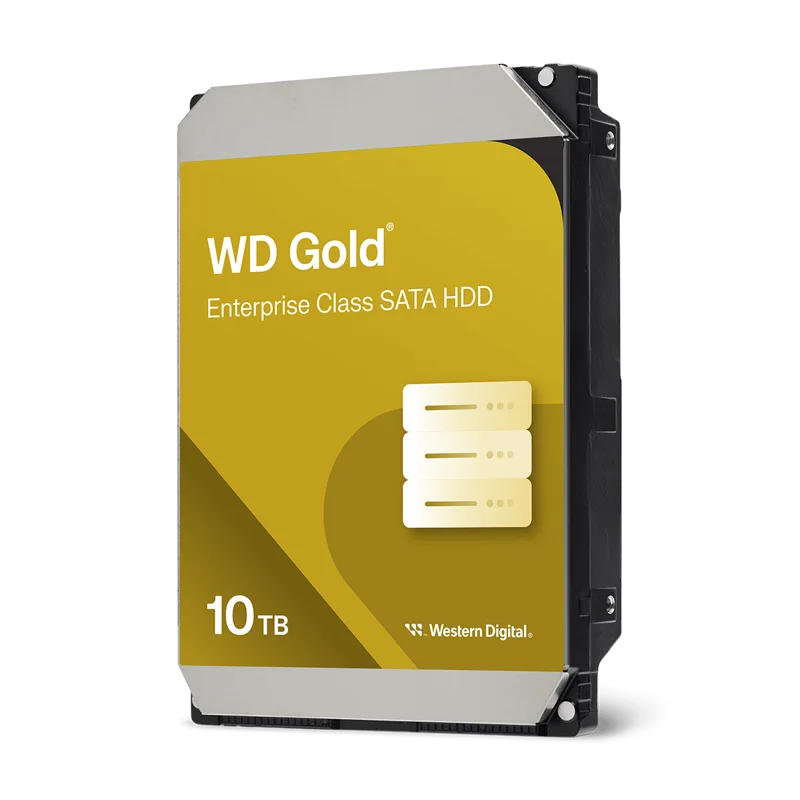
In our storage category, Red Pro sits between the entry NAS drive and the enterprise range. The existing WD Red 4 TB NAS hard drive lists a 5400 RPM spindle and a 64 MB cache, so the Red Pro 4 TB model at 7200 RPM and 256 MB is a clear step up in the cache and spindle fields; the side-by-side comparison of WD Red Pro and the WD Red 4 TB lines them up. The heavier sibling is the WD Gold enterprise-class family, which Western Digital positions for servers and mixed enterprise workloads rather than purely multi-user NAS. Our storage category also includes NVMe and portable drives for other roles.
What the page does not say
The page does not list a price, a launch date, power draw, noise, temperature limits or the platter count. Its copy mentions a 2 TB size that the table lacks, and the MTBF footnote calls its figures projected values, which means the reliability number may change as the programme matures. The table leaves the 26 TB model number blank in one place, although the model list gives WD260KFGX. For a purchase, check the exact model, the cache size and the warranty terms for your region, and confirm that your NAS vendor's compatibility list includes the capacity you plan to buy.