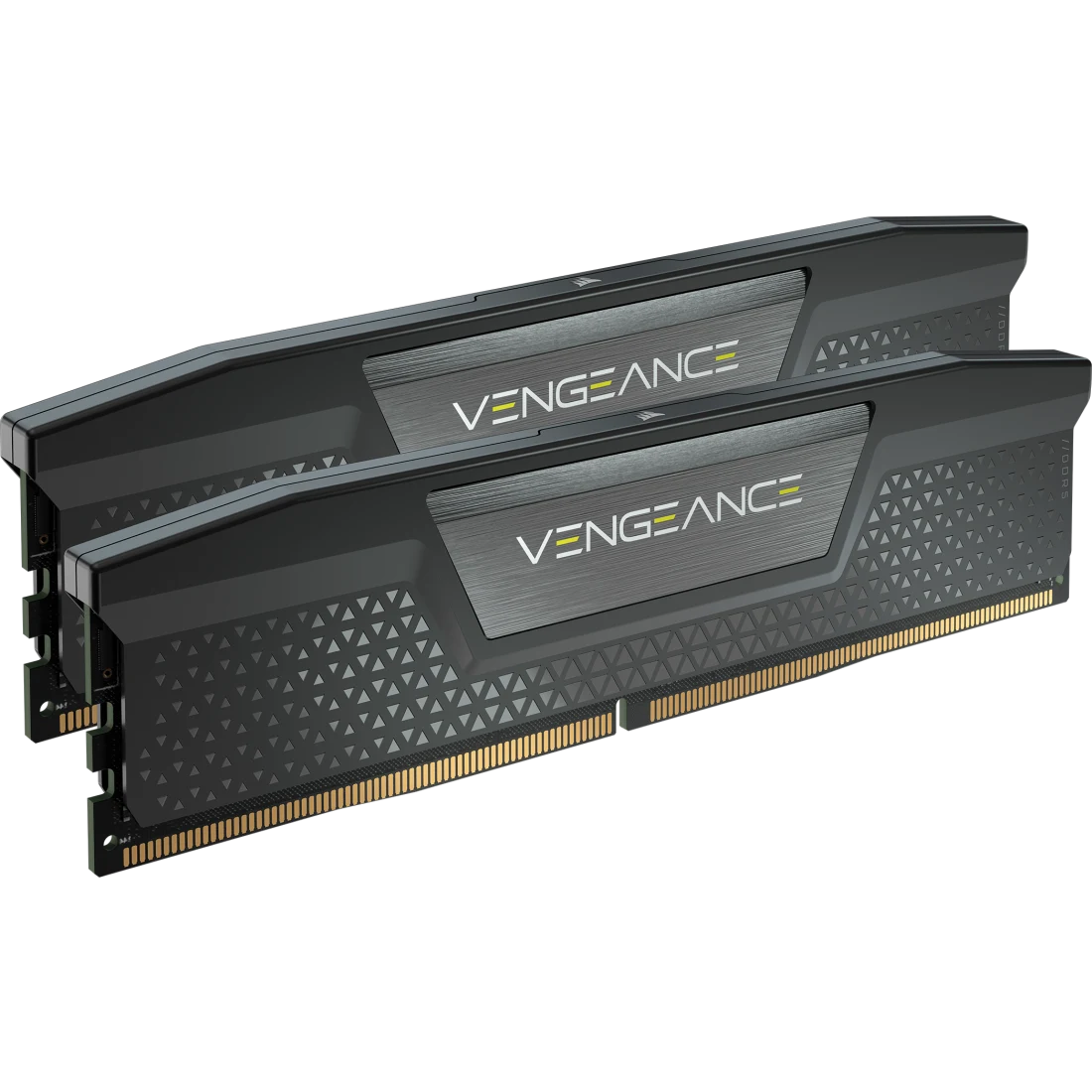
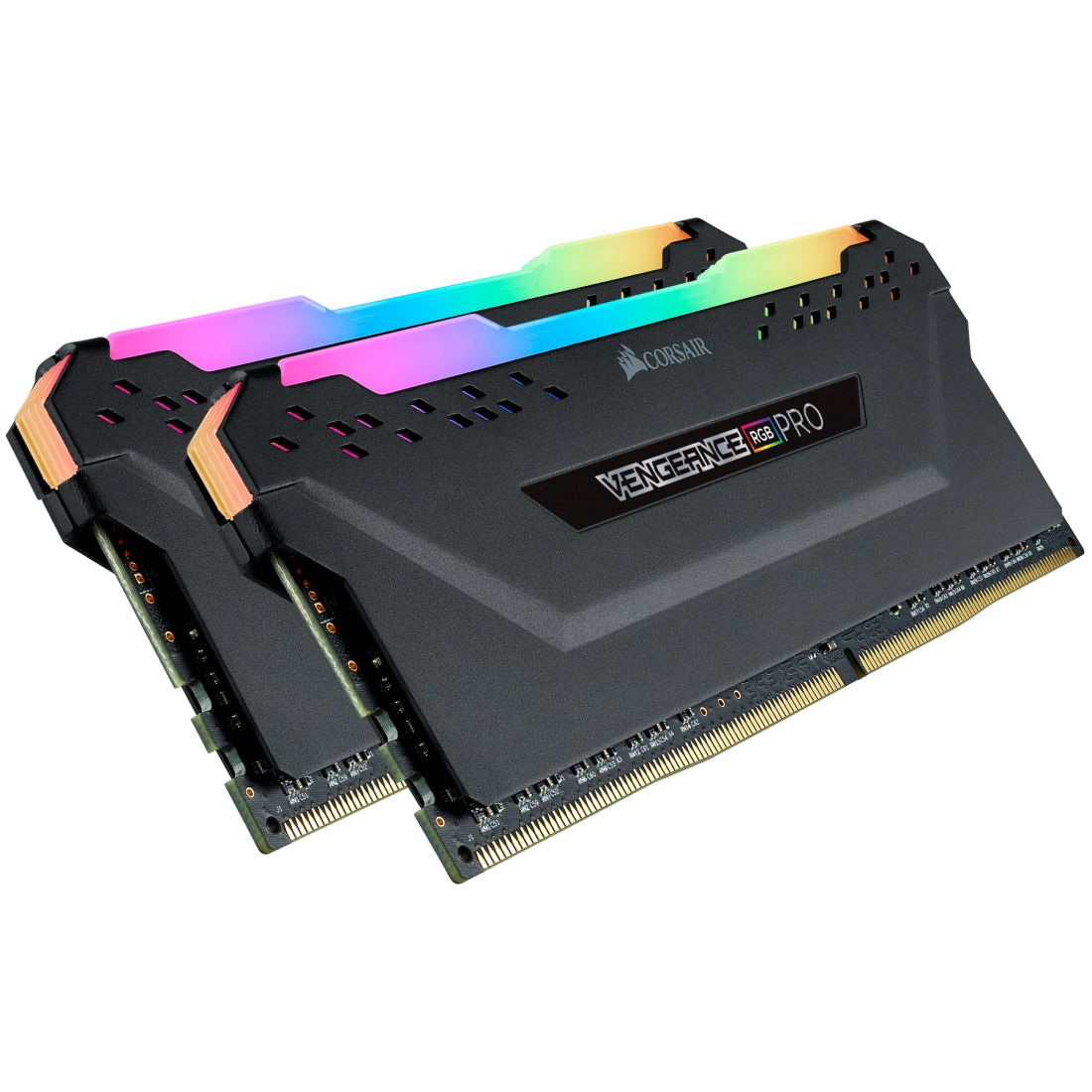
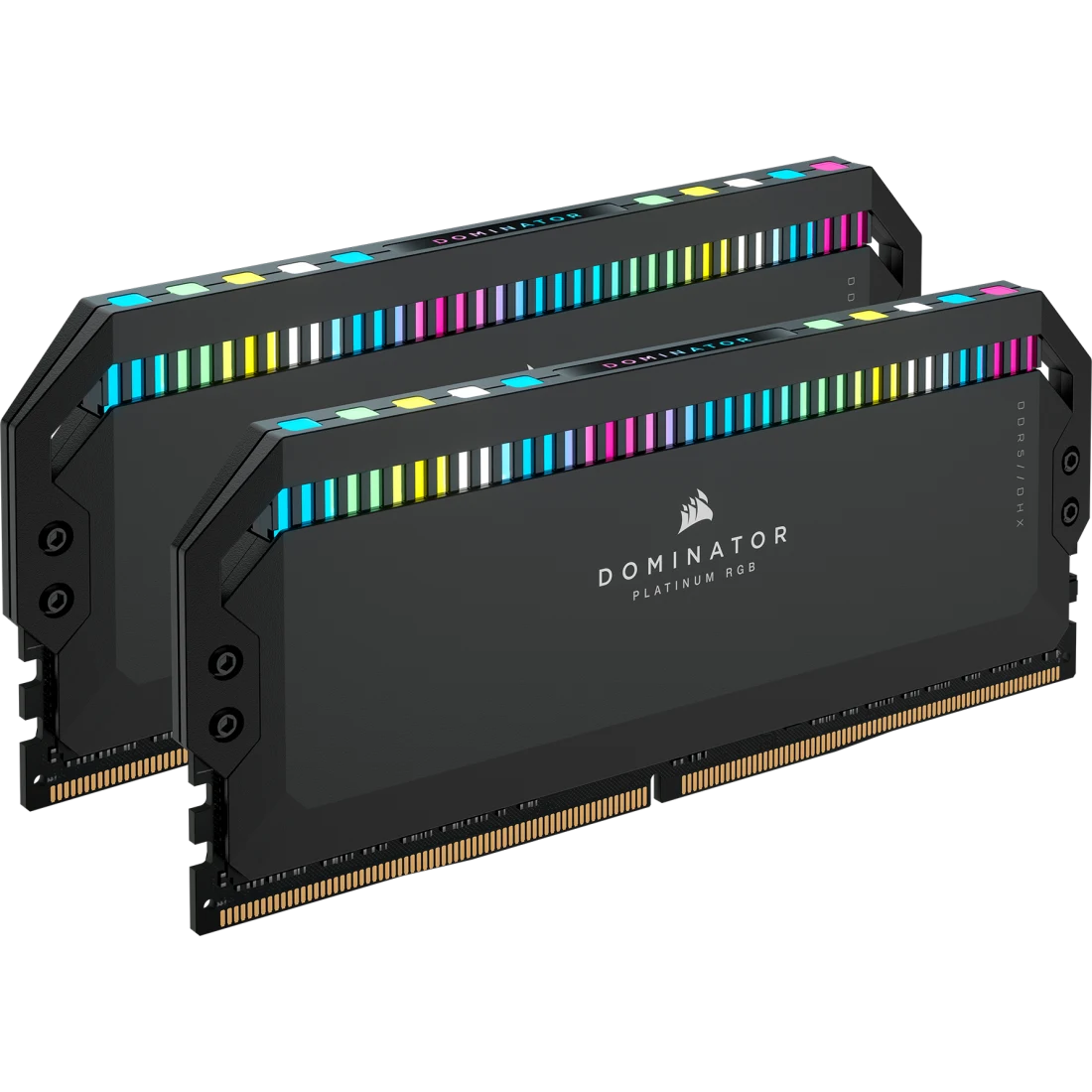
Corsair VENGEANCE LPX 32GB (2x16GB) DDR4-3600 CL18 Black
A 32 GB (2 x 16 GB) DDR4 UDIMM kit rated 3600 MT/s at CL18 and 1.35 V with an XMP 2.0 profile, a low-profile anodized aluminum heat spreader, broad Intel and AMD compatibility and a limited lifetime warranty.
Full Specification Sheet
| Part Number | CMK32GX4M2D3600C18 |
|---|---|
| Type | DDR4 UDIMM, 288-pin |
| Capacity | 32 GB kit (2 x 16 GB) |
| Tested Speed / Latency | 3600 MT/s, CL18 |
| Tested Voltage | 1.35 V |
| SPD (Default) | 2133 MHz, CL15, 1.2 V |
| Profile | Intel XMP 2.0 |
| Heat Spreader | Anodized aluminum, low profile |
| Color | Black |
| Compatibility | Intel 300, 400, 500 and 600 Series, Intel X299, AMD 300, 400 and 500 Series, AMD X570 |
| Warranty | Limited lifetime |
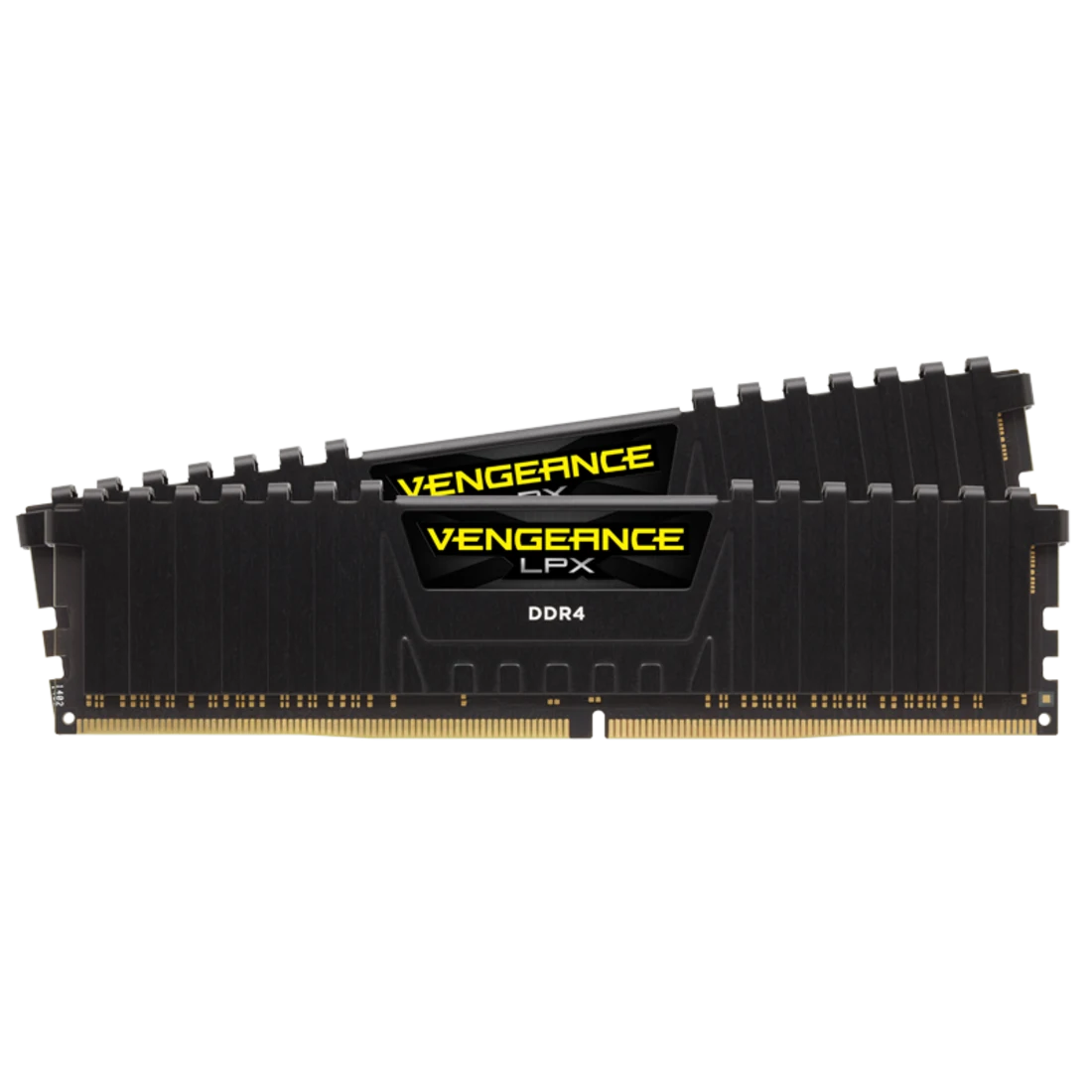
The Corsair VENGEANCE LPX 32GB (2x16GB) DDR4 3600MHz C18 kit, part number CMK32GX4M2D3600C18, is a black, unlit DDR4 memory kit aimed at people who want fast memory in a low-profile package. Corsair says VENGEANCE LPX memory is designed for high-performance overclocking, with a pure aluminum heat spreader for faster heat dissipation and a custom performance board that helps manage heat and gives headroom. The product page shows a price and an out-of-stock flag, but the price is next to a selector with many capacities and speeds, so we cannot tie it to this exact kit and leave it empty. This entry explains the listed specification, translates the ratings into nanoseconds and bandwidth with simple arithmetic, and spells out where compatibility is broad and where it needs care. There are no benchmarks of our own here.
Ratings explained
The tech spec lists a 32 GB kit made of two 16 GB modules, a tested speed of 3600 MT/s, a tested latency of 18 and a tested voltage of 1.35 V. The default profile stored on the module, the SPD, is 2133 (listed in MHz, the DDR4 baseline) at latency 15 and 1.2 V. In plain terms, the kit boots at the standard slow setting that every DDR4 board understands, and it becomes a 3600 MT/s kit when you enable the XMP 2.0 profile in the BIOS. The page describes XMP 2.0 as one setting that automatically adjusts to the fastest safe speed for the kit, avoiding lockups. Our explainer on XMP versus EXPO memory profiles describes how those profiles work and why a board can refuse them.
Latency and bandwidth by arithmetic
The first-word latency in nanoseconds is the CL number multiplied by 2000 and divided by the data rate. For this kit that is 18 times 2000 divided by 3600, exactly 10.0 ns. At the SPD default, 15 times 2000 divided by 2133 is about 14.1 ns, so the profile is worth roughly four nanoseconds of latency, and the data rate rises by about 69 percent (3600 divided by 2133). Dual-channel theoretical bandwidth is 3600 times 8 bytes times two channels, 57.6 GB/s, and the module rating corresponds to PC4-28800 (3600 times 8). The page does not print that module rating, so it is our arithmetic. Real-world speed depends on the processor's memory controller and on the other timings, which this page does not list. If the difference between speed and latency is unclear, our guide on RAM speed versus latency covers it in more detail.
Design
The heat spreader is anodized aluminum, and Corsair stresses that overclocking headroom is limited by operating temperature, so the spreader's job is to pull heat from the memory chips into the system's cooling path. The page describes the spreader as pure aluminum in one passage and anodized aluminum in the tech spec, which is consistent: anodizing is a surface treatment of aluminum. Each memory chip is described as individually screened for peak performance potential, and the module is built on a custom performance board; an earlier sentence on the page talks about an eight-layer board, and we treat both statements as describing the same product family rather than guess which wording is current. The low-profile design is the headline feature: it suits small cases or any system where space is tight, such as builds with a large air cooler hanging over the first memory slot. The kit comes in black, and the page notes the LPX family is available in several colours. There is no lighting on this version, and no fan is included.
Compatibility
Compatibility is generous for a DDR4 kit. Corsair lists Intel 300 Series, 400 Series, 500 Series and 600 Series boards (the 600 Series includes DDR4 variants), Intel X299, and AMD 300 Series, 400 Series, 500 Series and X570. Corsair says part of its testing process includes performance and compatibility testing on nearly every motherboard on the market. That makes this kit a natural fit for older Ryzen AM4 builds and for Intel platforms before the move to DDR5. If you are still deciding between platforms, our AM4, AM5 and LGA1700 platform guide explains which generation of memory each platform takes. A DDR4 kit cannot be used in a DDR5 slot, and the notch positions are different, so double-check the memory type your board supports before buying.
Capacity and options
The 32 GB kit uses two 16 GB modules, which fills both channels of a typical board. The page's selectors show other kit sizes in the LPX family, from a single 4 GB module up to a 256 GB kit of eight 32 GB modules, and speeds from 2400 up to 4000 MT/s. Which combinations are in stock changes, and several appear as out of stock on the page we read, including this very kit; availability therefore depends on the retailer. This entry covers only the 32 GB 3600 CL18 kit.
Where it sits in our database
Several DDR4 kits in our database sit close to this one. The Corsair VENGEANCE LPX 32GB DDR4-3200 CL16 is the slower sibling: its 16 times 2000 divided by 3200 also gives 10.0 ns, so the two kits have the same first-word latency on paper, and the 3600 kit offers 12.5 percent more bandwidth (3600 divided by 3200). The VENGEANCE RGB PRO SL 32GB DDR4-3600 CL18 shares the exact speed and latency but adds lighting; if you do not want RGB, the LPX kit gives you the same rated speed without paying for lights. You can look at the two next to each other in our comparison of LPX and RGB PRO SL at 3600 CL18, and the full memory category lists every other kit.
What the page does not say
The page does not list a weight (the field shows zero), a module height, the memory chip maker, the number of ranks or the secondary timings. Its first descriptive paragraph mentions an eight-layer board while the second mentions a custom performance board; we do not resolve that. The price on the page is attached to a multi-variant selector and is not used. Before you buy, confirm the board's memory support list and the clearance beneath your CPU cooler.