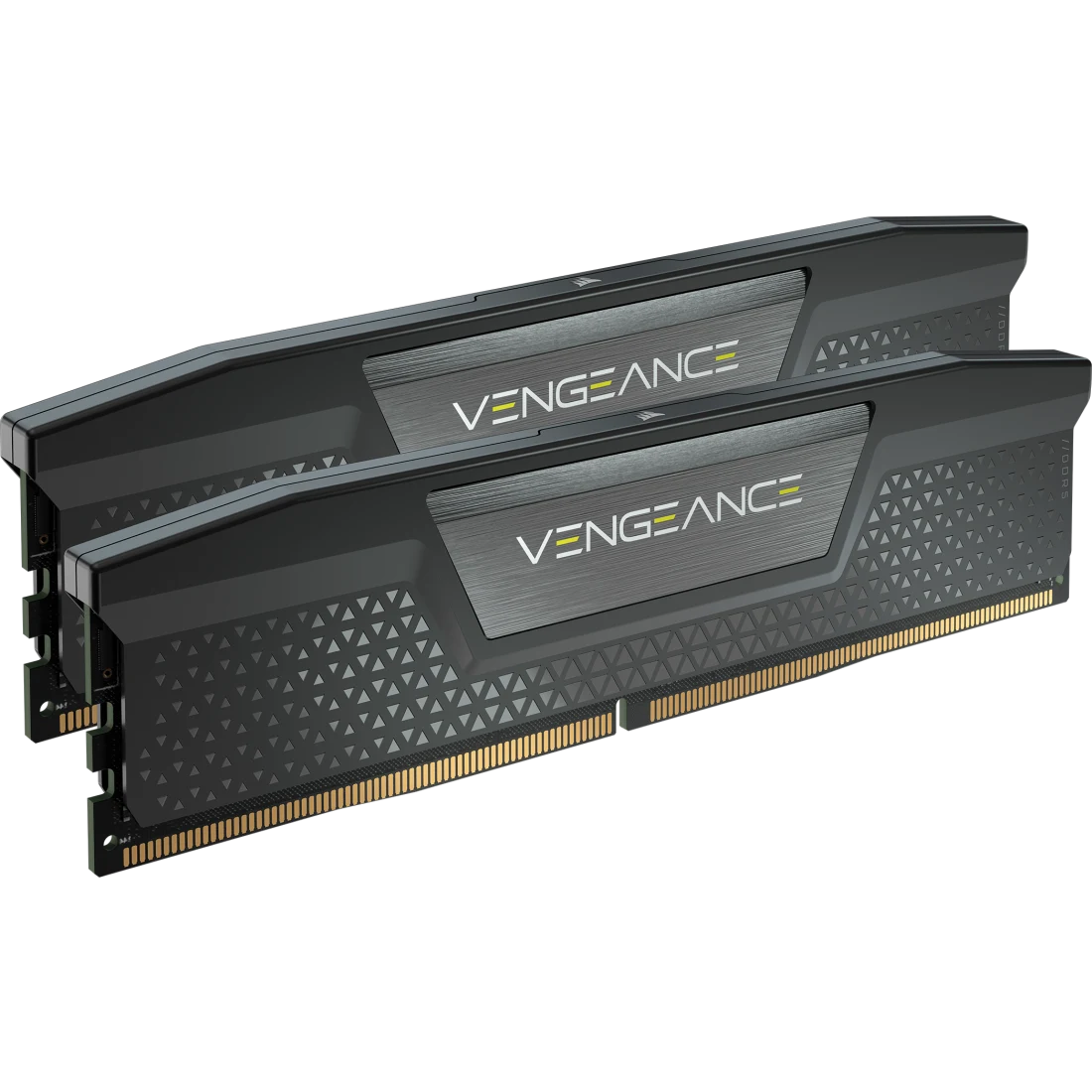
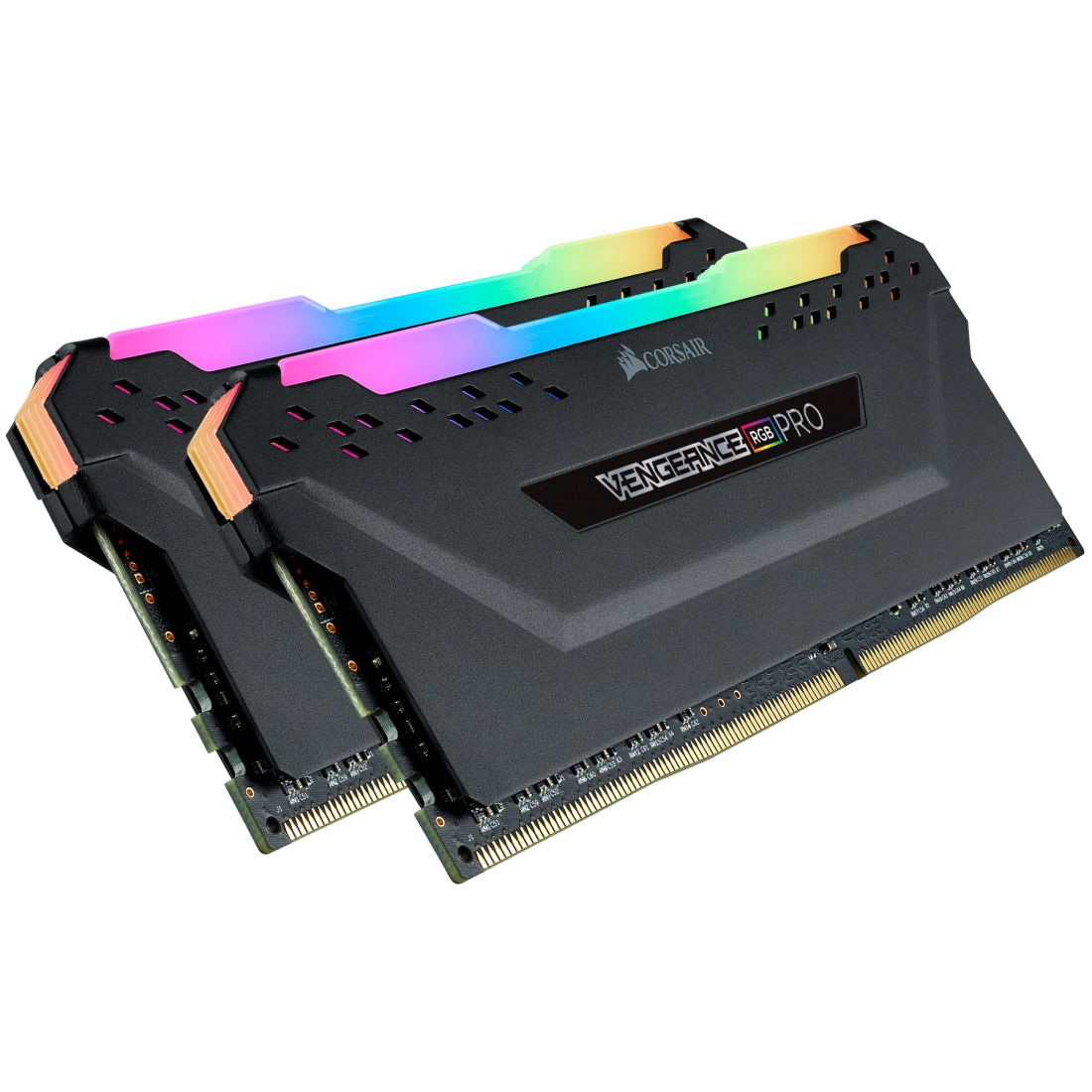
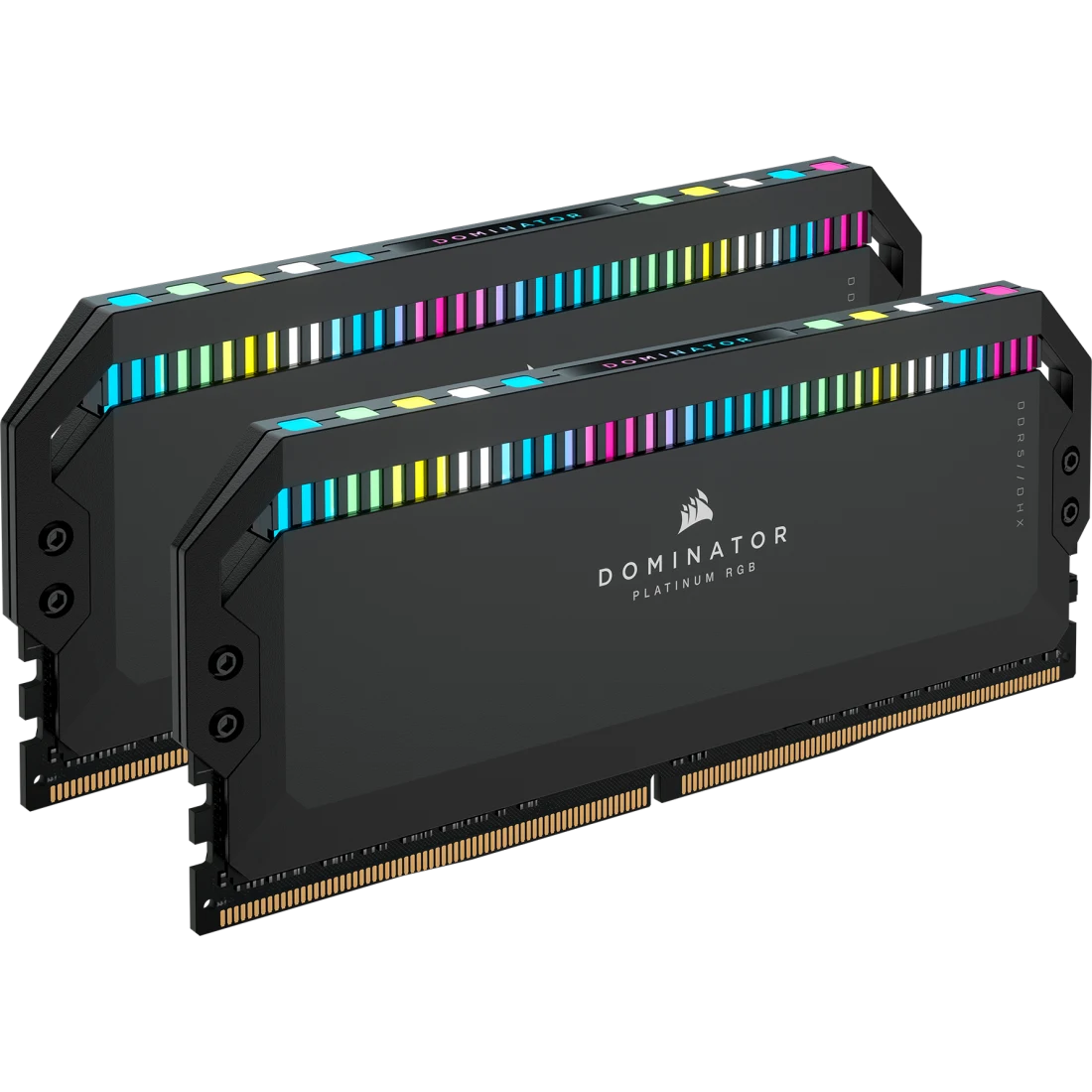
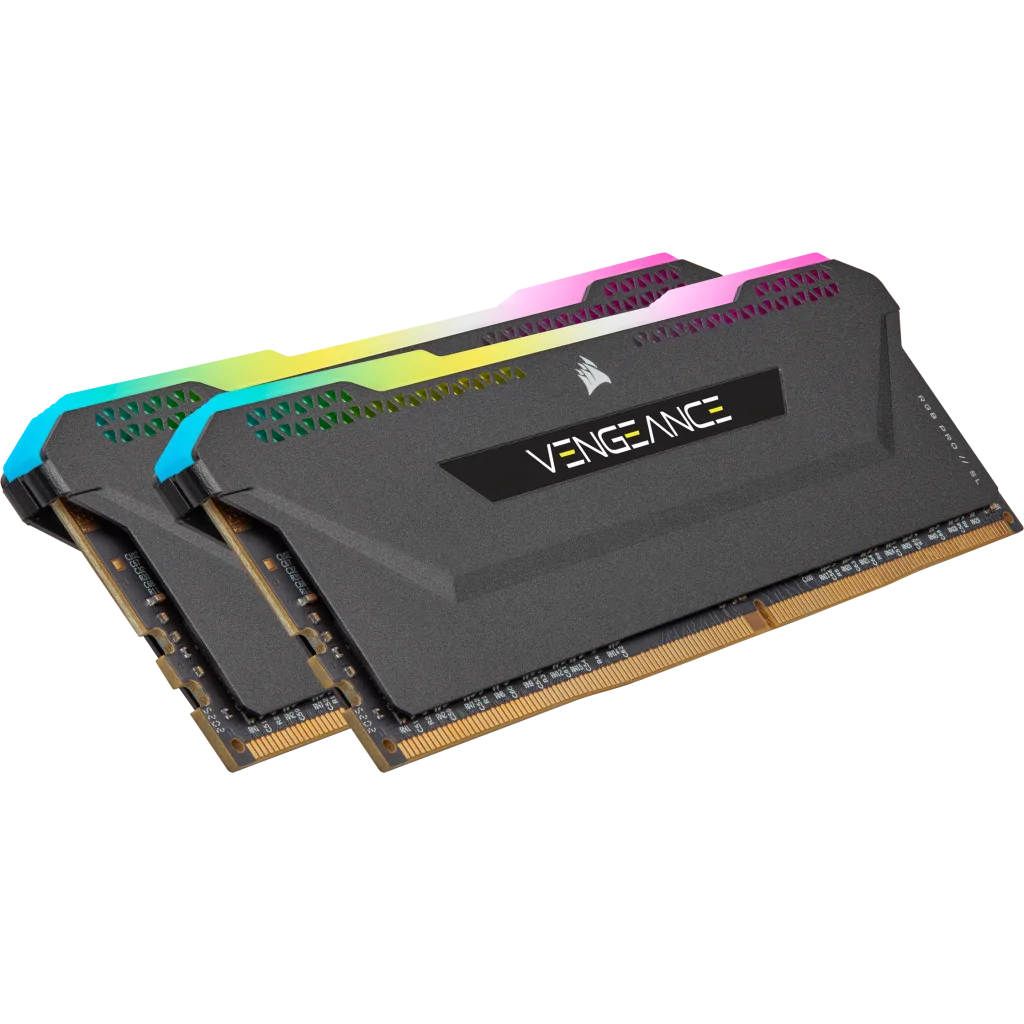
Corsair VENGEANCE RGB PRO SL 32GB (2 x 16GB) DDR4 3600MHz C18 (CMH32GX4M2D3600C18)
A 32 GB (2 x 16 GB) DDR4-3600 CL18 kit with individually addressable RGB, 44 mm tall aluminum heat spreaders, an XMP 2.0 profile and a limited lifetime warranty.
Full Specification Sheet
| Capacity | 32 GB (2 x 16 GB) |
|---|---|
| Type | DDR4 UDIMM, 288-pin |
| Tested Speed | 3600 MT/s (PC4-28800) |
| Tested Latency | CL18 |
| Tested Voltage | 1.35 V |
| SPD | 2133 MHz, CL15, 1.2 V |
| Profile | Intel XMP 2.0 |
| Heat Spreader | Anodized aluminum, 44 mm tall |
| Lighting | Individually addressable RGB, iCUE |
| Compatibility | Intel 500 and 600 Series, AMD 500 Series, AMD X570 |
| Warranty | Limited lifetime |
| SKU | CMH32GX4M2D3600C18 |
The Corsair VENGEANCE RGB PRO SL 32GB (2 x 16GB) DDR4 3600MHz C18 kit, part number CMH32GX4M2D3600C18, is a pair of 16 GB unbuffered DDR4 modules with individually addressable RGB lighting. Corsair describes the SL variant as delivering peak performance in compact, 44 mm tall modules, and it presents the kit as optimised for both Intel and AMD platforms. The manufacturer's product page is short, which limits what can honestly be said about the kit, so this page sticks to the published specification and explains each number in practical terms rather than padding it with claims the source does not make. There are no benchmarks here, and no price, because the page's price is tied to stock and shows the kit as out of stock.
What the kit contains
The kit is 32 GB in total, made of two 16 GB modules, so it is intended to be installed as a dual-channel pair in two of a board's DIMM slots. Corsair's page shows the same product family in other configurations, from a 16 GB kit of two 8 GB modules to 64 GB and larger four-module kits, and it lists 3200 MT/s at CL16, 3600 MT/s at CL16 and CL18 and 4000 MT/s at CL18 as tested speeds. This particular part is the 3600 MT/s, CL18 option. The format is UDIMM with 288 pins, which is the standard desktop module form for DDR4, and it is not compatible with laptop SO-DIMM slots or with DDR5 boards. If you are weighing 16 GB against 32 GB for your workload, our guide to 16 GB versus 32 GB of RAM covers the trade-off.
Speed, latency and voltage
Corsair lists a tested speed of 3600 MT/s, a tested latency of CL18 and a tested voltage of 1.35 V. The speed rating is PC4-28800, which is the module-bandwidth name for DDR4-3600: 3600 million transfers per second across a 64-bit bus is 28,800 MB/s per module. Latency is expressed in clock cycles, and here the CAS latency is 18. Because DDR memory transfers twice per clock, a 3600 MT/s module runs a 1800 MHz clock, so 18 cycles correspond to 10 nanoseconds for the first word, a figure obtained by simple arithmetic from Corsair's numbers rather than from a measurement. It shows why frequency and latency should be read together, a point our article on RAM speed versus latency expands on. The tested voltage of 1.35 V is above the JEDEC-style default of 1.2 V, which Corsair lists separately as the SPD voltage.
SPD and the XMP profile
Every module stores a baseline profile in its SPD chip. Corsair gives that baseline as 2133 MHz at CL15 and 1.2 V, which is the speed the kit uses if no profile is applied. The advertised 3600 MT/s, CL18 setting is stored as an Intel XMP 2.0 performance profile, and Corsair says a single BIOS setting is all that is required to apply it. Corsair's footnote is careful: reaching the listed speed requires overclocking or a BIOS adjustment, and the maximum speed and performance depend on system components including the motherboard and processor. In practice that means the kit will boot at the safe baseline and must be told to use the faster profile in firmware. Our explainer on XMP versus EXPO memory profiles describes how those profiles work and why Intel and AMD boards name them differently.
Platform compatibility
Corsair lists the following memory compatibility: Intel 500 Series, Intel 600 Series, AMD 500 Series and AMD X570. A related accessory on the product page, an LGA1700 retrofit kit, indicates that Corsair anticipated installation on that Intel socket. The listing makes no statement about earlier or later chipset families, so anyone using another platform should check the motherboard maker's own memory support list. DDR4 is the older memory generation, so it only fits boards that have DDR4 slots, and the choice between the generations is discussed in our DDR5 versus DDR4 buying guide.
Heat spreader and lighting
The heat spreader is anodised aluminum, and the modules are 44 mm tall, a height Corsair highlights as giving wider compatibility with air coolers and smaller chassis. That is a useful detail because tall memory can collide with large CPU coolers. The lighting is individually addressable RGB, and the modules are iCUE-enabled: Corsair's software can synchronise the memory with other Corsair RGB products such as coolers, keyboards and fans and switch between profiles. The named lighting patterns on the page are Wave, Spiral, Rain, Visor and Sequential. Corsair's page also lists an RGB memory plug-in for ASUS AURA SYNC. If you already use another lighting ecosystem, see our comparison of iCUE, Aura and Mystic Light. No fan is included, the colour is black, and the kit weight is not stated on the page.
Build quality claims
Corsair says each module starts with a custom performance PCB and tightly screened memory chips to provide high frequencies, maximum bandwidth and tight response times on all platforms. These are marketing statements about component selection, and the page does not name the DRAM manufacturer or the chip type, so we cannot say more about the memory ICs. The kit carries a limited lifetime warranty, which Corsair presents as peace of mind and years of worry-free performance. Downloads on the page include the iCUE software, the RGB memory plug-in for ASUS Aura Sync and a quick start guide, along with declarations of conformity.
Choosing within the product family
The product page presents the SL series as a set of options rather than one fixed kit. Capacities run from 16 GB (2 x 8 GB) and 32 GB (2 x 16 GB) to four-module 32 GB and 64 GB kits, and larger 2 x 32 GB and 4 x 32 GB kits are shown as out of stock. The tested speed options are 3200 MT/s at CL16, 3600 MT/s at CL16, 3600 MT/s at CL18 and 4000 MT/s at CL18. Two practical points follow from that list. A kit with two modules keeps the memory controller load lower than a kit with four, which is why two-module kits are the usual choice when a board is asked to hold an advertised profile. And the CL18 variant at 3600 MT/s sits between the slower CL16 options and the faster 4000 MT/s kit, so the part number, not just the headline speed, tells you which one you are buying. Always compare the full SKU when shopping.
How to use this information
Match the kit to the board first: it needs DDR4 slots and a BIOS that supports XMP. Install the two modules in the slots the motherboard manual designates for dual channel, enable the profile, and confirm the reported speed. Check clearance if you use a large air cooler, although the 44 mm height helps. To see how this kit stacks up on paper against another DDR4 option in our database, open the comparison with the VENGEANCE LPX 32GB 3200 CL16, or browse the full memory category. Every value quoted here is a manufacturer specification, and none is a measured result.