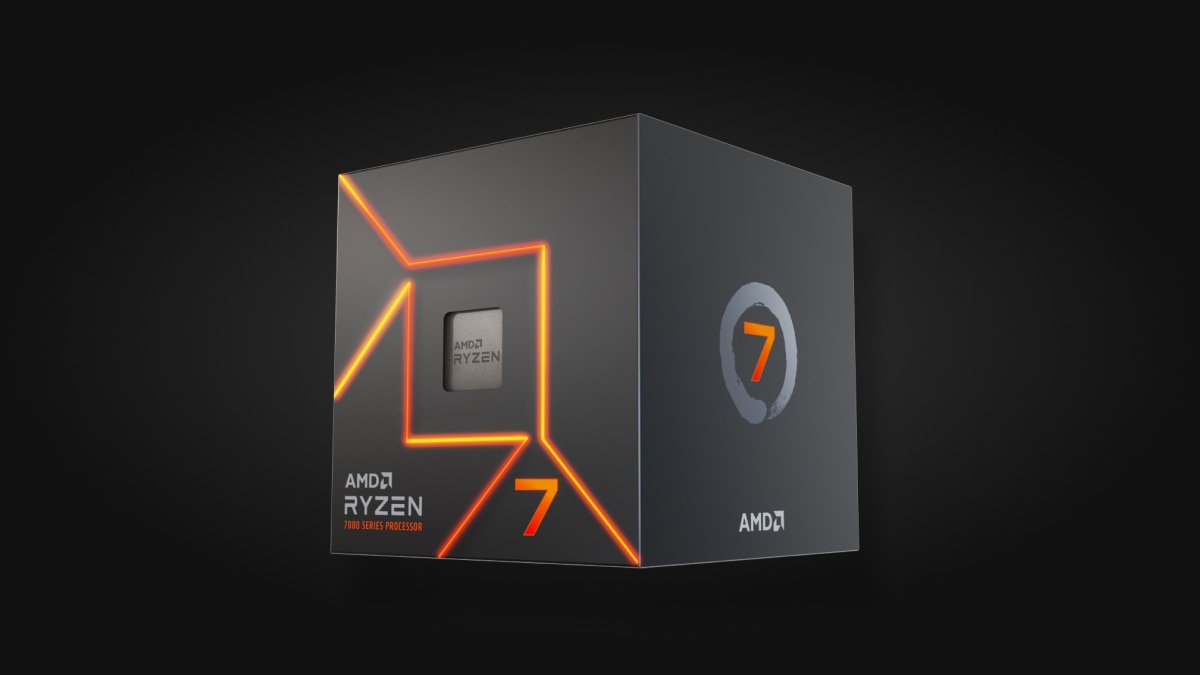
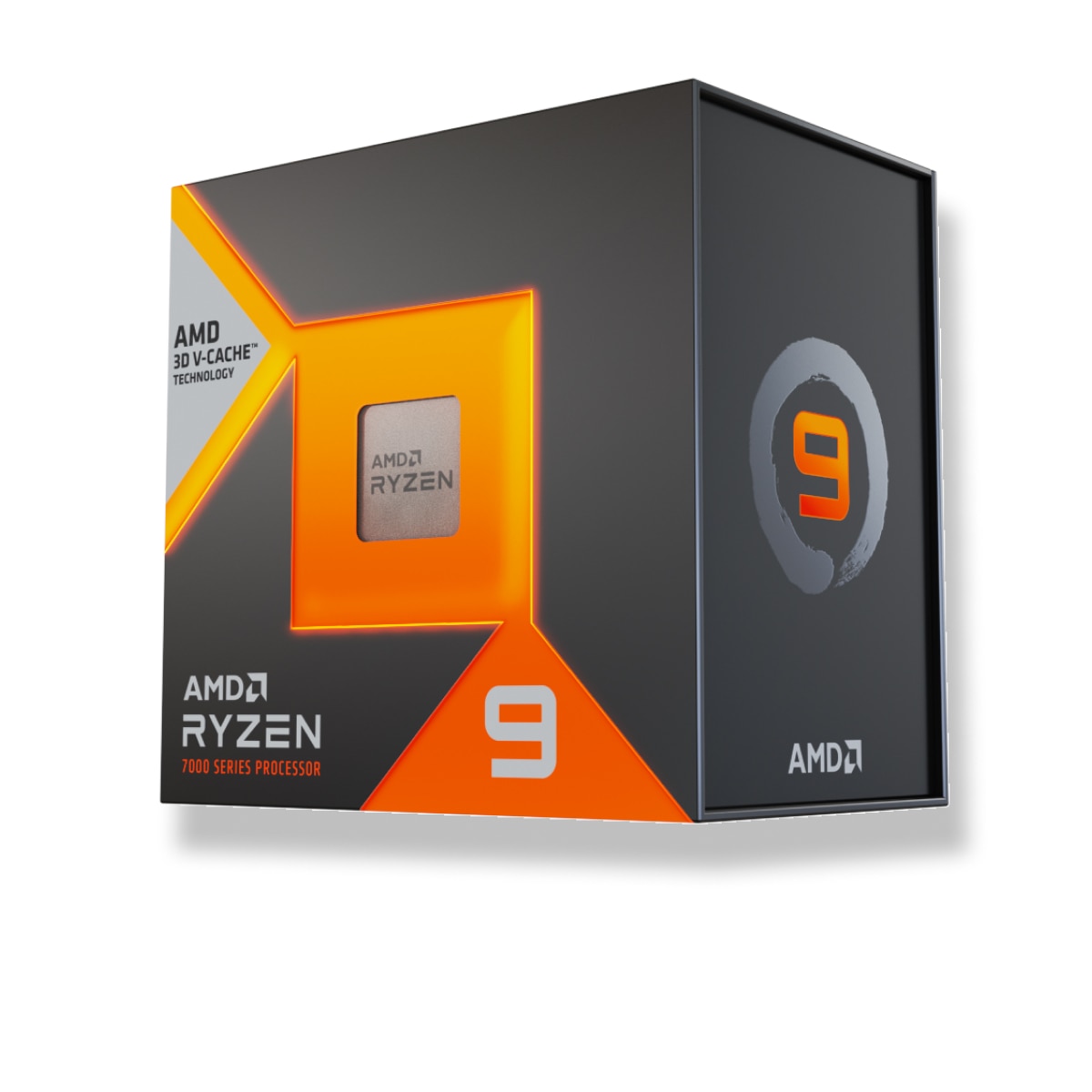
AMD Ryzen 9 9900X3D
A 12-core, 24-thread AM5 processor with 128 MB of L3 cache through 2nd gen AMD 3D V-Cache, a 4.4 GHz base clock, up to 5.5 GHz boost and a 120 W default TDP.
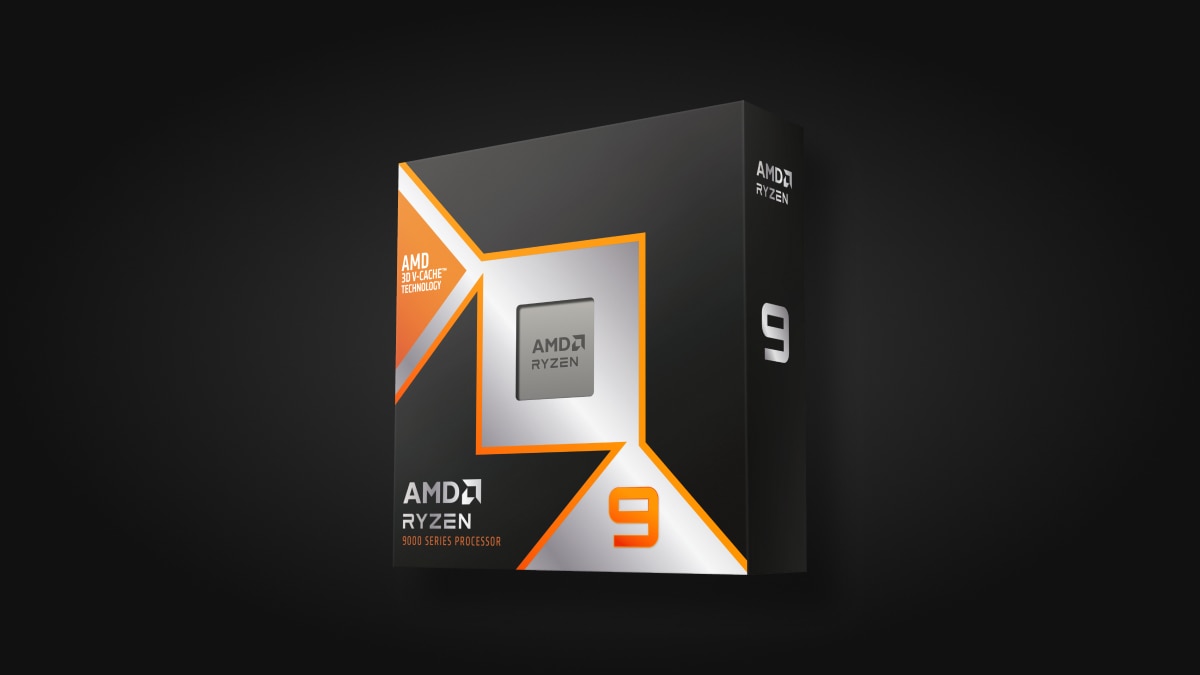
Full Specification Sheet
| Architecture | Zen 5 (codename Granite Ridge) |
|---|---|
| Cores / Threads | 12 / 24 |
| Base Clock | 4.4 GHz |
| Max Boost Clock | Up to 5.5 GHz |
| L1 Cache | 960 KB |
| L2 Cache | 12 MB |
| L3 Cache | 128 MB (2nd gen AMD 3D V-Cache) |
| Default TDP | 120 W |
| Process | TSMC 4nm FinFET (CPU cores), TSMC 6nm FinFET (I/O die) |
| Socket | AM5 |
| Memory | DDR5, 2 channels, up to 256 GB, DDR5-5600 (2 x 1R) |
| PCIe | PCIe 5.0, 28 lanes (24 usable) |
| Integrated Graphics | AMD Radeon Graphics, 2 cores, 2200 MHz |
| Max Operating Temperature | 95 C |
| Cooler Included | No |
The AMD Ryzen 9 9900X3D is a twelve-core desktop processor for the AM5 socket and part of the Ryzen 9000 Series. AMD describes it as a gaming and content creation processor and pairs the Zen 5 architecture (former codename Granite Ridge) with a very large L3 cache delivered through second-generation AMD 3D V-Cache technology. The launch date on AMD's product page is 12 March 2025. AMD's headline promise is extreme performance for gaming, creating, streaming or any workload you choose; that is marketing language backed by AMD's own testing, and this page does not repeat or verify it. What follows is the specification AMD publishes, translated into plain terms, with everything the page does not state left out. No benchmark results appear here, and each figure is a manufacturer-stated specification unless it is marked as simple arithmetic.
Cores, threads and clock speeds
AMD lists twelve CPU cores with simultaneous multithreading, which gives twenty-four threads. The base clock is 4.4 GHz, defined by AMD as the average effective base frequency of all cores, and the maximum boost clock is up to 5.5 GHz. As on every AMD product page, the boost number comes with a caveat: it is the maximum frequency a single core can reach on a bursty single-threaded workload, and it varies with thermal paste, system cooling, motherboard design and BIOS, the latest AMD chipset driver and the latest operating-system updates. Boost behaviour is managed by Precision Boost 2. The default TDP is 120 W, which is AMD's stated thermal design figure for the processor rather than a measurement of consumption in any given task. The chip is unlocked for overclocking, and AMD lists support for Precision Boost Overdrive, Curve Optimizer voltage offsets and control through Ryzen Master, while noting that the product warranty does not cover damage caused by overclocking. For a wider view on choosing between more cores and higher clocks, see our guide to core count versus clock speed.
The 128 MB cache and what 3D V-Cache means
The cache table explains the X3D suffix. AMD lists 960 KB of L1 cache, 12 MB of L2 cache and 128 MB of L3 cache. Dividing the L1 and L2 totals by twelve cores gives 80 KB of L1 and 1 MB of L2 per core; that is simple arithmetic from AMD's figures, not a separate claim. The 128 MB of L3 is the headline number, and AMD attributes it to 2nd gen AMD 3D V-Cache technology, a stacked cache design. A cache is small, very fast memory that sits near the cores and holds data they are likely to need again, so the more last-level cache a processor has, the more of a program's working set can stay on the chip instead of being fetched from main memory. Whether that matters depends entirely on the software. Our explainer on AMD X3D processors and 3D V-Cache describes the concept and the trade-offs without quoting test numbers, and it is the best place to start if the term is new to you.
Dies, process and package
The processor is built with TSMC 4nm FinFET technology for the CPU cores and TSMC 6nm FinFET technology for the I/O die. AMD lists a package die count of three. The page does not break down which die holds which portion of the cache or how the cores are divided between dies, so this page does not either; the honest summary is that the twelve cores and the 128 MB of L3 are provided by a multi-die package with a separate input-output die. The extra silicon is one reason AMD recommends liquid cooling on this model. The Tjmax, the maximum operating temperature, is 95 C.
Memory support
The Ryzen 9 9900X3D supports DDR5 only, in two channels, with a maximum capacity of 256 GB. AMD lists the maximum speeds by configuration: DDR5-5600 for two single-rank modules or two dual-rank modules, and DDR5-3600 for four modules of either type. As with other AM5 processors, the table shows that filling all four slots lowers the supported speed, so a two-module kit is the simple route to the highest listed speed. AMD EXPO memory overclocking technology is supported, letting compatible kits apply their rated profiles. ECC is listed as supported, but it requires motherboard support. If you want to understand how speed and latency combine when you choose a kit, our explanation of RAM speed versus latency covers it.
Platform, PCIe and connectivity
The socket is AM5. AMD lists the supporting chipsets as A620, X670E, X670, B650E, B650, X870E, X870, B840 and B850, so the processor is not tied to the newest boards. The processor provides PCI Express 5.0 with 28 native lanes, of which 24 are usable. NVMe support covers boot, RAID 0, RAID 1, RAID 5 and RAID 10. Native connectivity from the processor is four USB4 (40 Gbps) ports and one USB 3.2 Gen 1 (5 Gbps) port, and USB Type-C DisplayPort Alternate Mode is listed as supported. That USB4 figure is a difference from the earlier AM5 generation on this site, so read your motherboard's own specification to see how many of those ports are actually wired out.
Two ASUS boards on this site give a sense of what a current AM5 platform looks like: the ASUS PRIME X870-P WIFI and the ASUS TUF GAMING B850-PLUS WIFI. Each page reports the manufacturer's board specification, including that many ASUS entries list support per processor family.
Integrated graphics
The processor includes AMD Radeon Graphics with two graphics cores at 2200 MHz. AMD does not present this as a gaming feature. It gives the system a display output when no discrete graphics card is installed, which helps when you are diagnosing a new build. Anyone planning a gaming system will still pair the chip with a separate graphics card.
Cooling and operating notes
AMD states that a thermal solution is not included and recommends a liquid cooler for optimal performance. Set that next to the 120 W default TDP and the 95 C Tjmax when you budget your build: the cooler is a separate purchase, and AMD's own guidance points to liquid cooling for this model. The recommendation is the manufacturer's advice, not a test result. Operating-system support covers Windows 11 and Windows 10 in 64-bit editions, RHEL x86 64-bit and Ubuntu x86 64-bit.
Instruction set and technologies
AMD lists AES, AMD-V, AVX512, AVX2, AVX, FMA3, MMX-plus, SHA, the SSE family through SSE4.2 and SSE4A, and x86-64. The supported technologies are AMD EXPO and AMD Ryzen technologies, with the usual note that certain technologies may require third-party enablement or activation and that supported features may vary by operating system. AMD also states that no technology or product can be completely secure, a standard disclaimer.
Identifiers and how to compare
AMD gives the boxed product ID as 100-100001368WOF and the tray product ID as 100-000001368. There is no price on AMD's page, so none appears here. To see how this twelve-core part lines up against the sixteen-core sibling in the same X3D family, open our side-by-side comparison, or browse the whole processor category. Remember that all numbers on this page are manufacturer specifications, and real-world behaviour depends on cooling, memory, motherboard and software.