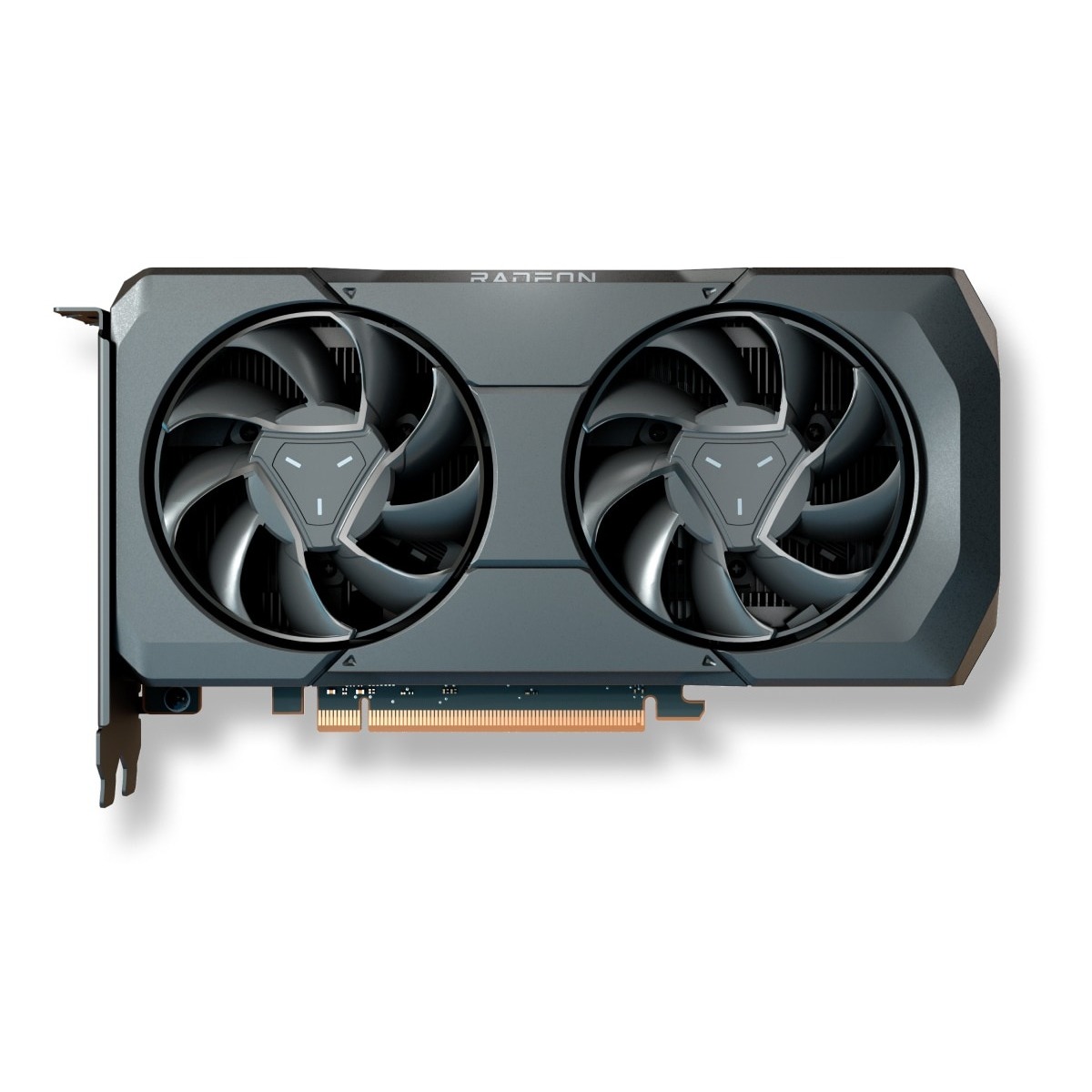
AMD Radeon RX 9060 XT (16GB)
A Radeon RX 9000 Series card with 32 compute units, 2048 stream processors, 16 GB of GDDR6 on a 128-bit bus, 32 MB of Infinity Cache, a 160 W typical board power and a single 8-pin connector.
Full Specification Sheet
| Series | Radeon RX 9000 Series |
|---|---|
| Memory Configuration | 16 GB (page title: RX 9060 XT 16GB) |
| Compute Units | 32 |
| Stream Processors | 2048 |
| Ray Accelerators | 32 |
| AI Accelerators | 64 |
| ROPs | 64 |
| Texture Units | 128 |
| Boost Clock | Up to 3130 MHz |
| Game Clock | 2530 MHz |
| Memory | 16 GB GDDR6, 128-bit |
| Memory Speed | Up to 20 Gbps |
| Memory Bandwidth | Up to 320 GB/s |
| Infinity Cache | 32 MB |
| Peak Pixel Fill-Rate | Up to 200.3 GP/s |
| Peak FP32 (Vector) | 25.6 TFLOPs |
| Peak FP16 (Matrix) | 103 TFLOPs (205 TFLOPs with structured sparsity) |
| Peak INT8 (Matrix) | 205 TOPs (410 TOPs with structured sparsity) |
| Transistors | 29.7 billion |
| Typical Board Power | 160 W |
| Power Connector | 1 x 8-pin |
| Minimum PSU Recommendation | 450 W |
| Bus | PCIe 5.0 x16 |
| Outputs | DisplayPort 2.1a, HDMI 2.1b |
| Media Engine | AV1, H.265/HEVC and H.264 encode and decode (4K) |
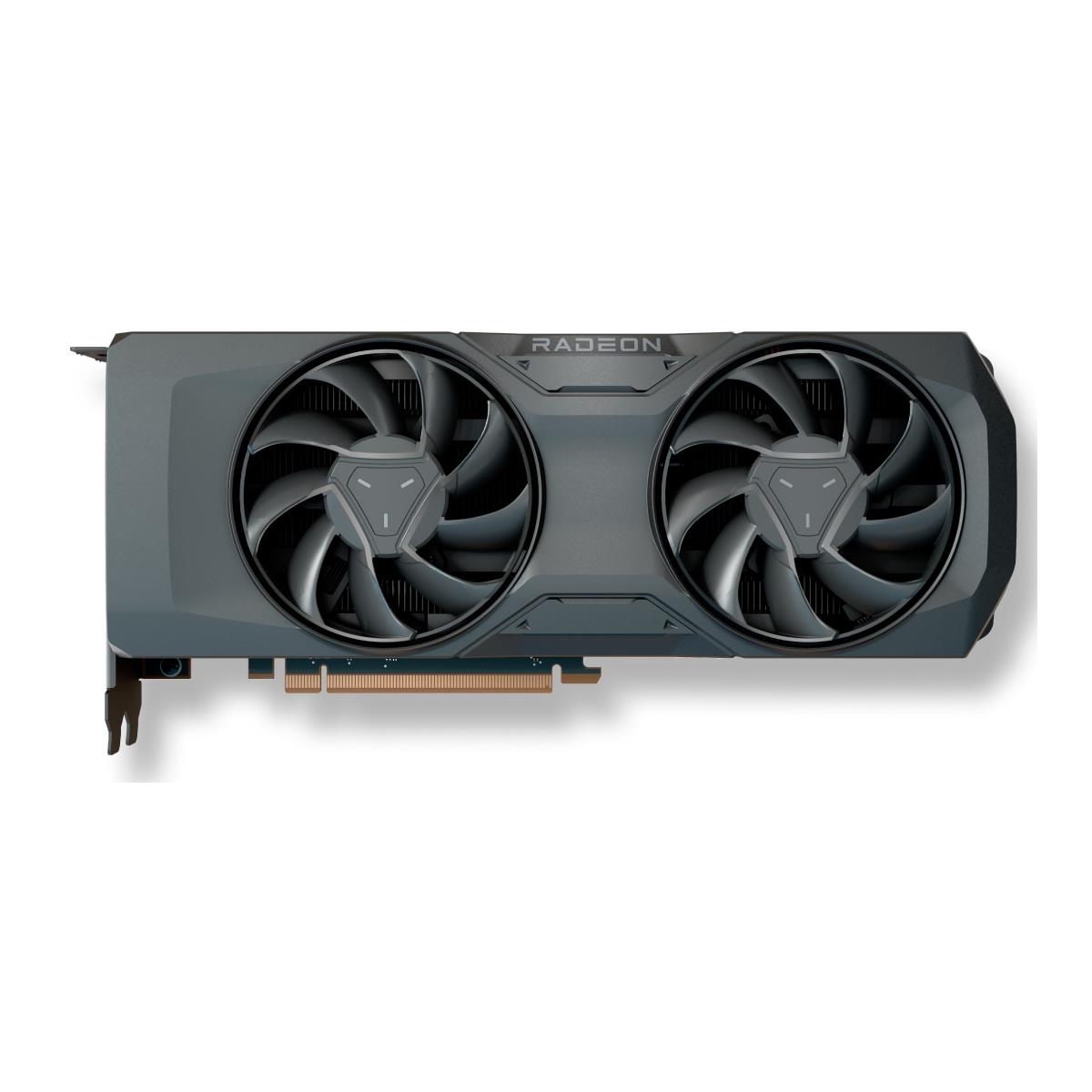
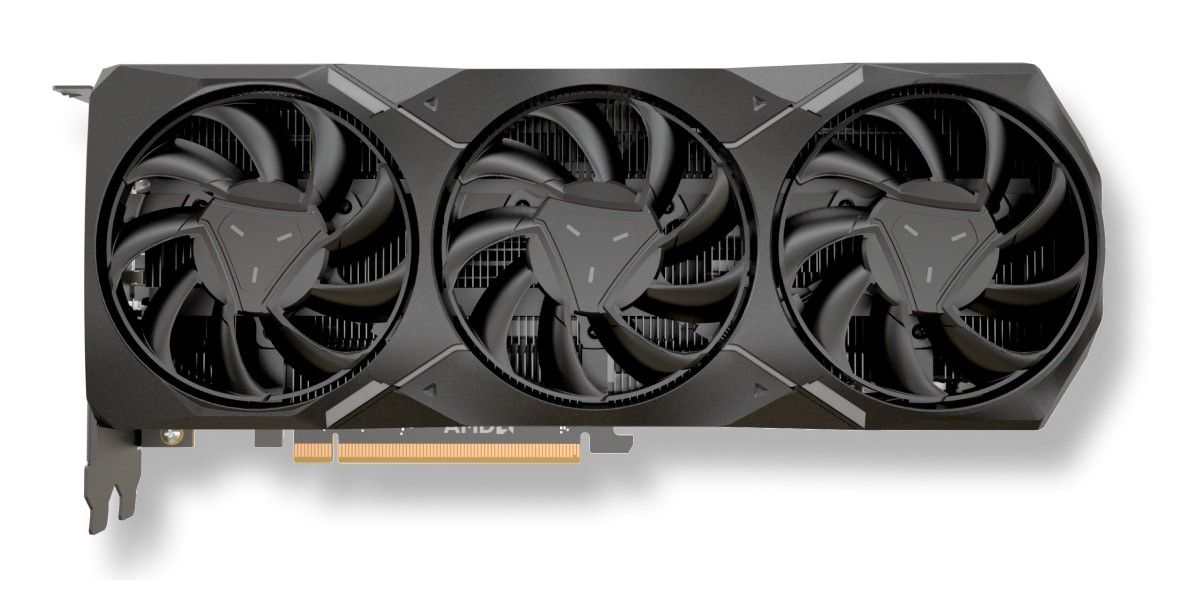
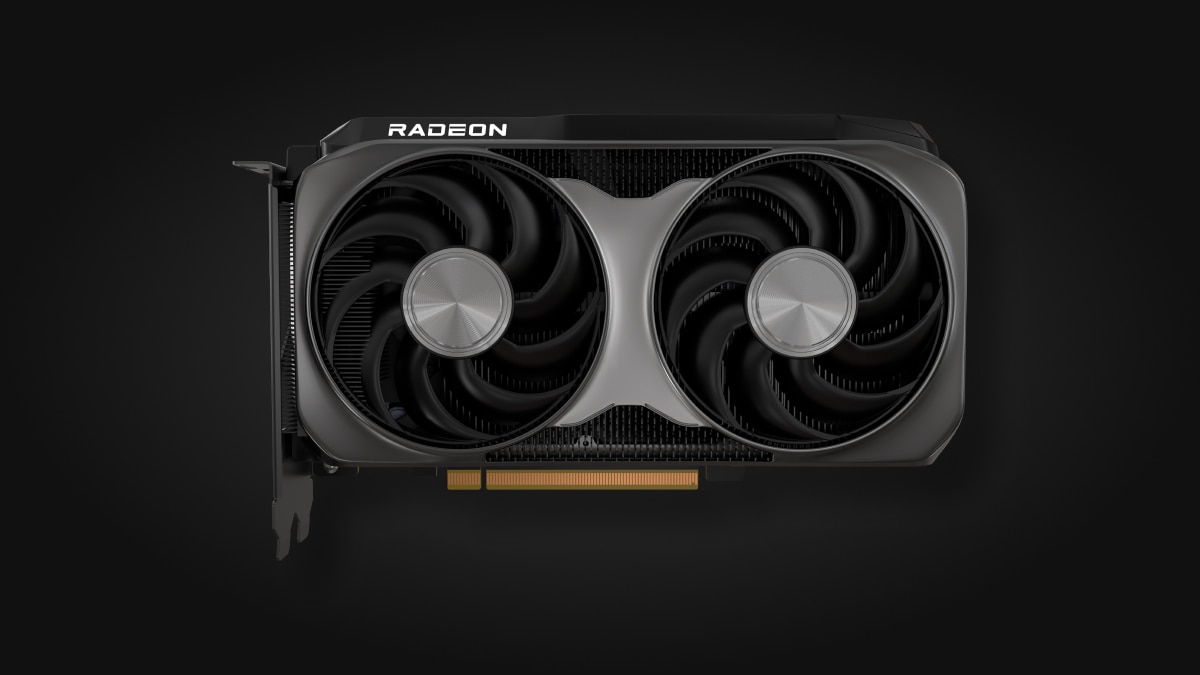
The AMD Radeon RX 9060 XT is a desktop graphics card in the Radeon RX 9000 Series, and the page we used describes the 16 GB version, as its title reads "AMD Radeon RX 9060 XT (16GB)". AMD's tagline is "All You Need For Incredible Gaming", and the specification places it as a card for 1080p and 1440p play rather than for the highest-end 4K tiers. The page shows an artist render and says the image is not available for purchase, which means the picture we use is a marketing illustration of the reference design, not a photograph of a particular board-partner card. AMD lists no price and no launch date, so this entry gives neither. Everything below is the manufacturer's published specification with a few clearly marked calculations. We have not tested the card.
Compute resources
AMD lists 32 compute units, 2048 stream processors, 32 ray accelerators and 64 AI accelerators, together with 128 texture units and 64 ROPs. The boost frequency is up to 3130 MHz and the game frequency is 2530 MHz. AMD explains in its footnotes that the boost frequency is the maximum achievable on the GPU running a bursty workload and varies with thermal conditions and the application, while the game frequency is the expected clock when running typical gaming applications at typical total graphics power. The transistor count is 29.7 billion. For context on the name, our explainer on GPU naming tiers shows how a 60-class card with an XT suffix usually sits near the lower-middle of a generation.
Do the throughput numbers agree?
A quick check helps show that the sheet is consistent. AMD lists a peak pixel fill rate of up to 200.3 GP/s, and 64 ROPs multiplied by the 3130 MHz boost clock gives 200.3 GP/s, so the figure follows directly from the page's own numbers. The peak single-precision vector figure of 25.6 TFLOPs is consistent with 2048 stream processors at 3130 MHz if each is counted as four floating-point operations per clock, which is our reading of how AMD counts and is not stated on the page. The page also lists peak FP16 matrix throughput of 103 TFLOPs, 205 TFLOPs with structured sparsity, FP8 matrix throughput of 205 TFLOPs, 410 TFLOPs with sparsity, INT8 matrix throughput of 205 TOPs, 410 TOPs with sparsity, and INT4 matrix throughput of 410 TOPs, 821 TOPs with sparsity. These are theoretical peaks, useful for comparing designs, not predictions of what a game or an AI application will achieve.
Memory subsystem
The card carries 16 GB of GDDR6 on a 128-bit interface at up to 20 Gbps. Multiplying 20 Gbps by 128 bits and dividing by eight gives 320 GB/s, which matches AMD's stated memory bandwidth exactly. A 32 MB AMD Infinity Cache sits in front of the memory to reduce how often the narrow bus has to be used. The capacity is the interesting part of this card: a 128-bit bus is narrow, but 16 GB of memory leaves generous room for high-resolution textures. Our guide on how much video memory you need explains why capacity and bandwidth are different questions. Note that the page covers the 16 GB configuration only, and we do not describe any other memory variant because the page does not.
Power, connectors and size
The typical board power is 160 W, the additional power connector is a single 8-pin, and AMD's minimum power supply recommendation is 450 W. The page lists the bus as PCIe 5.0 x16. It gives no length or slot count for this model, and board partners design their own coolers and boards, so physical dimensions, fan layouts and connector placement vary from card to card. Before you buy, check the exact board's length and thickness against your case. A single 8-pin connector is also easier on a modest power supply than the two-connector cards above it; if you are using adapters or splitters, read our note on daisy-chaining and adapters first.
Display outputs and media features
The listed outputs are DisplayPort 2.1a and HDMI 2.1b. AMD states 4K support through HDMI and lists 4K decode and encode for H.264 and H.265/HEVC as well as AV1 decode and encode, so the card handles the common modern video codecs in hardware. The supported-technology list on the page includes AMD Software Adrenalin Edition, AMD FSR Redstone, AMD Fluid Motion Frames, AMD Noise Suppression, Radeon Super Resolution, Smart Access Memory, Smart Access Video, Privacy View, Radeon Boost, Enhanced Sync, FreeSync, Radeon Chill, Virtual Super Resolution, Radeon Anti-Lag 2 and Radeon Image Sharpening 2. Which of these work on a given system depends on the operating system and the application, as AMD's own footnote says. Supported operating systems are Windows 10 and Windows 11 in 64-bit editions and 64-bit Linux.
Where it sits in our database
Two cards in our database make the position clear. The Radeon RX 9070 lists 56 compute units, 3,584 stream processors, 16 GB of GDDR6 on a 256-bit bus, 64 MB of Infinity Cache, a 220 W typical board power, two 8-pin connectors and a 650 W power supply recommendation. Set against it, the 9060 XT has 57 percent of the compute units (32 divided by 56), half the bus width and half the Infinity Cache, and the same 16 GB of memory, while asking for about 73 percent of the board power and 450 W instead of 650 W from the power supply, all arithmetic from the two pages. The Radeon RX 7600 lists 32 compute units as well, but with 8 GB of memory, a 165 W board power and a 550 W power supply recommendation. The two RDNA generations are visible in the clocks: 3130 MHz boost on the 9060 XT against 2655 MHz on the RX 7600. You can see the pair side by side in our comparison of the RX 9060 XT and the RX 7600, and the whole graphics card category is open for wider browsing.
What the page does not say
AMD's page does not list a price, a launch date, the die size, the process node, the length of the reference card or an 8 GB variant. It does show a chart of average frame rates at 1440p ultra settings in eight games, with a footnote saying the tests were run by AMD's performance labs in May 2026 on a Ryzen 7 9800X3D system with 32 GB of DDR5-6000 memory and a specific driver. We deliberately leave those numbers out: they are the manufacturer's own marketing data on one configuration and they would age as drivers and games change. Use this entry to check whether the card fits your power supply, your case and your monitor setup, then look for independent testing that matches the games and resolution you care about.