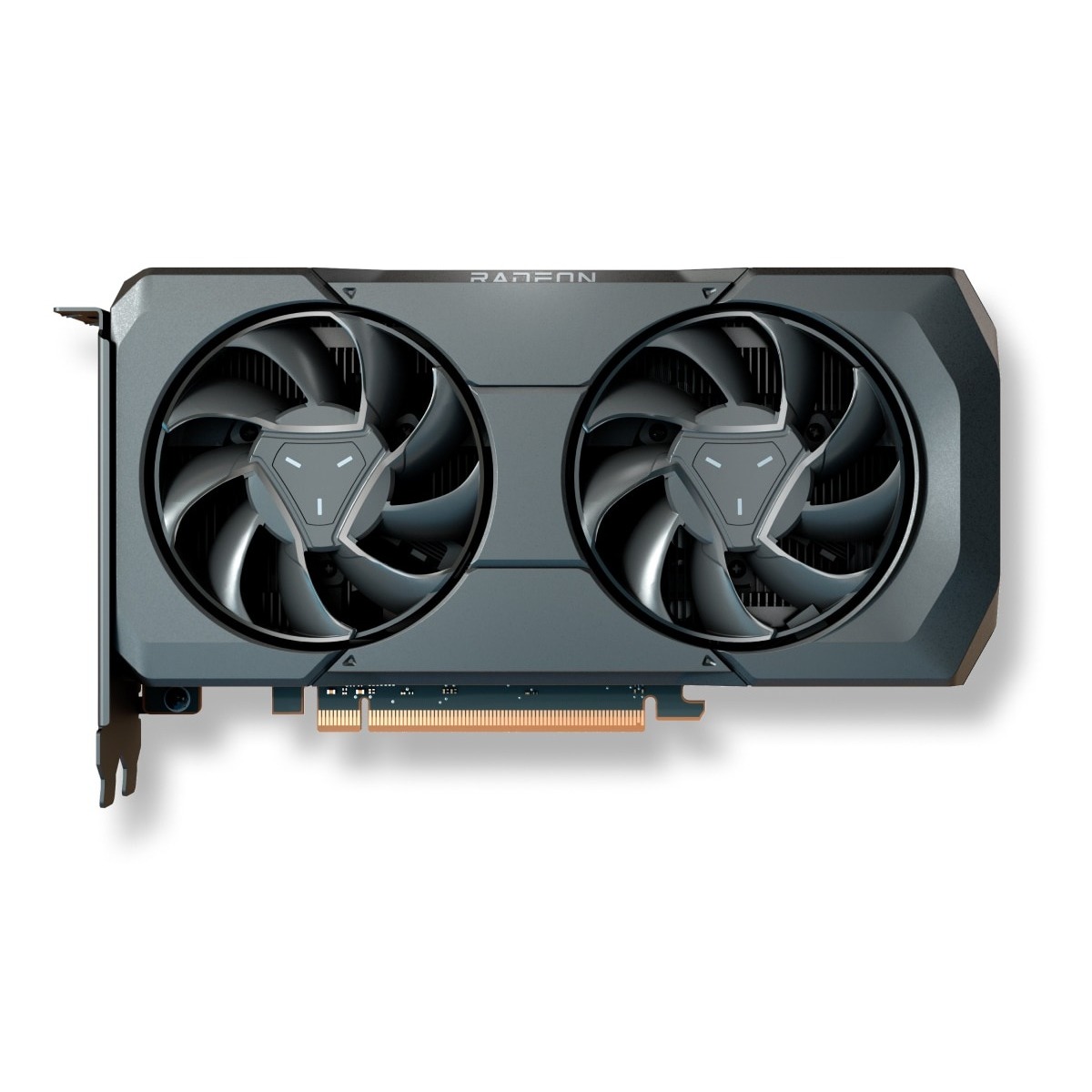
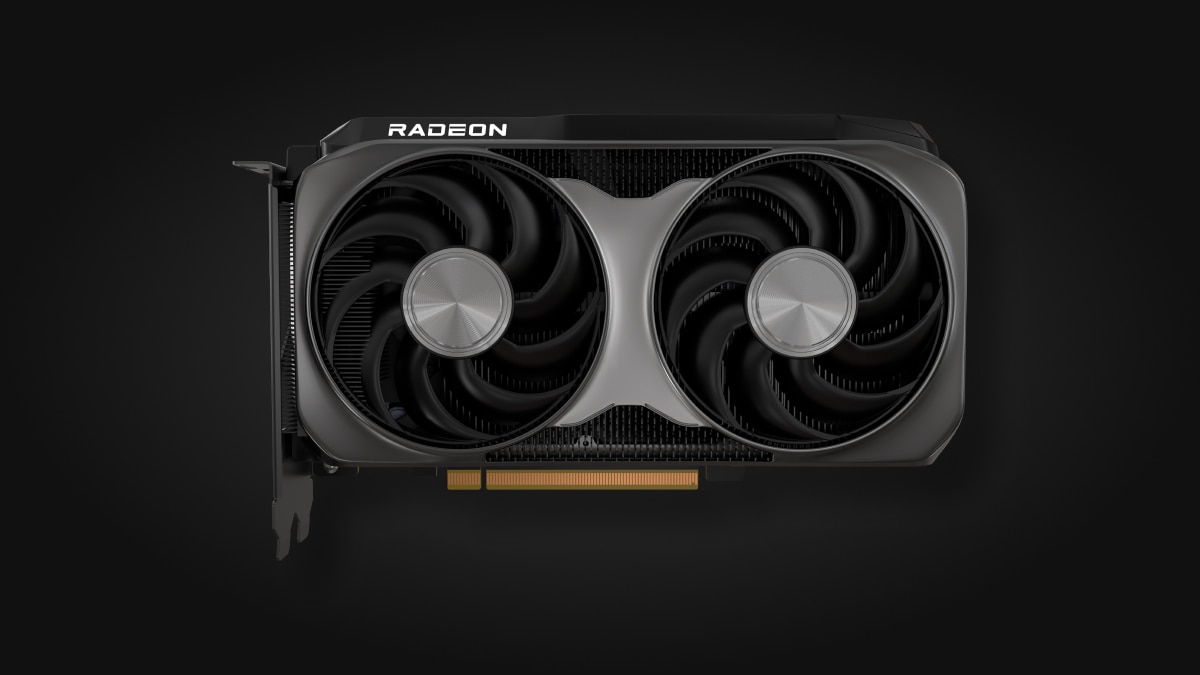
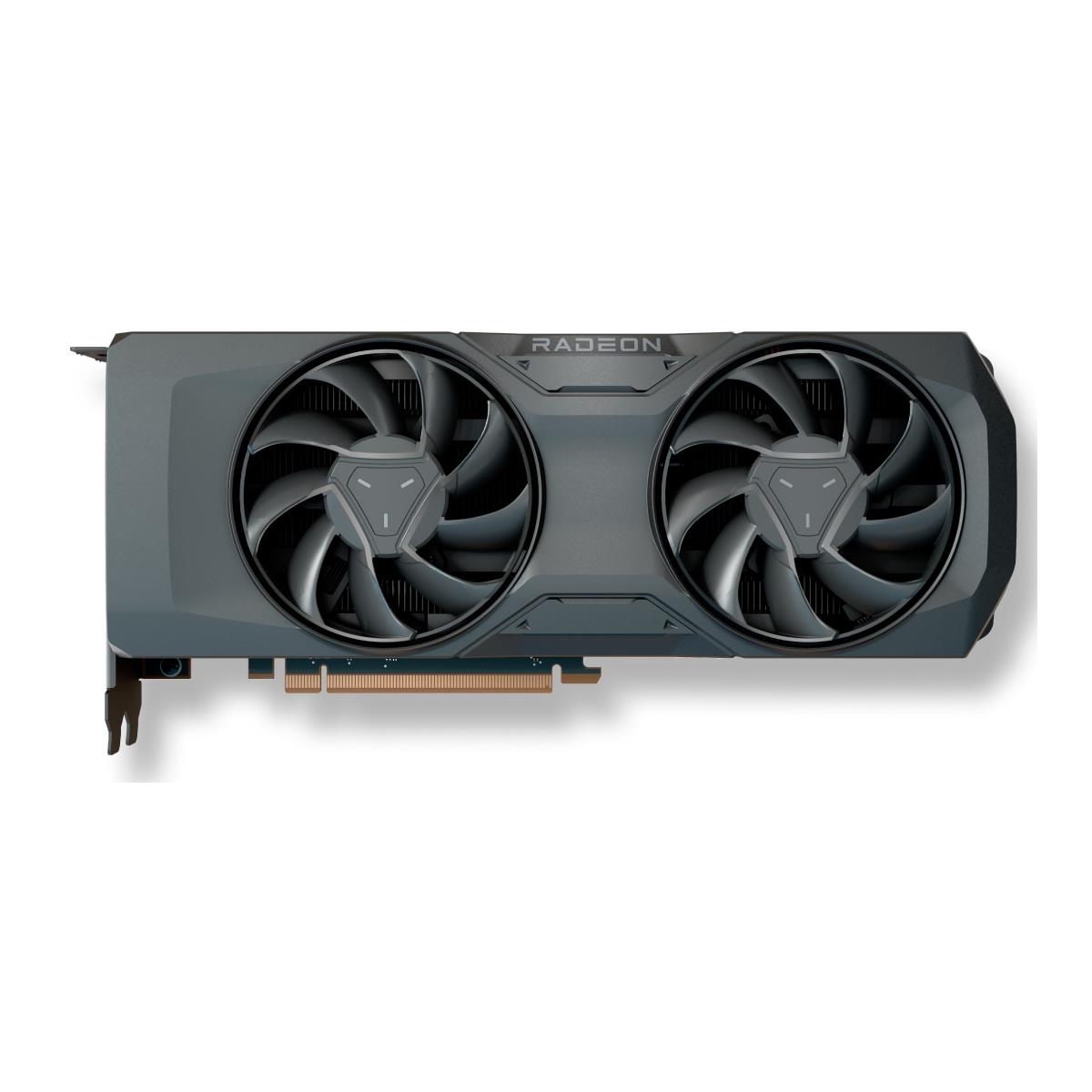
AMD Radeon RX 7900 GRE
A 16 GB GDDR6 graphics card with 80 RDNA 3 compute units, 5,120 stream processors, 64 MB of Infinity Cache, a 260 W typical board power and DisplayPort 2.1, launched by AMD on 27 July 2023.
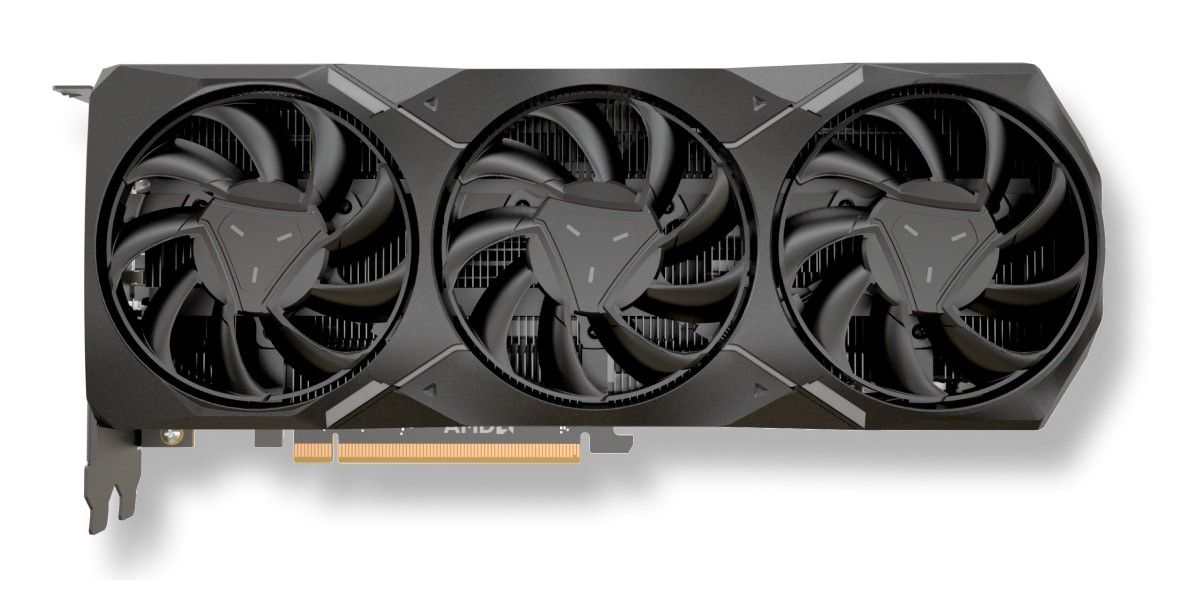
Full Specification Sheet
| Series | Radeon RX 7000 Series (AMD RDNA 3 architecture) |
|---|---|
| Compute Units | 80 |
| Stream Processors | 5120 |
| Ray Accelerators | 80 |
| AI Accelerators | 160 |
| Boost Clock | Up to 2245 MHz |
| Game Clock | 1880 MHz |
| Memory | 16 GB GDDR6, 256-bit |
| Memory Speed | Up to 18 Gbps |
| Memory Bandwidth | Up to 576 GB/s |
| Infinity Cache | 64 MB |
| Typical Board Power | 260 W |
| Power Connectors | 2 x 8-pin |
| Transistors | 54 billion |
| Outputs | DisplayPort 2.1, HDMI 2.1, USB Type-C |
The AMD Radeon RX 7900 GRE is a desktop graphics card from the Radeon RX 7000 Series, built on AMD's RDNA 3 architecture. AMD's product page describes it as a future-ready 16 GB graphics card for 1440p and 4K gaming and gives 27 July 2023 as its launch date. It sits below the Radeon RX 7900 XTX in AMD's lineup and, on the specification sheet, above the Radeon RX 7800 XT that we also cover. This page walks through the figures AMD publishes, explains what each one means for someone choosing a card and leaves out anything the manufacturer page does not state. There are no benchmarks and no test results here. AMD's own page includes a chart of average frames per second in named games together with a footnote describing its test system and a comparison card; those are AMD's marketing measurements, and we do not reproduce them. Every number below is a specification unless it is marked as simple arithmetic. The page shows no price, so none is given.
Compute units and shader hardware
AMD lists 80 compute units, 5,120 stream processors, 80 ray accelerators and 160 AI accelerators. The stream processor count is 64 per compute unit (arithmetic: 80 x 64 = 5,120), and there is one ray accelerator per compute unit and two AI accelerators per compute unit, which is how the RDNA 3 design is organised. Compared with the Radeon RX 7800 XT in our database, which AMD lists at 60 compute units and 3,840 stream processors, the 7900 GRE has a third more compute units. The page also lists peak throughput figures: 46 TFLOPs for single-precision (FP32 vector), 46 TFLOPs for half precision (FP16 vector), 92 TFLOPs for half precision matrix operations, 92 TOPs for 8-bit integer matrix operations and 184 TOPs for 4-bit integer matrix operations. These are theoretical peaks that a game or application will not sustain; they are useful for comparing cards on paper and not for predicting frame rates. The transistor count is listed as 54 billion.
Clocks
AMD gives two clock figures. The boost clock is up to 2,245 MHz, which AMD defines as the maximum frequency achievable on the GPU running a bursty workload, and it varies with thermal conditions and the application. The game frequency is 1,880 MHz, which AMD defines as the expected GPU clock when running typical gaming applications at the typical total graphics power. The gap between them is 365 MHz (arithmetic from AMD's two figures), and the practical clock in a game sits between the two and depends on the individual card, its cooler and the workload. AMD adds that individual results may vary. Board partners sell versions of this GPU with their own coolers and sometimes their own clocks, so a specific product from a partner may list different figures; the numbers on this page are AMD's for the reference specification.
Memory and Infinity Cache
The card has 16 GB of GDDR6 on a 256-bit interface at up to 18 Gbps per pin, which gives up to 576 GB/s of memory bandwidth (arithmetic check: 256 bits x 18 Gbps / 8 = 576 GB/s, matching AMD's figure). AMD adds 64 MB of Infinity Cache, an on-chip cache designed to reduce how often the GPU has to go to the graphics memory, and it lists an effective memory bandwidth of up to 2,250 GB/s. That figure is AMD's combination of the cache and the memory bus, and about 3.9 times the raw memory bandwidth (arithmetic from AMD's two figures); it describes a best case, and the real benefit depends on how well a workload fits in the cache. The 16 GB capacity is the headline for this card. VRAM capacity decides how high you can push texture quality and resolution before a game has to swap data, and 16 GB is more than the 8 GB found on many cards of this era; our guide to 8 GB versus 24 GB of video memory explains how to judge how much you need.
Power and board requirements
AMD lists a typical board power of 260 W for desktop use and an additional power connector configuration of two 8-pin connectors. For comparison, the Radeon RX 7800 XT in our database is listed at 263 W, so the two cards are close in board power despite the difference in compute units. The page does not give a minimum power supply recommendation, a card length, a cooler design or a slot width, and these depend on the board partner's model, so we do not state them here. The board type is listed as a component, meaning AMD is offering it as a graphics component for system builders and board partners. When you connect the two 8-pin power cables, use separate cables for each connector; our guide to GPU power connectors, daisy-chaining and adapters explains why.
Software technologies and upscaling
AMD's list of supported technologies for this card includes AMD Software Adrenalin Edition, AMD FSR, AMD Noise Suppression, AMD Radeon Super Resolution, AMD Smart Access Memory, AMD Privacy View, AMD Radeon Boost, AMD Radeon Anti-Lag, AMD Radeon Image Sharpening, AMD Enhanced Sync, AMD FreeSync, AMD Radeon Chill, AMD Virtual Super Resolution and the Vulkan API. The technologies that matter most for daily use are FreeSync, which matches the monitor's refresh rate to the card's frame rate, and FSR, AMD's upscaling technology, whose hardware requirements and behaviour compared with Nvidia's approach are covered in our explainer on DLSS, FSR and frame generation requirements. Smart Access Memory lets the processor access the card's full memory at once and needs support from the platform, so check your CPU and motherboard.
Display, video and connectivity
The card lists DisplayPort 2.1 and HDMI 2.1, plus a USB Type-C connection. It supports 4K output, hardware decode and encode for H.264, H.265 (HEVC) and AV1, and the page marks all of these as yes. DisplayPort 2.1 is the newer standard and supports higher bandwidth than DisplayPort 1.4, which matters for very high resolutions and refresh rates on monitors that support it; a monitor that only supports older standards will simply run at those. AV1 encoding is relevant for streamers and video creators. The page does not list the number of each connector, so the exact port layout depends on the board partner's design.
Software and operating-system support
AMD lists Windows 11 64-bit, Windows 10 64-bit, Ubuntu x86 64-bit and Linux x86 64-bit as supported operating systems. Drivers and the Adrenalin Edition software are provided on AMD's site, and AMD's page also mentions HYPR-RX profiles, which turn on a suite of features in one click. The Radeon RX 7900 GRE is designed around the RDNA 3 architecture like the rest of the 7000 series.
Where it fits in our database
The nearest relatives in our database are the Radeon RX 7800 XT below it and the Radeon RX 7900 XTX above it; put the 7900 GRE next to the 7800 XT in our side-by-side comparison, or read the entry for the flagship Radeon RX 7900 XTX. Browse every card in the graphics card category. The values on this page are all AMD's stated specifications and not results from our own testing.
What the page does not say
AMD's page does not state a price, a recommended power supply, a card length, a slot count, a cooler or memory temperature, and it gives no results measured by us. Plan the power supply and case around the partner model you actually buy, and read partner specifications for length and cooling; for the power supply, our guide to how much PSU wattage you need is a starting point.