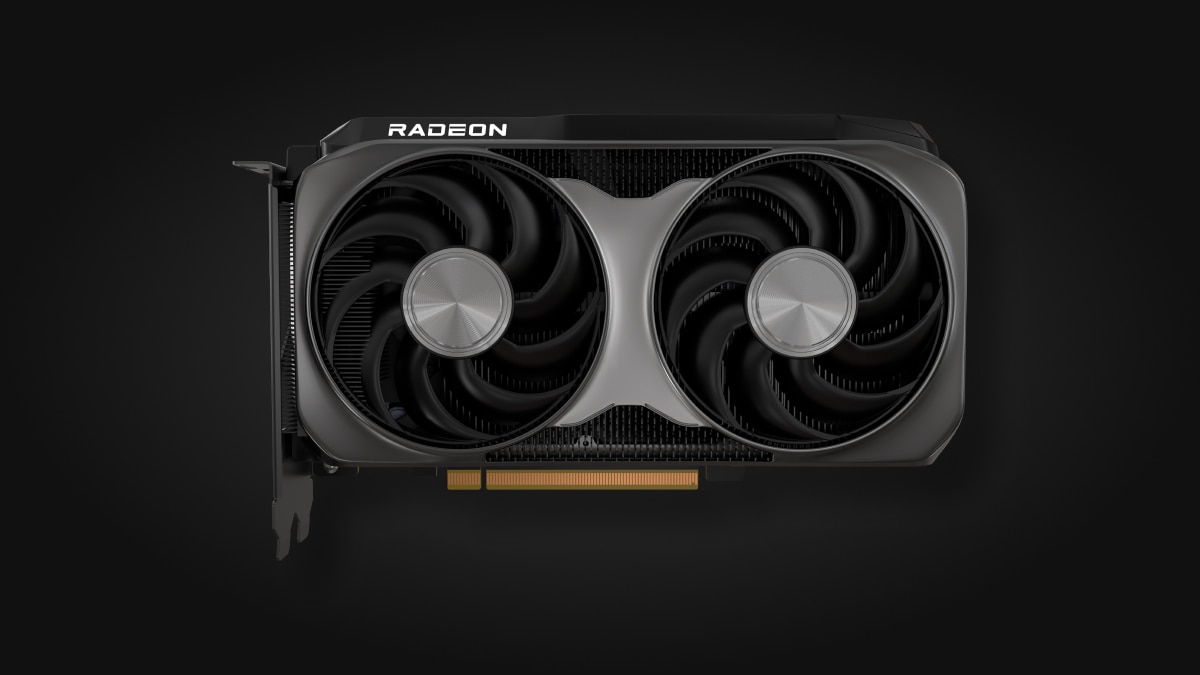
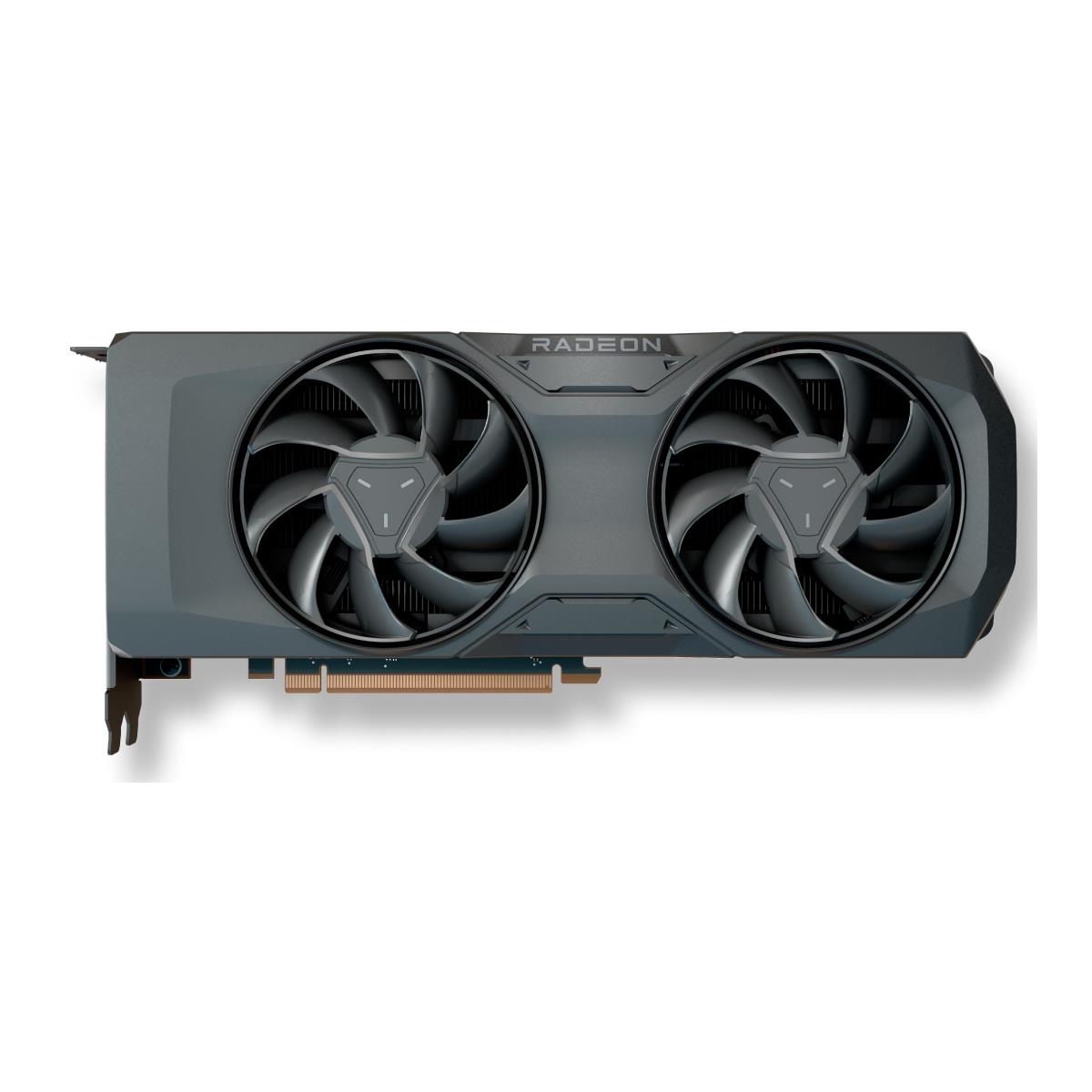
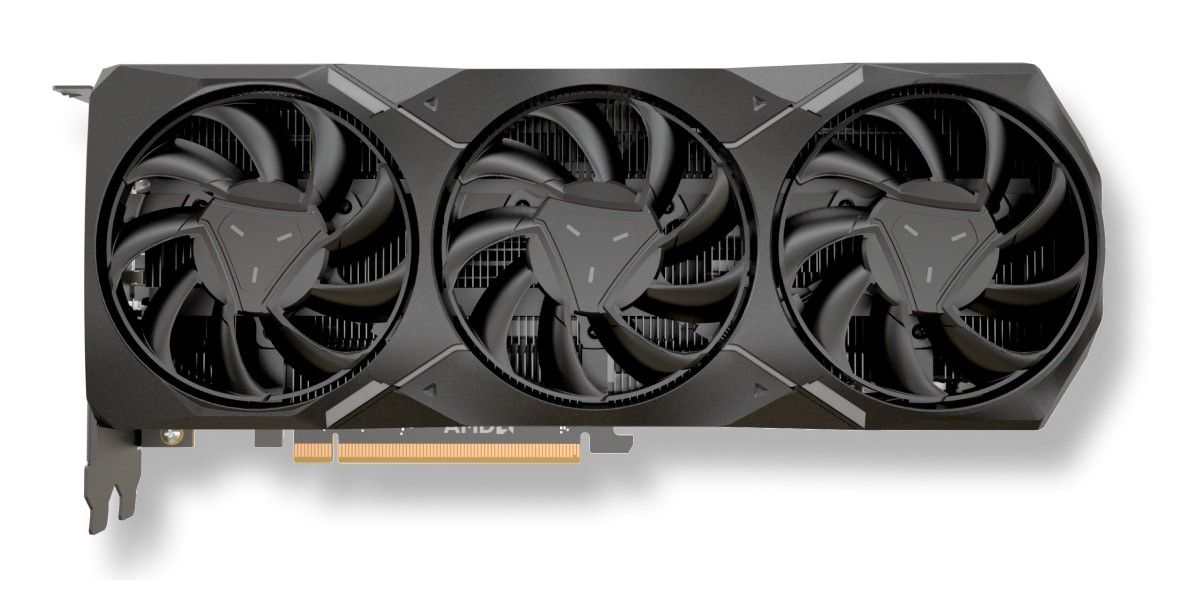
AMD Radeon RX 7600 XT
A Radeon RX 7000 Series card with 32 compute units, 2048 stream processors, 16 GB of GDDR6 on a 128-bit bus, 32 MB of Infinity Cache, a 190 W typical board power and two 8-pin connectors.
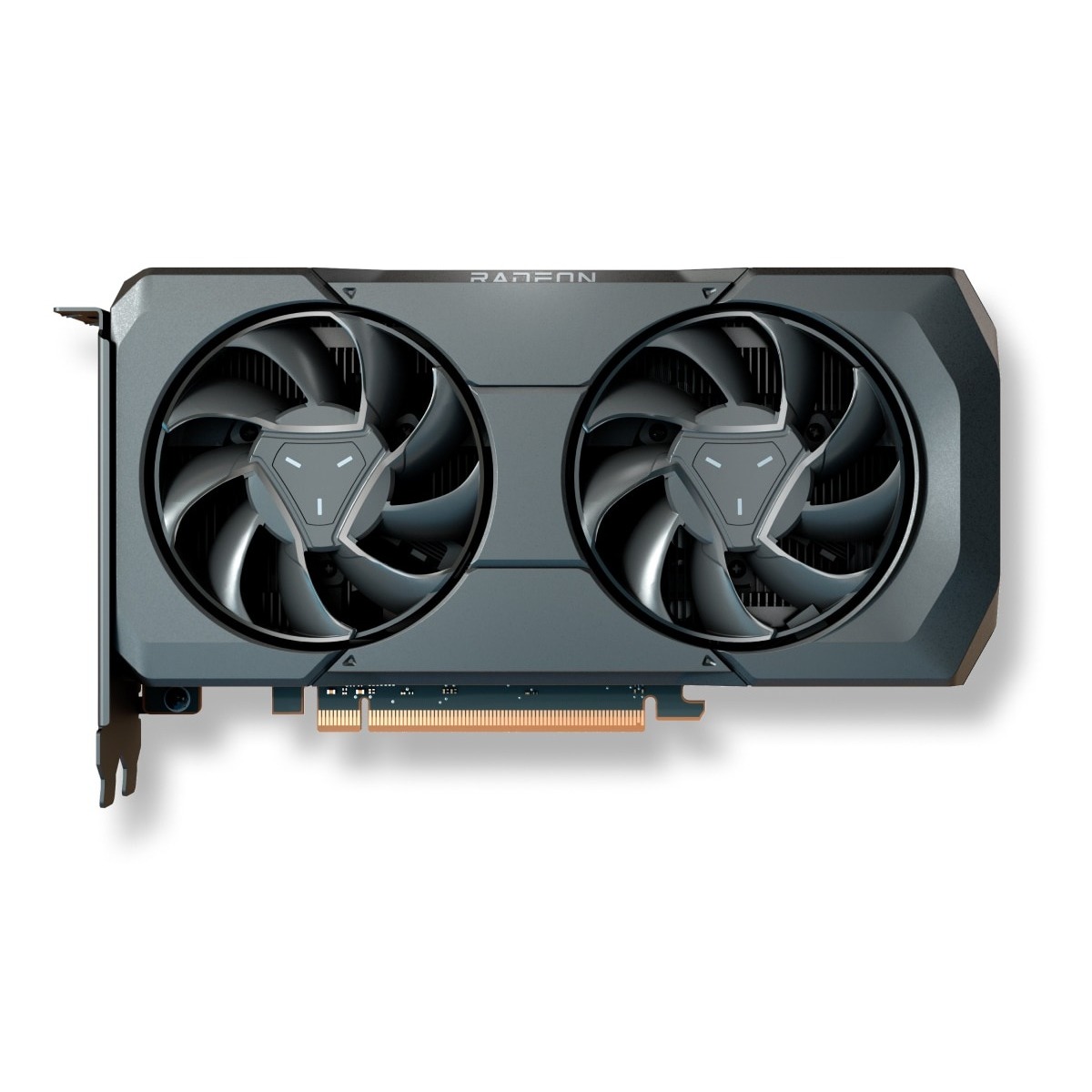
Full Specification Sheet
| Series | Radeon RX 7000 Series (AMD RDNA 3) |
|---|---|
| Compute Units | 32 |
| Stream Processors | 2048 |
| Ray Accelerators | 32 |
| AI Accelerators | 64 |
| ROPs | 64 |
| Texture Units | 128 |
| Boost Clock | Up to 2755 MHz |
| Game Clock | 2470 MHz |
| Memory | 16 GB GDDR6, 128-bit |
| Memory Speed | Up to 18 Gbps |
| Memory Bandwidth | Up to 288 GB/s (effective up to 477 GB/s with Infinity Cache) |
| Infinity Cache | 32 MB |
| Peak Pixel Fill-Rate | Up to 176.3 GP/s |
| Peak Texture Fill-Rate | Up to 352.6 GT/s |
| Peak FP32 | 22.6 TFLOPs |
| Peak FP16 (Matrix) | 45.1 TFLOPs |
| Peak INT8 (Matrix) | 45.1 TOPs |
| Transistors | 13.3 billion |
| Typical Board Power | 190 W |
| Power Connectors | 2 x 8-pin |
| Minimum PSU Recommendation | 600 W (12 V output 42 A) |
| Outputs | DisplayPort 2.1, HDMI 2.1 |
| Length / Slots | 241 mm / 2 slots |
| Media Engine | AV1, H.265/HEVC and H.264 encode and decode (4K) |
The AMD Radeon RX 7600 XT is a desktop graphics card in the Radeon RX 7000 Series, built on AMD's RDNA 3 design. AMD describes it as designed for next-generation gaming and streaming experiences, and the specification makes its most distinctive point clear: it pairs a mid-range 32-compute-unit graphics chip with 16 GB of GDDR6 memory, twice the capacity of the plain Radeon RX 7600 that sits just below it. The manufacturer's page lists no price and no launch date, so this entry gives neither. What follows is a reading of AMD's published numbers, with a few labelled calculations, written for people deciding whether a 16 GB card at this tier makes sense for their games and their power supply. We have not tested the card ourselves.
Compute resources
AMD lists 32 compute units, 2048 stream processors, 32 ray accelerators and 64 AI accelerators, with 128 texture units and 64 ROPs. The boost clock is up to 2755 MHz and the game clock is 2470 MHz. AMD's footnotes explain the terms: the boost clock is the maximum frequency achievable on the GPU running a bursty workload, and the game clock is the expected clock when running typical gaming applications at typical total graphics power; both vary with thermal conditions and the application. The transistor count is 13.3 billion. If the naming of these tiers is unclear, our guide on GPU naming tiers explains how the XT suffix is used inside a generation.
Do the throughput numbers agree?
AMD lists a peak pixel fill rate of up to 176.3 GP/s and a peak texture fill rate of up to 352.6 GT/s. Multiplying the 64 ROPs by the 2755 MHz boost clock gives 176.3 GP/s, and multiplying the 128 texture units by the same clock gives 352.6 GT/s, so both figures follow directly from the page's own unit counts and clock. The peak single-precision figure of 22.6 TFLOPs is consistent with 2048 stream processors at 2755 MHz if each is counted as four floating-point operations per clock; that factor is our reading of how AMD counts, and the page does not state it. The page also lists 45.1 TFLOPs for FP16 matrix work, 45.1 TOPs for INT8 matrix work and 90.2 TOPs for INT4 matrix work. These are theoretical peaks that show the hardware's ceiling and do not predict how a particular game performs.
Memory subsystem
The card carries 16 GB of GDDR6 on a 128-bit interface at up to 18 Gbps. Multiplying 18 Gbps by 128 bits and dividing by eight gives 288 GB/s, matching AMD's memory bandwidth figure exactly. AMD adds a 32 MB Infinity Cache and quotes an effective memory bandwidth of up to 477 GB/s, a combined figure that mixes the cache and the raw bus and should be read as a marketing-style peak, not a sustained rate. The memory capacity is what defines this model. A 128-bit bus does not change with capacity, so 16 GB does not make the card faster by itself; what it does is give games with large texture sets and creative applications more room before they have to spill into system memory. Our explainer on how much video memory you need covers when that headroom matters and when it does not.
Power, cooling and physical size
The typical board power is 190 W. AMD lists two 8-pin additional power connectors, a card length of 241 mm and a two-slot thickness. The recommended minimum power supply is 600 W with 42 A on the 12 V output, and AMD's footnote says the figure is based on a PC configured with a Ryzen 9 5900X processor plus typical power requirements of other components, so a more modest system may need less and a more demanding one more. The page describes the board type as a component and the dimensions as those of the reference design, and board partners build their own versions whose length, thickness and connectors may differ. Measure your case before buying, and if your power supply has fewer 8-pin cables than you need, read our note on daisy-chaining and adapters before reaching for a splitter.
Display outputs and media features
The listed outputs are DisplayPort 2.1 and HDMI 2.1, and the page lists no USB Type-C output. AMD states 4K support through HDMI and lists 4K decode and encode for H.264 and H.265/HEVC as well as AV1 decode and encode. The supported-technology list includes AMD Software Adrenalin Edition, FSR, Fluid Motion Frames, HYPR-RX and HYPR-RX Eco, Noise Suppression, Radeon FRTC, Radeon Super Resolution, Smart Access Memory, Smart Access Video, Privacy View, Radeon Boost, Radeon Anti-Lag, Radeon Image Sharpening, Enhanced Sync, FreeSync, Radeon Chill and Virtual Super Resolution. As AMD says, certain technologies may not be enabled in every operating system environment, so confirm with the system maker where it matters. Supported operating systems are Windows 11 and Windows 10 in 64-bit editions, Ubuntu and other 64-bit Linux.
Where it sits in our database
The closest relative in our database is the Radeon RX 7600, which lists the same 32 compute units, 2048 stream processors, 128-bit bus, 18 Gbps memory speed, 288 GB/s bandwidth and 32 MB of Infinity Cache, but 8 GB of memory, a boost clock of up to 2655 MHz, a 165 W typical board power, one 8-pin connector, a 550 W power supply recommendation and a 204 mm, two-slot design. Set against it, the 7600 XT doubles the memory, raises the boost ceiling by 100 MHz (2755 against 2655), adds 25 W of board power (190 against 165), asks for 50 W more from the power supply (600 against 550) and needs a second 8-pin connector, all arithmetic from the two pages. Above it sits the Radeon RX 7700 XT with 54 compute units, 12 GB on a 192-bit bus and a 245 W board power. You can read the 7600 XT against that card in our comparison of the RX 7600 XT and the RX 7700 XT, and the whole graphics card category is available for wider browsing.
What the page does not say
AMD's page does not list a price, a launch date, the die size, the process node or the display-engine details beyond the connector versions. It also shows a bar chart of average frame rates at 1080p and 1440p in ten games, with a footnote describing testing by AMD's performance labs in December 2023 on a Ryzen 5 7600X system using FSR upscaling and frame-generation settings that vary by title. We deliberately leave those numbers out. They are the manufacturer's own results on one configuration with upscaling enabled, they are not independent, and they would age as drivers change. Use this entry to check the facts that decide whether the card fits: the two 8-pin connectors, the 600 W recommendation, the 241 mm length and the 16 GB capacity. Then look for independent testing that matches your monitor and your games.