AMD Radeon RX 7900 XTX
AMD's 24 GB RDNA 3 flagship, built from a graphics die and six cache dies for 4K gaming.
Full Specification Sheet
| Stream Processors | 6,144 (96 Compute Units) |
|---|---|
| Memory | 24 GB GDDR6 |
| Memory Bandwidth | up to 960 GB/s |
| Boost / Game Clock | up to 2.5 GHz / 2.3 GHz |
| Infinity Cache | 96 MB |
| Board Power | 355 W (2x 8-pin) |
| Outputs | DisplayPort 2.1, HDMI 2.1, USB Type-C |
| Architecture | RDNA 3 (chiplet design) |
The AMD Radeon RX 7900 XTX is the top desktop graphics card of the Radeon RX 7000 series, launched on 13 December 2022 together with the RX 7900 XT. It uses the RDNA 3 architecture and is aimed at gaming at 4K resolution and above, where the combination of 96 compute units, 24 GB of memory and a very large cache is meant to keep frame rates high without depending on the smallest possible memory footprint. This page walks through what the specification means in practice so that you can judge whether the card matches your monitor, your case and your power supply.
A chiplet graphics card
The most unusual thing about the card is how the processor is built. Instead of a single monolithic die, the Navi 31 design uses a multi-chip module of seven dies: one graphics compute die made on TSMC's 5nm process and six memory cache dies. Together they hold around 58 billion transistors. The compute die contains the shader units, ray accelerators and AI accelerators, while the cache dies hold the 96 MB of AMD Infinity Cache and carry the memory interface. Splitting the design lets AMD apply the newest process only where it pays off and keeps the memory-related circuitry on a cheaper node. For the buyer, the visible effect is a card that delivers a high transistor count without the cost and yield problems of one enormous die.
Core specifications
The card has 96 compute units with 6,144 stream processors, 96 ray accelerators and 192 AI accelerators. Clock speeds are listed as a game frequency of 2300 MHz and a boost frequency of up to 2500 MHz. Its peak single-precision throughput is 61.4 TFLOPs, and the fill rates are up to 480 gigapixels per second and 960 gigatexels per second, supported by 192 ROPs and 384 texture units. AMD lists peak half-precision matrix performance of 123 TFLOPs, which is relevant for AI-related workloads on the card. These figures describe peak capability rather than game performance, since real results depend on the game engine, resolution and settings.
Memory subsystem
The card carries 24 GB of GDDR6 running at up to 20 Gbps, for up to 960 GB/s of memory bandwidth. Alongside that sits the 96 MB Infinity Cache, which AMD quotes as giving an effective bandwidth of up to 3500 GB/s. The reason for a large last-level cache is simple: every request served from the cache is a request that does not have to travel to the memory chips, which saves power and time. The large 24 GB pool is the other strength of the card. High-resolution textures, ray tracing data and creative workloads such as large video projects or 3D scenes can exceed the memory of smaller cards, and having headroom means fewer slowdowns from data being swapped in and out.
Display, video and features
On the connectivity side, the card supports DisplayPort 2.1 and HDMI 2.1, plus a USB Type-C output. The newer DisplayPort standard is designed for very high resolutions and refresh rates, which matters if you plan to use a modern high-refresh 4K or ultrawide monitor. The media engine supports decode and encode for H.264, H.265/HEVC and AV1, which is important for streamers and video editors who want efficient recording. On the software side, AMD lists FSR upscaling, Smart Access Memory, Radeon Anti-Lag, Radeon Boost, Radeon Chill, FreeSync, Virtual Super Resolution and the Adrenalin Edition driver suite, including HYPR-RX profiles that enable a set of features in one click.
Power, size and cooling
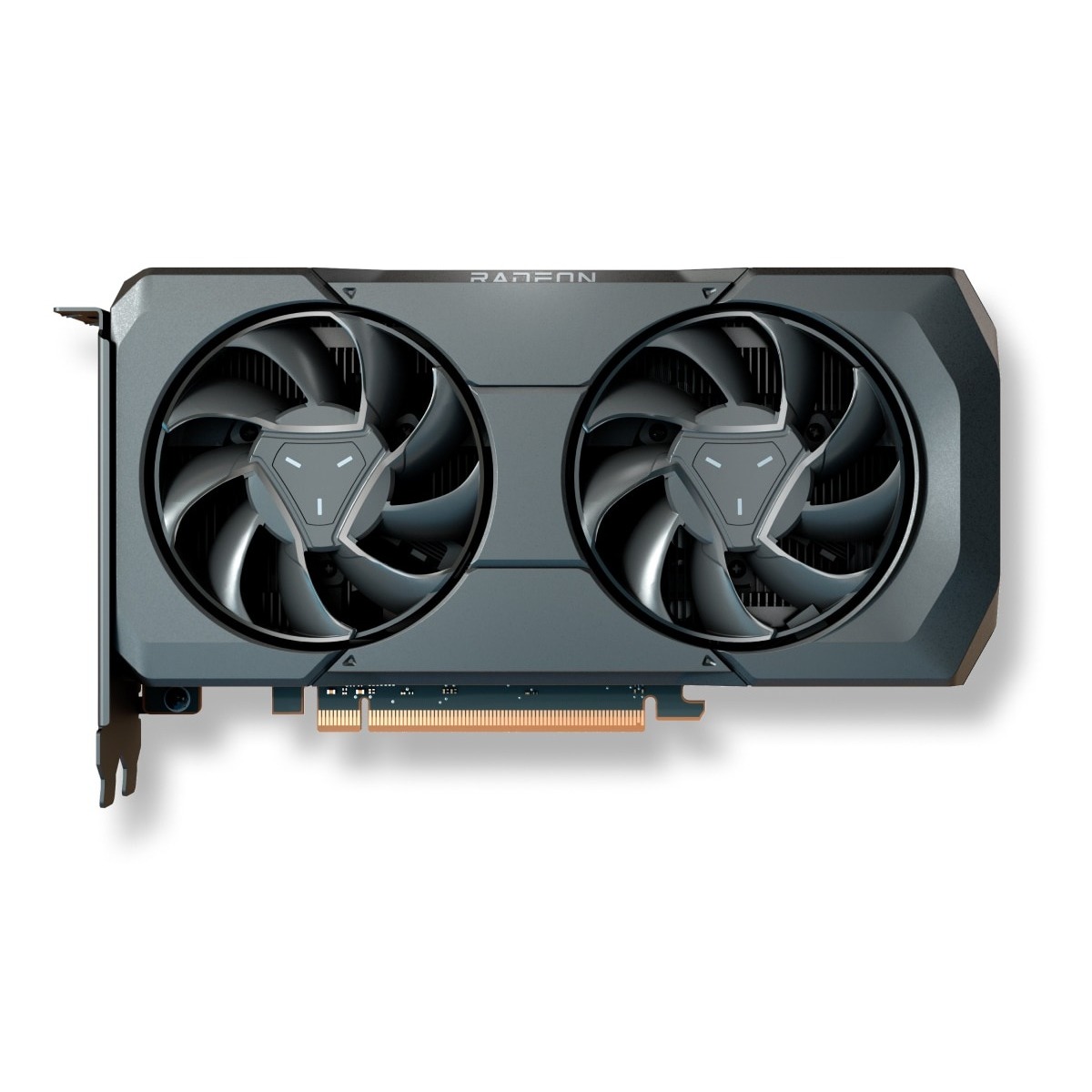
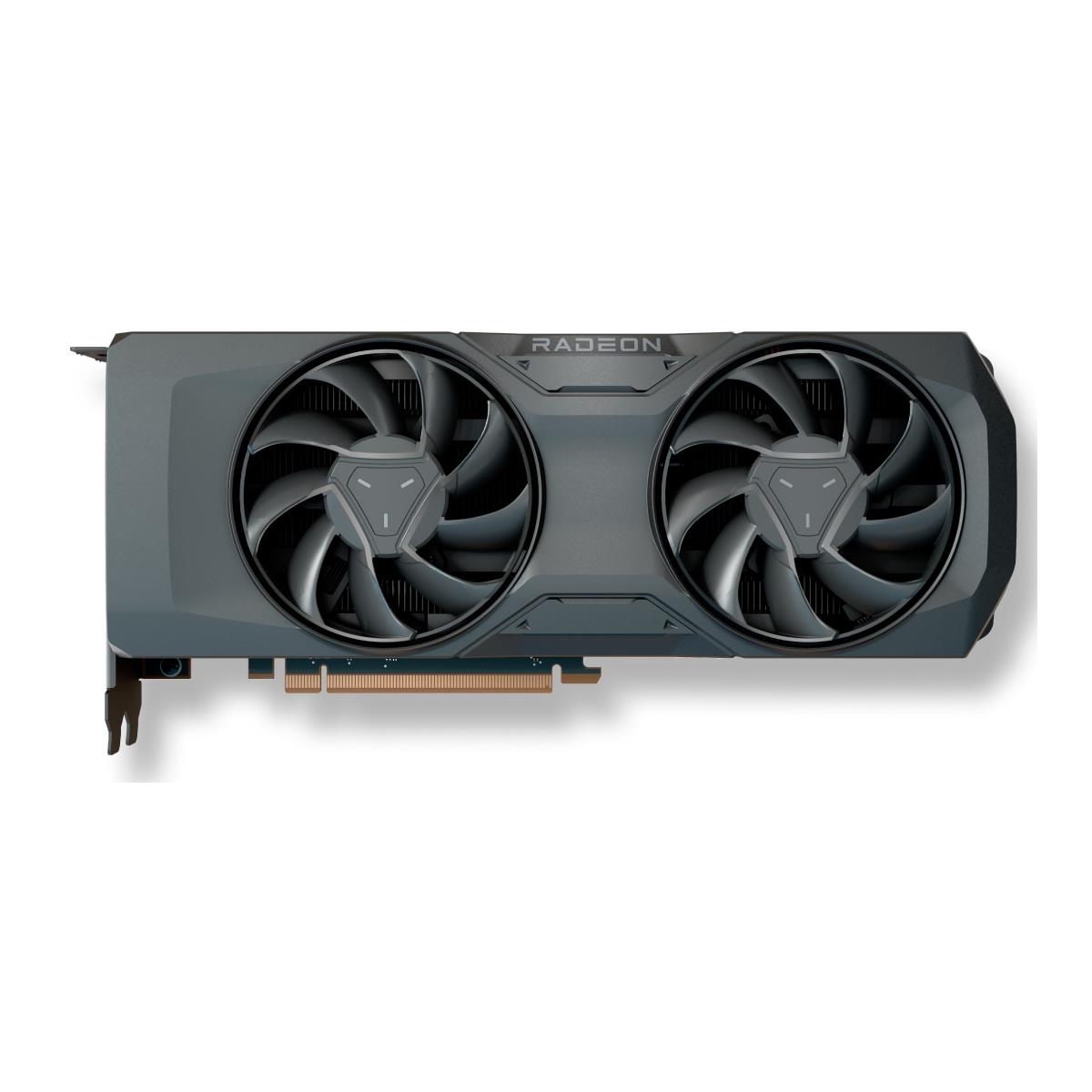
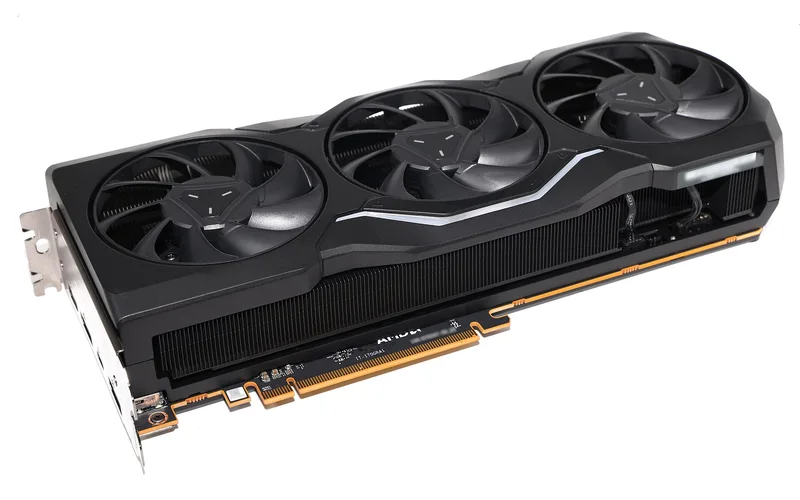
The typical board power is 355 W, and the card uses two 8-pin power connectors. AMD recommends a power supply of at least 800 W with a 12 V output above 65 A, a figure based on a system with a Ryzen 9 5900X processor plus typical components; your own system may need more or less. Our guide to PSU wattage explains how to add up the components and why the graphics card dominates the calculation. The reference design is 287 mm long and occupies 2.5 slots, so check case clearance, especially in compact cases where the card may be close to the front fan mount. Partner cards from other manufacturers vary in length, thickness and cooler design, so confirm the dimensions of the exact model you plan to buy.
Buyers should also be aware of some early-life notes. Soon after launch, some users reported high idle power draw with certain high-refresh or multi-monitor setups, and AMD addressed this in later driver releases. AMD also acknowledged a vapor-chamber manufacturing issue in a small batch of reference coolers and offered replacements. Both points underline a general rule with new hardware: install the latest driver, check the manufacturer's support page and choose a model from a retailer with a clear return policy.
Who should buy it
The RX 7900 XTX suits gamers who want to play at 4K or on high-refresh ultrawide monitors, creators who need a large memory pool, and enthusiasts who prefer a large frame buffer over the newest proprietary upscaling features. If your target is 1080p or 1440p gaming at moderate settings, a smaller card will do the job for less money and power; our value guide comparing a flagship and a midrange card explores that trade-off, and the Radeon RX 6600 XT page shows what a modest card offers. For a head-to-head with the other flagship in our database, open the RX 7900 XTX against the GeForce RTX 4090 page and the GeForce RTX 4090 review. The full graphics card catalogue lists every model we cover.
Verdict
The Radeon RX 7900 XTX is a large, power-hungry card with a generous 24 GB of memory, a huge cache and modern display outputs. It is best matched with a spacious case, a robust power supply, a high-resolution monitor and a processor that will not hold it back. If those conditions apply, its specification sheet shows a card built for demanding gaming and creative work; if they do not, a smaller card is likely a better fit. Compare the specifications above with your needs, verify the physical dimensions of the specific model, and use the latest drivers to get the most from it.
Photo: Geni / Wikimedia Commons, CC BY-SA 4.0.