RTX 4090 vs RX 6600 XT: Why Comparing Them by Price-Per-Frame Misses the Point
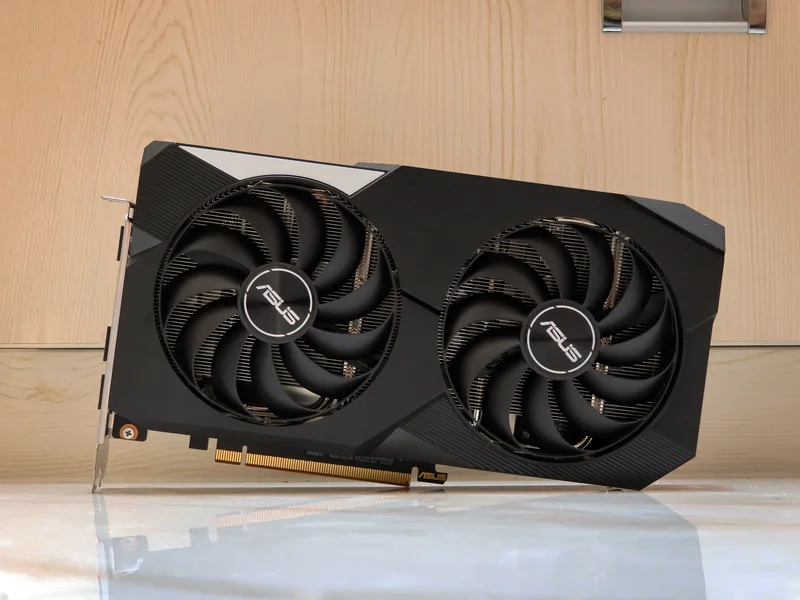
Put the GeForce RTX 4090 and the Radeon RX 6600 XT side by side on a spec sheet and the temptation is to reach for a single price-per-frame number and call it a day. That comparison is technically possible and almost entirely useless, because these two cards were never built to solve the same problem, and understanding why is more useful than any single benchmark chart.
The RTX 4090 exists to answer one question: what is the fastest GPU money can buy for native 4K gaming with ray tracing enabled. Its 16,384 CUDA cores, 24GB of GDDR6X memory on a 384-bit bus, and 450W of power budget are all sized around that specific, extremely demanding target. The RX 6600 XT exists to answer a completely different question: how do you drive a 1080p monitor at a comfortable frame rate without spending flagship money, and its 2,048 stream processors, 8GB of GDDR6 on a 128-bit bus, and 160W power draw are sized around that much more modest, much more common target.

Memory capacity is the clearest illustration of why matching resolution to card matters more than matching cards to each other. 24GB on the 4090 is not excess for its target use case — at native 4K with high-resolution texture packs and ray tracing enabled, VRAM usage climbs fast, and running short triggers stuttering that no amount of core performance can fix. 8GB on the RX 6600 XT is not a limitation for its target use case either — at 1080p, where this card genuinely lives, 8GB comfortably covers even demanding modern titles. The "problem" only appears if you try to run the 6600 XT at 4K or the 4090 at 1080p, and neither scenario reflects how either card is actually meant to be used.
Power infrastructure is where the practical decision often actually gets made before a single frame is rendered. The RTX 4090's 450W draw demands a genuinely high-quality 850W-plus power supply and a case with real airflow to keep thermals in check under sustained load. The RX 6600 XT's 160W draw is forgiving of far more modest power supplies and works comfortably in smaller, quieter cases where a 450W card's cooler would have nowhere to exhaust heat properly. For a small-form-factor build, the 6600 XT is not a compromise pick — it is frequently the only sensible pick.
So how should a buyer actually choose? Start with the monitor, not the GPU. A 1080p, 144Hz-or-lower monitor gains essentially nothing from a 4090 that a well-tuned 6600 XT cannot already deliver in the vast majority of titles, particularly competitive and esports games where both cards can exceed the monitor's refresh ceiling. A 4K monitor, especially one with a high refresh rate and ray tracing ambitions, is a completely different story — that is squarely 4090 territory, and a 6600 XT paired with a demanding 4K panel will spend most of its time compute-limited rather than display-limited.
The second question is how long you intend to keep the card. Buyers who upgrade GPUs every generation can lean toward whichever card fits this generation's resolution target without over-thinking future-proofing. Buyers who plan to keep a card for four-plus years benefit disproportionately from extra headroom — a 4090's 24GB buffer ages far more gracefully as game texture budgets grow than an 8GB card can, even at resolutions below its natural ceiling.
The honest conclusion: this is not really an "either/or" comparison at all. It is two answers to two different questions, and the right move is picking the question that actually matches your monitor, your case, your power supply, and how long you plan to keep the build — not chasing whichever card wins an out-of-context benchmark chart.
Upscaling technology narrows the practical gap between these two cards more than raw specs suggest, and it is worth factoring into the decision directly. Modern upscaling lets a GPU render at a lower internal resolution and reconstruct a sharper final image, meaning a 1440p or even 4K target becomes far more achievable on the RX 6600 XT than native benchmarks alone would suggest, while the RTX 4090 uses the same category of technology to push already-high 4K frame rates even higher, particularly with ray tracing enabled. Neither card should be judged purely on native-resolution numbers anymore.
Case size and total build cost ripple outward from this GPU decision more than buyers often expect going in. A 4090-class build typically needs a larger case, a more robust power supply, and a case with genuine airflow to keep a 450W card cool and quiet — costs that add up well beyond the GPU's own price tag. A 6600 XT-class build can comfortably fit in a smaller, quieter, less expensive case and power supply, which is part of why this card remains a popular choice for small-form-factor builds specifically, not just a budget compromise.
A common follow-up question: is it better to buy a mid-range card now and upgrade again sooner, or stretch the budget for a flagship and hold longer? There is no universally correct answer, but the honest framework is this: buyers who enjoy upgrading regularly and chasing the newest releases lose relatively little by buying mid-range now and upgrading again in a couple of years. Buyers who prefer to build once and not think about it again for four-plus years get disproportionately more value from stretching toward the flagship tier, since extra VRAM and compute headroom age far more gracefully than a card already near its ceiling at launch.
The bottom line: match the card to your monitor's actual resolution and refresh rate, your case's realistic airflow and size budget, and how long you genuinely intend to keep the build — not to a single cross-tier benchmark chart that was never built to answer the question you are actually asking.
One last practical note: monitor technology itself — specifically variable refresh rate support like G-Sync or FreeSync — narrows the practical gap between these two cards further still, since a smooth variable refresh rate experience reduces how strictly a system needs to hit a fixed high frame rate target to feel responsive, giving the more modest card an even easier time delivering a genuinely satisfying experience at its intended resolution.
Finally, remember that display technology itself keeps evolving alongside GPU generations, and a monitor purchase made alongside either of these cards deserves the same careful thought as the GPU decision itself — a mismatched pairing, such as a low-refresh 1080p panel bought alongside a 4090, wastes a meaningful share of that card's actual capability regardless of how well the rest of the build is specified.