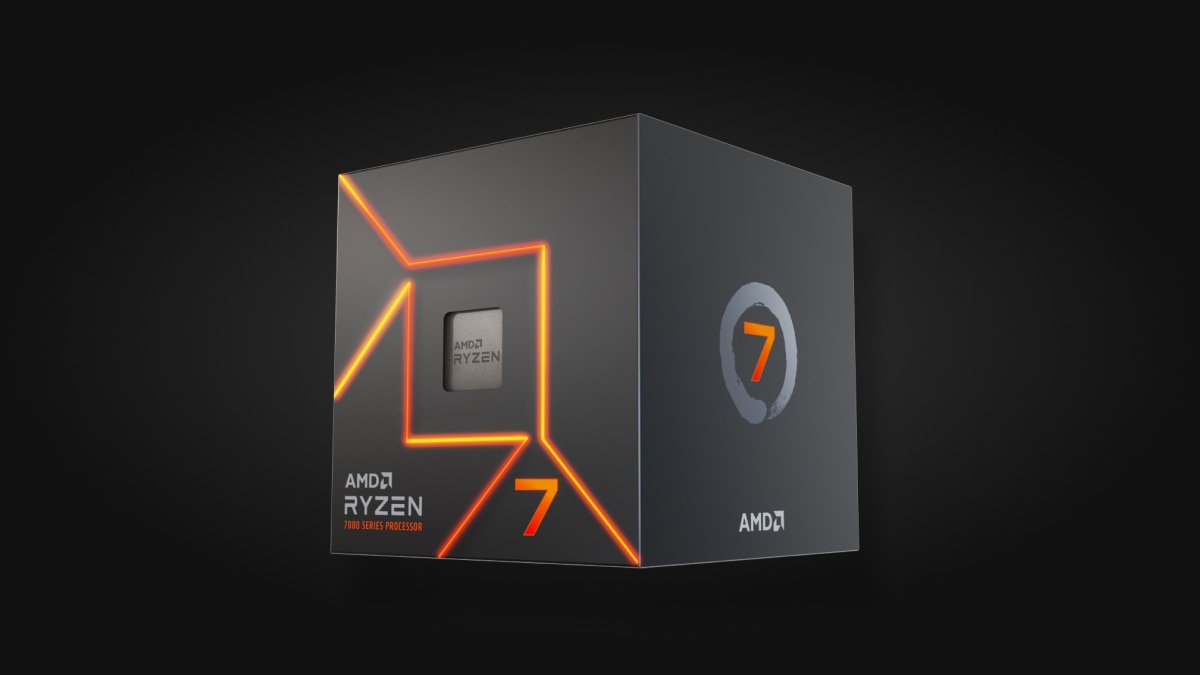
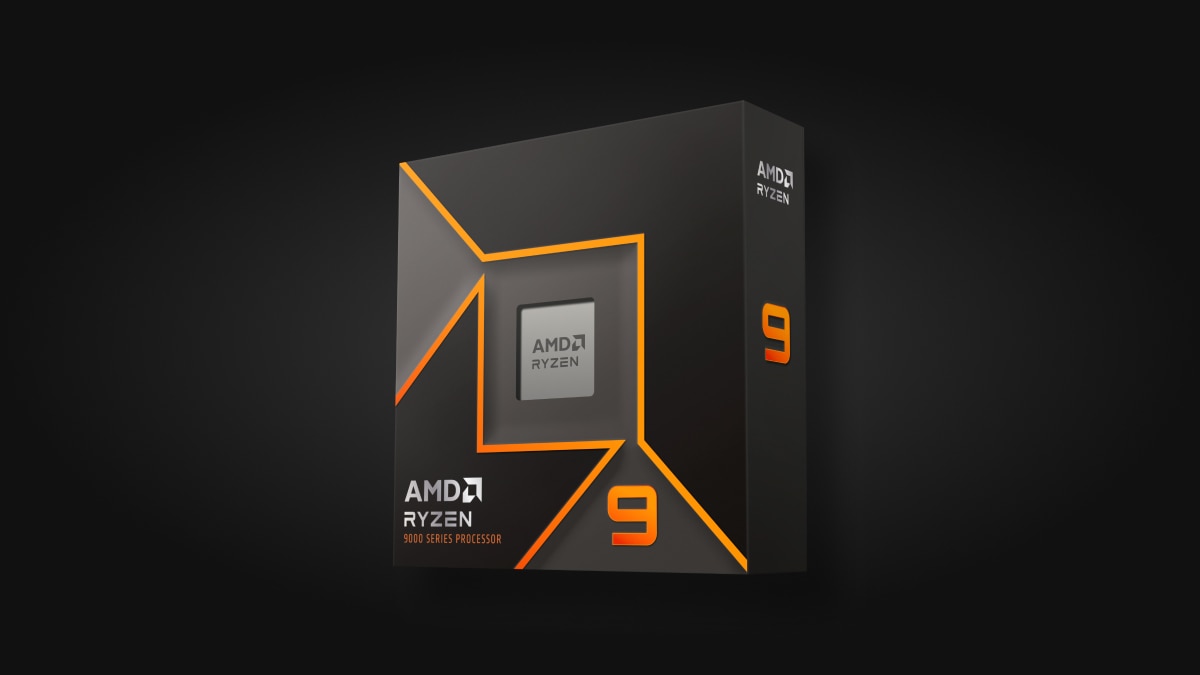
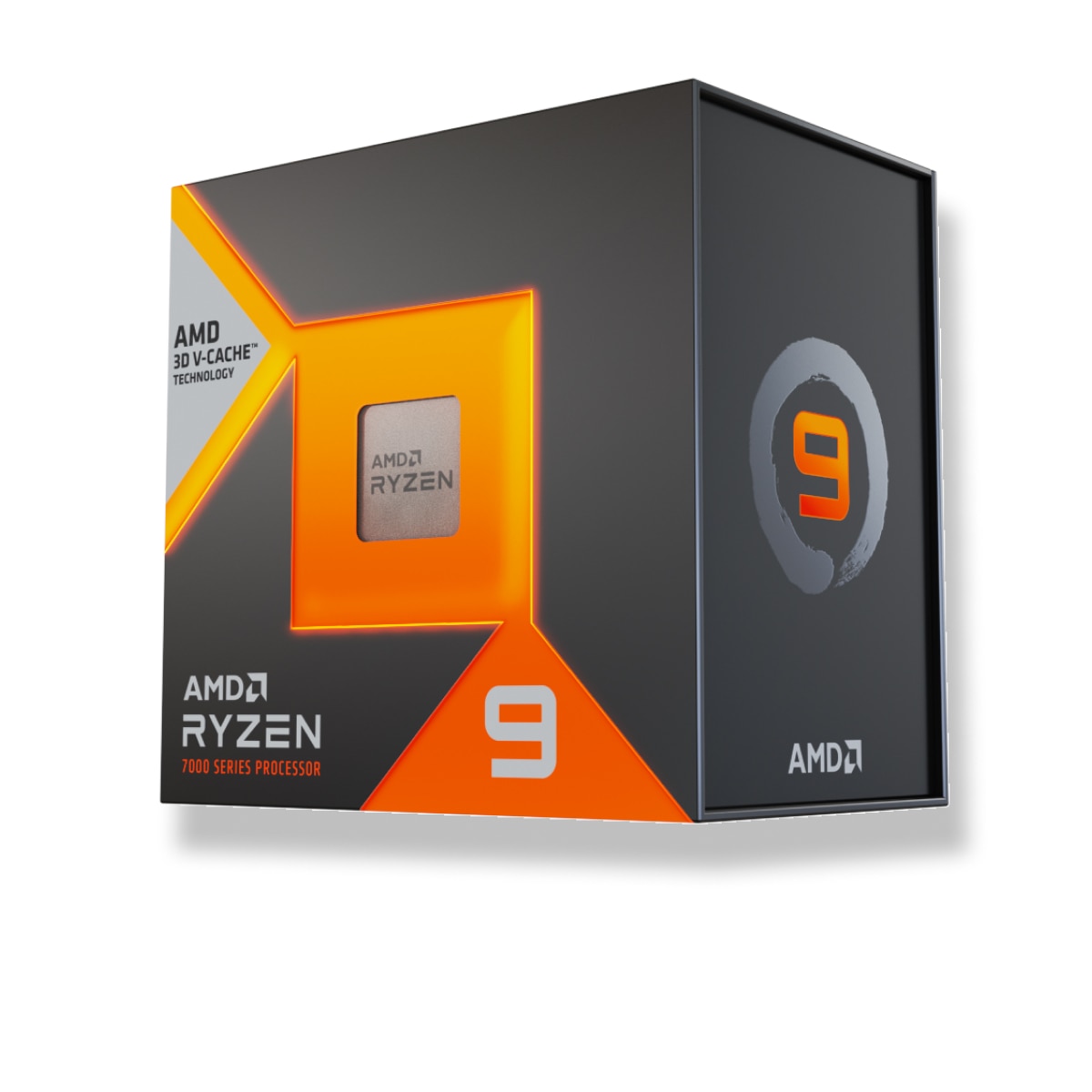
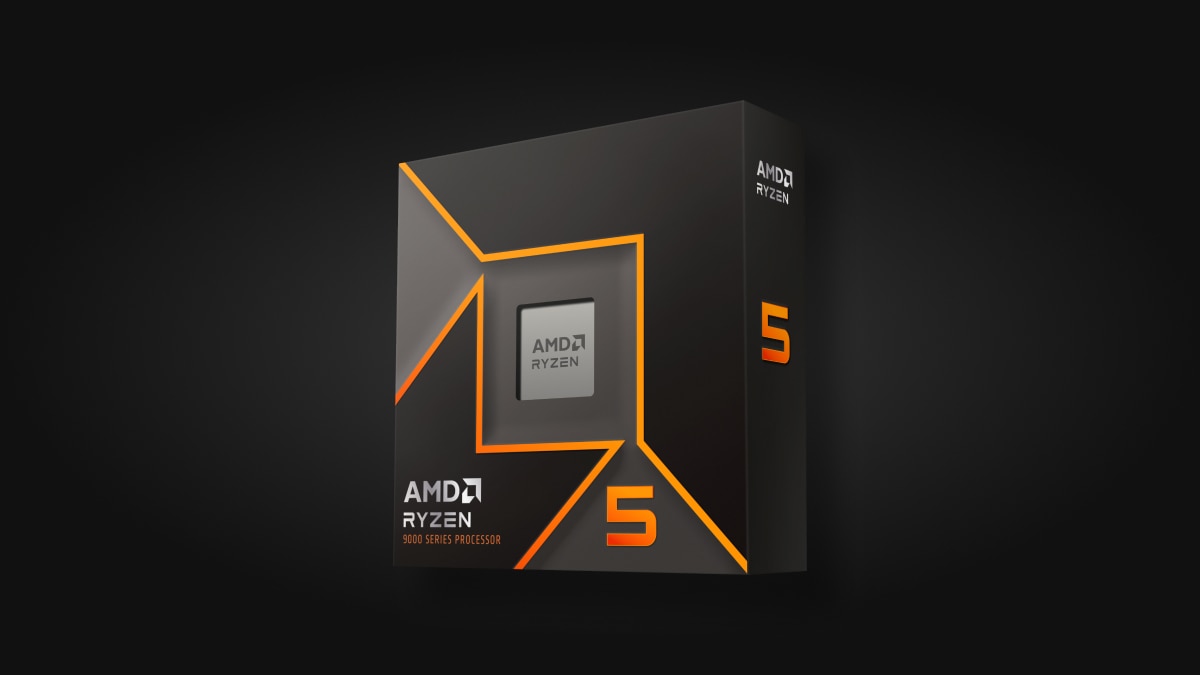
AMD Ryzen 5 9600X
A six-core, 12-thread Zen 5 processor for AM5 with a 65 W default TDP, 32 MB of L3 cache and boost clocks up to 5.4 GHz.
Full Specification Sheet
| Architecture | Zen 5 (Granite Ridge) |
|---|---|
| Cores / Threads | 6 / 12 |
| Base / Max Boost | 3.9 GHz / up to 5.4 GHz |
| L2 + L3 Cache | 6 MB + 32 MB |
| Default TDP | 65 W |
| Process | TSMC 4nm CPU die, 6nm I/O die |
| Socket | AM5 |
| Memory | DDR5, 2 channels, up to 256 GB, DDR5-5600 (2 DIMMs) |
| PCIe | PCIe 5.0, 28 lanes (24 usable) |
| Integrated Graphics | Radeon Graphics, 2 CUs, 2200 MHz |
| Max Temperature | 95 C |
The AMD Ryzen 5 9600X is the entry point to the Ryzen 9000 desktop family. It has six Zen 5 cores and 12 threads, was released on 8 August 2024 together with the Ryzen 7 9700X, and uses AMD's AM5 socket with DDR5 memory. AMD's tagline for the part is pure gaming performance, and the design reflects a straightforward idea: a small number of fast cores, a generous 32 MB of shared L3 cache and a 65 W default power rating, all at the lowest price of the launch lineup. This page walks through the published specification, explains what each figure means for a real build and describes who the processor suits.
Cores, threads and clock speeds
Six cores with simultaneous multithreading give 12 threads. AMD specifies a base clock of 3.9 GHz, which it describes as the average effective base frequency across all cores, and a maximum boost clock of up to 5.4 GHz. As with every AMD desktop processor, the boost figure is the highest speed a single core can reach in a short, lightly threaded burst, not a sustained all-core clock. Interestingly, the 9600X has a slightly higher base clock than the eight-core 9700X (3.9 GHz against 3.8 GHz) but a lower boost ceiling (5.4 GHz against 5.5 GHz). The gap is small, and both parts share the same 65 W envelope, so in everyday use the difference in core count matters far more than either clock figure.
The package holds two dies: a single CPU die built on TSMC's 4 nm FinFET process and an I/O die on TSMC's 6 nm process. All six enabled cores sit on the one CPU die, so there is no traffic between core complexes and the topology is simple. Supported instruction extensions include AVX2, AVX-512, AES, SHA and the virtualisation set, so software that uses modern vector instructions runs natively. To judge whether six cores is enough for your usage, our explainer on core count versus clock speed is a good starting point.
Cache and memory
AMD lists 480 KB of L1 cache, 6 MB of L2 cache (1 MB per core) and 32 MB of L3 cache. Notably, the L3 pool is the same size as on the eight-core 9700X, which means each of the six cores has a larger share of L3 than in the bigger part. That is a useful property for games and other latency-sensitive workloads, which tend to respond to cache capacity. It is the standard Zen 5 arrangement without a stacked cache layer, and AMD's generational figures for instructions per clock are manufacturer numbers based on its own selected workloads.
On the memory controller side the chip supports dual-channel DDR5 up to 256 GB. The officially supported speed is DDR5-5600 for two single- or dual-rank modules, dropping to DDR5-3600 with four modules. EXPO profiles are supported, so a kit rated at 6000 MT/s is a common choice, and ECC is listed as supported when the motherboard provides it. For anyone coming from DDR4, our DDR5 versus DDR4 buying guide explains why AM5 boards accept only DDR5 and what that means for the total cost of an upgrade.
Platform and connectivity
The 9600X is compatible with A620, B650, B650E, X670, X670E, B840, B850, X870 and X870E motherboards on socket AM5. Because the processor draws little power, an entry-level A620 or B840 board is a sensible partner and the money saved can go towards the graphics card. The processor provides PCIe 5.0 with 28 native lanes, 24 of them usable, plus extra Gen4 lanes from the chipset that depend on the board (8 on X870E and B650E, 12 on X670E and X670, 4 on X870). Four USB 3.2 Gen 2 ports at 10 Gbps and one USB 2.0 port are native, and USB Type-C DisplayPort alternate mode, NVMe boot and RAID 0, 1, 5 and 10 are listed. For the wider context of how AM5 relates to AM4 and Intel's LGA1700, see our platform guide.
Integrated graphics are provided by a Radeon Graphics engine with two graphics cores at up to 2,200 MHz. This is a display-output solution: it lets you start the machine, use a monitor and run office software while you wait for a graphics card, but it is not meant for modern games.
Power and cooling
The default TDP is 65 W and the maximum operating temperature is 95 degrees Celsius. AMD does not supply a cooler in the box and recommends a premium air cooler, so budget for a decent tower cooler in the shopping list. A modest cooler is normally sufficient because of the low power rating, and the processor is quiet in a well-ventilated case. The chip is unlocked and supports Precision Boost Overdrive, Curve Optimizer voltage offsets, Ryzen Master and EXPO. AMD states that its warranty does not cover damage from overclocking, so treat any manual tuning as your own responsibility.
Positioning and alternatives
In the Ryzen 9000 range the 9600X is the six-core entry, below the eight-core Ryzen 7 9700X and far below the 12- and 16-core Ryzen 9 chips. AMD's launch price for the 9600X was 279 US dollars; retail prices vary by region and time. Its main appeal is for gaming-first builders who want current-generation cores, PCIe 5.0 and DDR5 without paying for core counts that games rarely use. The natural point of comparison from the previous socket is the Ryzen 5 5600X, and our Ryzen 5 9600X versus Ryzen 5 5600X comparison shows the two side by side, with the caveat that the move from AM4 to AM5 also requires a new motherboard and DDR5 memory. If you are planning a complete machine, the budget gaming PC build guide shows how to split money between the processor, the graphics card and the rest. The full list of processors is in the processor category.
Building around the 9600X
A sensible pairing for this processor is a mid-range B650 or B850 board, 32 GB of DDR5 in two modules and a graphics card chosen for your monitor's resolution. Because six cores are shared across a large L3 cache, the processor tends to be limited by the graphics card in most modern games at higher resolutions, which is why spending more on the card than on the processor is often the better balance. If your workload includes heavy rendering or many simultaneous virtual machines, a larger core count will pay for itself and the 9700X or a Ryzen 9 is the better fit.
All figures on this page come from AMD's official product specification. Availability, retail prices and bundled items differ between markets, so check with your retailer before you buy.
Product image: AMD product image.