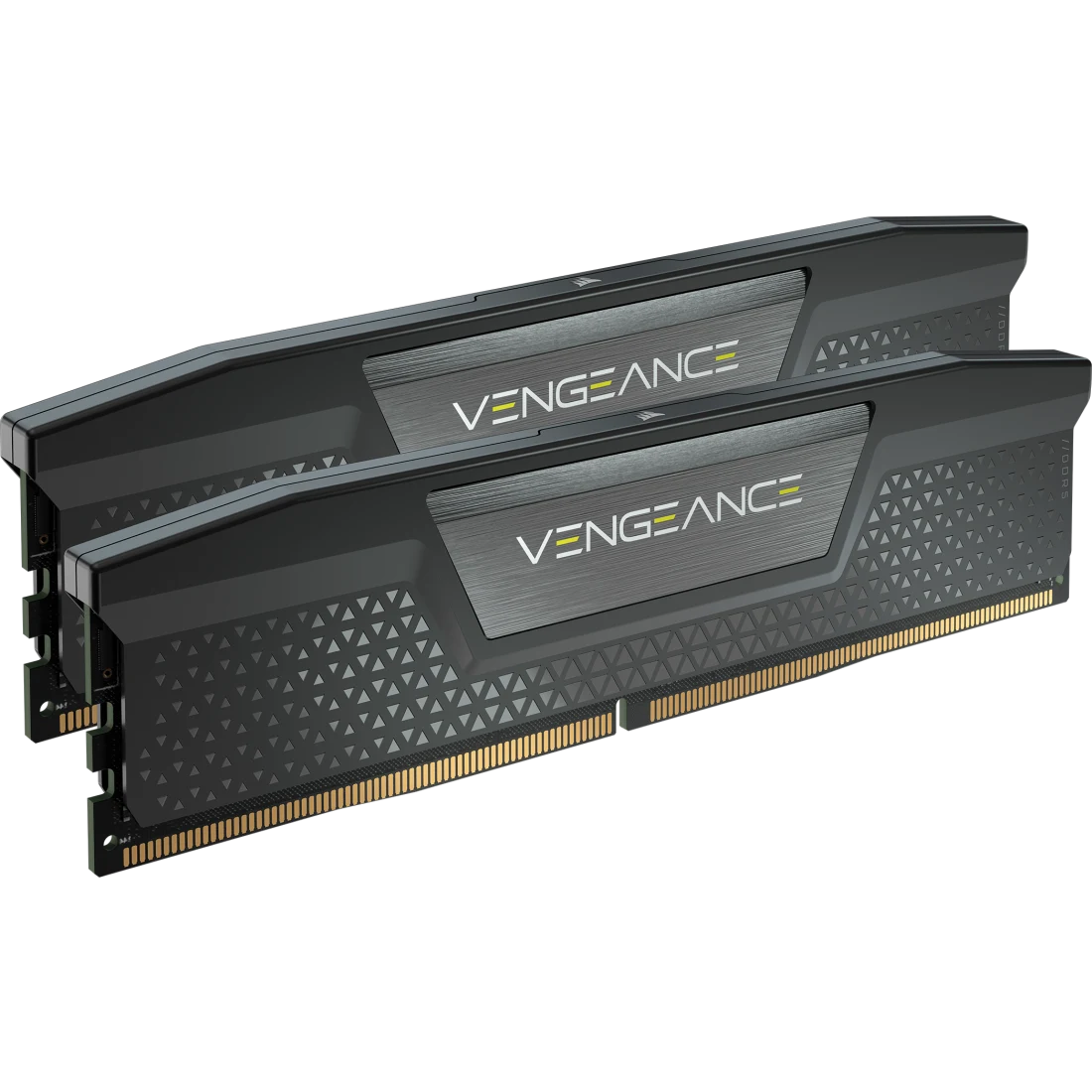
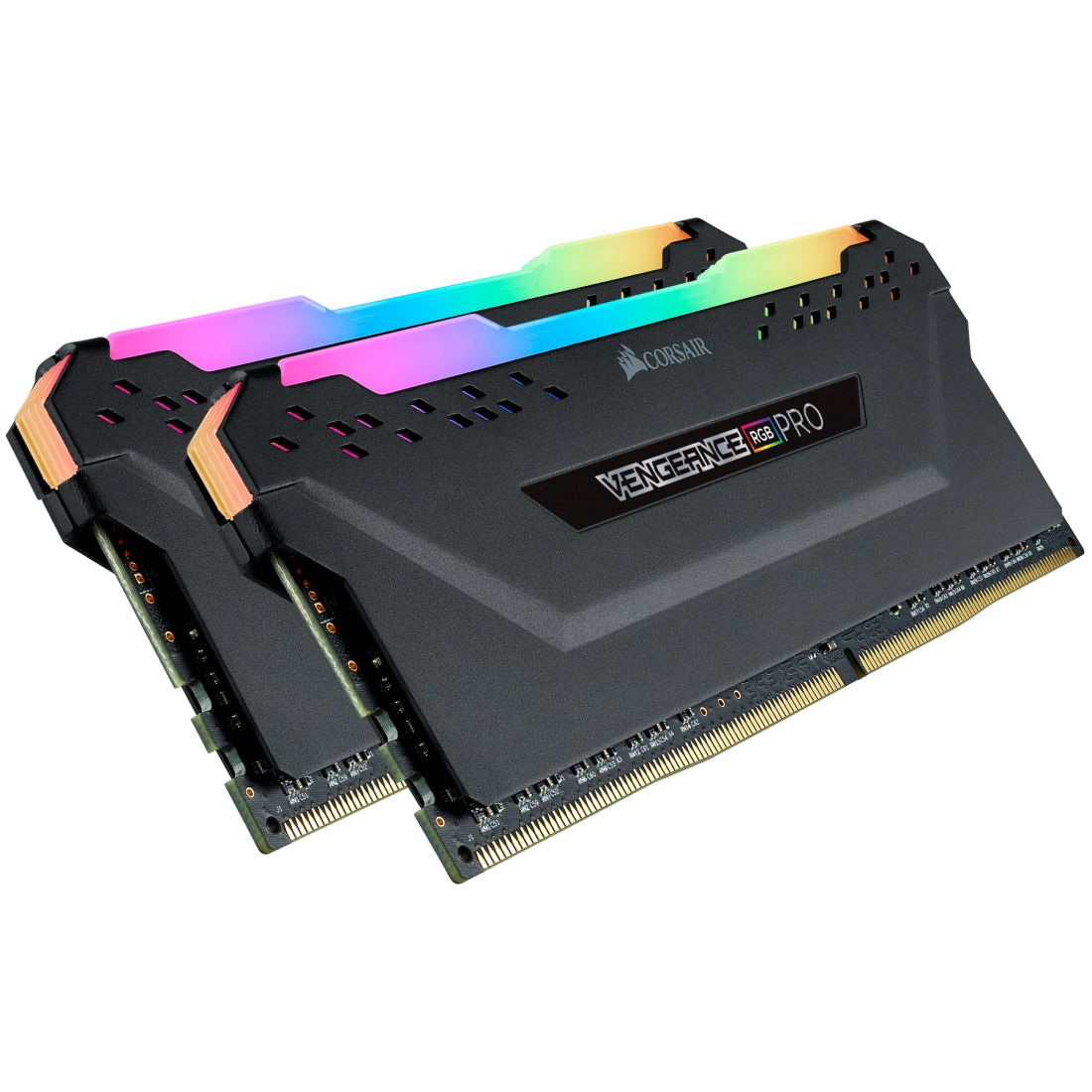
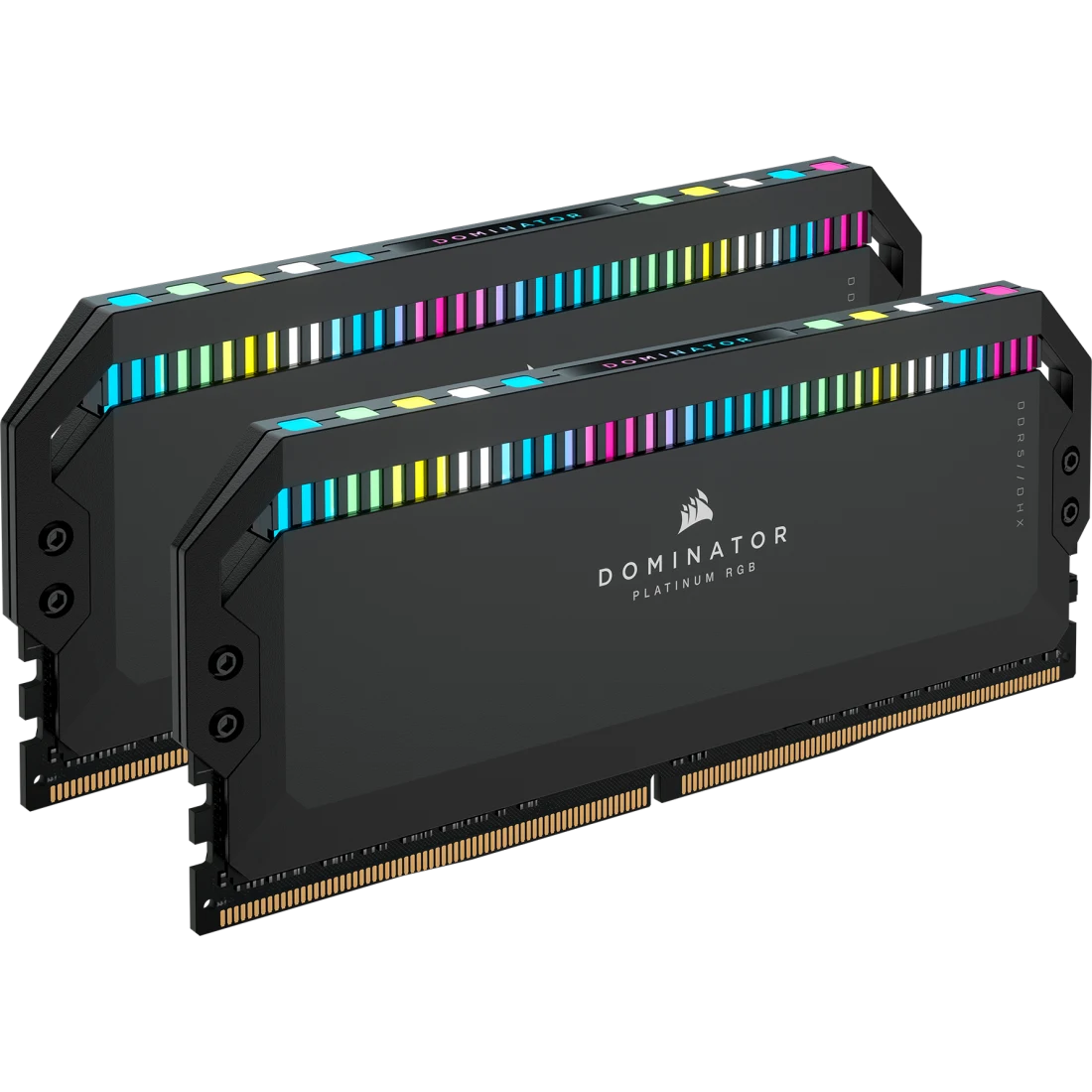
Corsair VENGEANCE RGB 96GB (2 x 48GB) DDR5 6400MT/s CL32 (CMH96GX5M2B6400C32)
A 96 GB (2 x 48 GB) DDR5-6400 CL32 kit optimised for Intel platforms, with ten-zone RGB lighting, an overclocking PMIC, an XMP 3.0 profile and a limited lifetime warranty.
Full Specification Sheet
| Capacity | 96 GB (2 x 48 GB) |
|---|---|
| Type | DDR5 UDIMM, 288-pin |
| Tested Speed | 6400 MT/s (PC5-51200) |
| Tested Latency | CL32 |
| Tested Voltage | 1.40 V |
| SPD | 4800 MT/s, CL40, 1.1 V |
| Profile | Intel XMP 3.0 |
| PMIC | Overclock PMIC |
| Lighting | Ten-zone RGB per module, iCUE |
| Heat Spreader | Aluminum |
| Compatibility | Intel 700 Series, Intel 800 Series |
| Warranty | Limited lifetime |
| SKU | CMH96GX5M2B6400C32 |
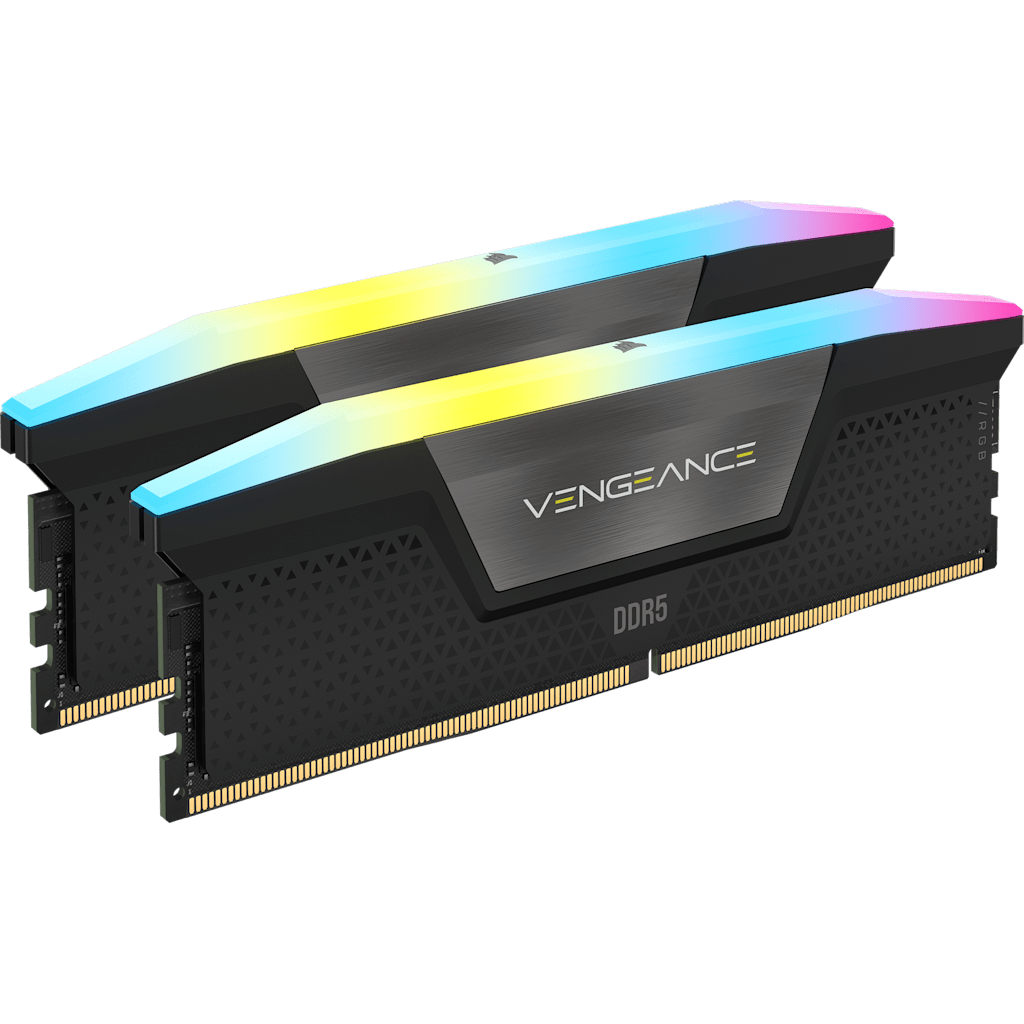
The Corsair VENGEANCE RGB 96GB (2 x 48GB) DDR5 6400MT/s CL32 kit, part number CMH96GX5M2B6400C32, is a two-module DDR5 kit with an unusually large capacity per module. Corsair says the VENGEANCE RGB DDR5 range delivers DDR5 performance, higher frequencies and greater capacities optimised for Intel motherboards, while lighting up the PC with dynamic, individually addressable ten-zone RGB lighting. This page covers the published specification of this one part number, explains each figure in practical terms and attaches no performance claim that Corsair does not itself make. It contains no benchmark and no price.
Capacity and module layout
The kit holds 96 GB in two 48 GB modules. The Corsair page lists many capacities for the range, from a single 16 GB module up to 192 GB in four 48 GB modules, and this 2 x 48 GB configuration is one of the large options. Fewer, denser modules are an alternative to filling all four slots with smaller ones: with two modules the memory system uses a simple dual-channel arrangement, and two slots stay free for a later upgrade. Whether a given board can take 48 GB modules depends on its BIOS and its memory support list, so that list is worth checking. For a general view of how much memory a workload needs, our guide to 16 GB versus 32 GB of RAM gives the baseline, and this kit sits far above it, in territory meant for heavy content creation, virtual machines or large datasets.
Speed, latency and what they add up to
Corsair lists a tested speed of 6400 MT/s, a tested latency of CL32 and a tested voltage of 1.40 V. The speed rating is PC5-51200, which is DDR5-6400 expressed as bandwidth: 6400 million transfers per second across a 64-bit module gives 51,200 MB/s per module. Since DDR5 transfers twice per clock, the clock is 3200 MHz, and a CAS latency of 32 cycles therefore corresponds to 10 nanoseconds to the first word. That is arithmetic from Corsair's own figures and not a measured result. The JEDEC-style baseline stored in the module is 4800 MT/s at CL40 and 1.1 V; by the same calculation 40 cycles at a 2400 MHz clock is about 16.7 nanoseconds, so the profile tightens the absolute delay as well as raising the transfer rate. Our article on RAM speed versus latency explains why both numbers matter.
XMP 3.0 profile and the overclocking PMIC
The performance profile is Intel XMP. Corsair says customers can save their own custom XMP 3.0 profiles through the iCUE software, and it describes this as an alternative to adjusting settings by hand each time. The tech table also lists an overclock PMIC. In DDR5, voltage regulation moved from the motherboard onto the memory module itself, and Corsair advertises onboard voltage regulation together with iCUE control for finer-tuned output and more stable overclocking. The page does not state how much headroom that gives, so we make no claim about it. Corsair's footnote applies here as on every kit: reaching a listed speed requires enabling the profile in the BIOS, and maximum speed and performance depend on the motherboard and processor. If the profile names are unfamiliar, read our explainer on XMP versus EXPO. Note that this kit lists Intel XMP only, not an AMD EXPO profile.
Platform compatibility
Corsair lists Intel 700 Series and Intel 800 Series compatibility and describes the kit as optimised for the latest generation of DDR5-compatible Intel motherboards, aiming for maximum bandwidth and tight response times on them. Because the profile is XMP and the compatibility list names only Intel chipsets, AMD platform owners should look at a kit that advertises EXPO instead, or at least verify support before buying. The modules are UDIMMs with 288 pins, the standard desktop format for DDR5. The memory layout matters too: two modules map to the two channels of a dual-channel controller, which our guide to dual-channel and quad-channel DDR5 explains.
Lighting and heat spreader
Each module carries ten individually addressable, ultra-bright RGB LEDs in a panoramic light bar, and Corsair lists preset patterns including Color Shift, Rain, Watercolor, Rainbow Wave and Spiral Rainbow, with near-limitless customisation in iCUE. The kit is iCUE-enabled, so it can be synchronised with other Corsair products. The heat spreader is solid aluminum in a two-tone VENGEANCE style, intended to conduct heat away from the memory quickly, and a custom performance PCB is described as guaranteeing signal quality and stability for overclocking. Corsair says the chips are hand-sorted and tightly screened to give consistent high-frequency performance with aggressive timing options; the page does not name the DRAM maker. The colour is black and no fan is included.
Where 6400 CL32 sits in the range
Corsair lists the speed and latency options of the wider VENGEANCE RGB DDR5 family, and the spread is large: entries start at 4800 MT/s CL40, pass through 6000 MT/s at CL28, CL30, CL36, CL38 and CL40, and reach 8200 MT/s at CL40, with several 6400 MT/s options at CL32, CL36, CL38 and CL42 in between. Not every combination exists for every capacity, and the page marks some as out of stock. The point for a buyer is that 6400 MT/s at CL32 is a mid-to-upper option in this family, not its ceiling, and that larger capacities such as 96 GB are offered at a subset of the speeds. The speeds in that table are described by Corsair as tested speeds that require overclocking or BIOS adjustment, and Corsair explains that speed affects memory bandwidth while latency affects how fast each memory cycle completes, so a lower latency number means a faster response. Reading the SKU carefully is therefore the safest way to be sure that the capacity, speed and latency in your basket are the ones you intended.
Warranty and documentation
The kit carries a limited lifetime warranty, described as complete peace of mind and years of worry-free performance. Downloads on the page include the iCUE driver software for Windows, a quick start guide and declarations of conformity. Corsair's guide section links to articles on XMP and EXPO compatibility and on memory for recent Intel processors, which are useful reading before choosing a speed.
How to use this information
Start with the motherboard. Confirm it is an Intel 700 or 800 Series board with DDR5 slots, check that its memory support list includes 48 GB modules, update the BIOS if needed and then enable the XMP profile. Install the two modules in the slots the manual assigns to dual channel. If you plan to fill all four slots later, remember that boards commonly lower memory speeds with four modules, so the two-module layout is the safest way to keep the advertised profile. To place the kit next to another DDR5 option in our database, open the comparison with the VENGEANCE RGB 32GB DDR5-6000 or browse the whole memory category. Everything above is a manufacturer specification or claim, not a test result.