Air Cooling vs. Liquid Cooling: Which Does Your CPU Actually Need?
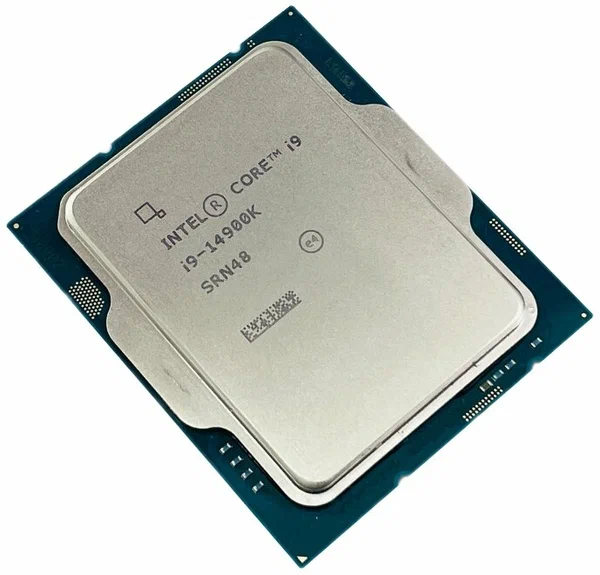
The air-versus-liquid cooling debate resurfaces every time a new flagship CPU launches with a bigger power budget than the last one, and it tends to get argued in absolutes that do not really hold up once you look at what specific chips actually demand. The honest answer depends heavily on which CPU you are cooling, how you actually use it, and how much noise and complexity you are willing to accept — not on liquid cooling being categorically "better" than a good air cooler.
Start with the numbers that actually matter: sustained power draw under real workloads, not just the chip's rated TDP. The Core i9-14900K can pull up to 253W under an all-core boost load, while the Ryzen 9 7950X is rated for a flat 170W. Both numbers sit well above what most budget air coolers were designed around, which is exactly why both manufacturers effectively expect serious cooling as part of the build cost for these chips rather than an optional upgrade.
A high-end air cooler — a large, well-built dual-tower design with a serious heatsink and a pair of quality fans — is genuinely capable of handling both of these chips for gaming-focused use, where all-core boost rarely engages for long stretches. Air coolers have real advantages that get undervalued in the current liquid-cooling-heavy marketing environment: no pump to eventually fail, no risk of a leak, generally longer service life with less maintenance, and often better price-to-performance at the very top of the air-cooling market than an equivalently priced AIO liquid cooler.
Liquid cooling — specifically a 240mm or larger all-in-one (AIO) unit — earns its keep specifically under sustained, heavy multi-core load: video encoding, 3D rendering, large compilation jobs, or any workload that holds an all-core boost clock for extended periods rather than short bursts. In that scenario, the larger total radiator surface area of a 280mm or 360mm AIO genuinely does move more heat than even a very good air cooler can manage, and it does so more quietly at a given thermal load because the heat is being rejected across a much larger radiator rather than a smaller, denser heatsink.
Case size and airflow direction matter as much as which cooler type you pick, and this is the part builders most commonly get wrong. A 360mm AIO crammed into a case with poor intake airflow will underperform a well-mounted air cooler in a case that breathes properly, because the AIO's radiator still needs cool air pulled through it to reject heat — it is not a magic bypass around case airflow, just a different way of moving that heat to the air. Before choosing a cooler type, confirm your case actually has the clearance and airflow path the cooler needs to perform as reviewed.
Pump and fan noise deserve an honest mention, since "liquid cooling is quieter" is not automatically true. A cheap AIO's pump can produce an audible whine or tick under certain conditions that some users find more irritating than a well-balanced air cooler's fan noise, even at a lower decibel reading. Reading noise-specific reviews of a specific AIO model, not just its cooling performance numbers, is worth the extra few minutes before buying one purely for a quieter build.
Longevity is the practical factor that tips many experienced builders back toward air cooling for a system meant to last many years without maintenance. A quality air cooler has essentially no wear parts beyond its fans, which are cheap and easy to replace individually. An AIO's pump is a sealed, non-serviceable unit with a finite lifespan — most carry warranties in the five-to-seven-year range, which is generous, but it is a real limit that an air cooler simply does not have in the same way.
Common questions worth answering directly: does the 14900K specifically need liquid cooling? For sustained heavy multi-core work, a serious 280mm-or-larger AIO or an equivalently high-end air cooler is the realistic minimum; for gaming-only use, a top-tier air cooler handles it comfortably. Is a 120mm AIO ever worth it over a good air cooler at this performance tier? Generally no — small single-fan AIOs frequently underperform a good dual-tower air cooler at a similar price while adding pump failure risk, making them one of the weaker value propositions in the cooling market specifically for high-TDP flagship chips. Can you mix and match — air cooling now, liquid later? Yes, cooler choice is one of the easiest components to change later without touching anything else in the build.
For builders who want the thermal ceiling of liquid cooling without committing to a sealed AIO, a custom open loop is the enthusiast-tier option worth knowing about, even if it is not the right recommendation for most people. A custom loop with a large radiator, a quality pump, and a dedicated CPU block can outperform even the best 360mm AIO, and it is serviceable and upgradeable in a way a sealed unit is not — coolant can be changed, a block can be swapped when upgrading CPUs, and individual components can be replaced rather than discarding the whole unit. The trade-off is cost, build complexity, and real maintenance responsibility, which is exactly why it remains a niche choice reserved for builders who specifically want that level of control rather than a mainstream recommendation for a first high-end build.
Mounting pressure and installation quality matter more than people expect for either cooler type, and a poorly seated cooler can underperform a cheaper one that was installed correctly. Uneven mounting pressure on an air cooler's heatsink, or an AIO block that was not fully seated against the CPU's integrated heat spreader, can produce temperatures many degrees higher than a properly installed identical unit — a gap large enough to be the difference between comfortable thermal headroom and constant throttling under load. Reseating a cooler with fresh thermal paste and confirming even mounting pressure is one of the highest-value, lowest-cost troubleshooting steps available if temperatures ever seem unexpectedly high relative to a cooler's reviewed performance.
The bottom line: choose based on your actual workload and case, not marketing. A genuinely high-end air cooler handles both of these flagship CPUs — see our Core i9-14900K review for its real-world thermal behavior — comfortably for gaming-focused use with less long-term maintenance risk, while a quality 280mm-or-larger AIO earns its price specifically for sustained, heavy multi-core workloads where its larger radiator surface area has a real, measurable thermal advantage. If you are still deciding between platforms entirely, our AM4 vs AM5 vs LGA1700 platform guide covers that broader decision.