SSD Endurance Ratings (TBW) Explained: How Long Will Your Drive Actually Last?
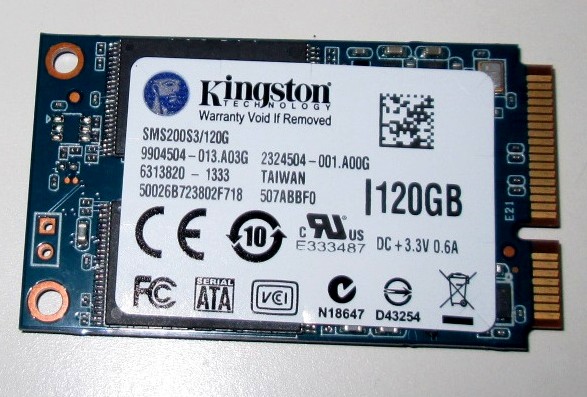
SSD spec sheets lead with capacity and speed, but the number that actually determines how long a drive will last under real use is buried further down: TBW, or Terabytes Written, the manufacturer's rated endurance limit before the drive is statistically expected to start seeing increased failure risk. For the overwhelming majority of desktop and gaming use, TBW ratings are so far beyond realistic usage that endurance is a non-issue - but for specific workloads (video editing scratch disks, write-heavy server use, some NAS configurations) it's a spec worth actually understanding rather than ignoring.
What TBW Actually Measures
TBW is the total amount of data a drive is rated to write over its lifetime before the manufacturer's warranty coverage for wear-related issues ends - a drive rated for 600TBW, for example, is expected to reliably handle 600 terabytes of total writes across its service life. This is a statistical endurance rating based on the NAND flash memory's physical write-cycle limits, not a hard cutoff where the drive suddenly fails the moment you cross it; drives typically continue functioning past their TBW rating, just with a manufacturer warranty that no longer covers wear-related failure. NAND flash cells degrade slightly with each write cycle, and TBW is the manufacturer's conservative estimate of how many total writes the drive can absorb while staying within normal failure-rate expectations.
How Much Writing Does Normal Use Actually Involve?
This is where the spec becomes mostly academic for typical users: a normal desktop or gaming PC - web browsing, gaming, general productivity, occasional large file transfers - typically writes somewhere in the range of a few gigabytes to a few tens of gigabytes per day, which adds up to roughly 5-15TB per year in realistic terms. Against a typical modern NVMe drive's TBW rating of several hundred terabytes, that usage pattern would take multiple decades to approach the rated endurance limit - which is longer than the drive will likely remain useful for capacity or speed reasons anyway. For the large majority of PC builds, TBW simply isn't a practical constraint worth optimizing around.
When TBW Actually Becomes Relevant
Endurance starts to matter for genuinely write-heavy workloads: video editing with the drive used as an active scratch disk (constant large sequential writes during rendering), some NAS and server configurations with continuous write activity, or any workload involving sustained, repeated large writes rather than typical read-mostly desktop use. A drive like the Samsung 990 Pro 4TB, rated for a high TBW figure appropriate to its capacity tier, is comfortably suited to demanding workloads that would meaningfully stress a lower-capacity, lower-TBW-rated drive faster. As a general rule, TBW rating scales with capacity - larger drives of the same product line typically carry proportionally higher TBW ratings, which is worth factoring in if you're choosing between capacities for a write-heavy use case specifically.
TBW and Drive Type: NVMe vs. SATA vs. HDD
Endurance ratings apply to SSDs (both NVMe and SATA) since both use NAND flash with finite write cycles; traditional hard drives don't carry a TBW rating in the same sense because magnetic storage doesn't degrade from write cycles the way flash memory does, though HDDs have their own separate mechanical wear considerations. If your workload is genuinely, continuously write-heavy at high sustained volume - well beyond what a normal desktop generates - a traditional HDD's lack of write-cycle wear can actually be an advantage worth weighing against an SSD's speed, which is one of the considerations in our SSD vs. HDD guide.
Checking Your Actual Write Usage
You don't have to guess at your own usage pattern - tools like CrystalDiskInfo on Windows report a drive's total host writes to date directly from its SMART data, letting you see exactly how much you've actually written since the drive was installed and extrapolate a realistic lifetime trajectory rather than relying on assumptions. Checking this after a few months of normal use gives a far more accurate picture of whether TBW is remotely relevant to your situation than any generic estimate, and it's a good habit to check periodically on drives used for demanding workloads specifically, since usage patterns can drift over time as your workflow changes.
Does Drive Type Change the Picture: NVMe vs. Portable Storage
Endurance considerations differ somewhat between an internal NVMe boot drive and portable external storage used for backups - a drive like the Seagate Expansion Portable 4TB used primarily for periodic backup writes rather than constant active read/write cycling sees a very different, much lighter usage pattern than an OS or scratch drive, and endurance is correspondingly less likely to be a practical concern for it. Our portable vs. internal storage guide covers the broader decision between drive types if you're weighing where a given workload actually belongs, which indirectly affects how much you should weight endurance specs in the first place.
Warranty Terms Often Matter More Than the Raw Number
Most SSD warranties are actually expressed as "whichever comes first" between a time period (commonly five years) and the TBW rating, which means for typical desktop use the time-based limit is almost always the one that would apply first in practice, since normal usage patterns take so long to approach the TBW figure. This is worth knowing because it reframes TBW from "how long will my drive last" into "which of two independent limits protects me, and does it actually matter for my usage" - for the vast majority of buyers, neither limit is a realistic constraint, and the practical warranty question comes down to the manufacturer's general reliability track record more than the specific TBW number printed on the box.
The Bottom Line
For typical desktop and gaming use, TBW ratings on modern drives are so far beyond realistic usage that they're not worth factoring into a purchase decision at all - prioritize capacity, speed, and price instead, which our NVMe SSD buying guide covers in more depth. For genuinely write-heavy workloads specifically, checking TBW and choosing a higher-endurance drive (often simply a larger-capacity model in the same product line) is a real and worthwhile consideration rather than a spec sheet number to ignore.