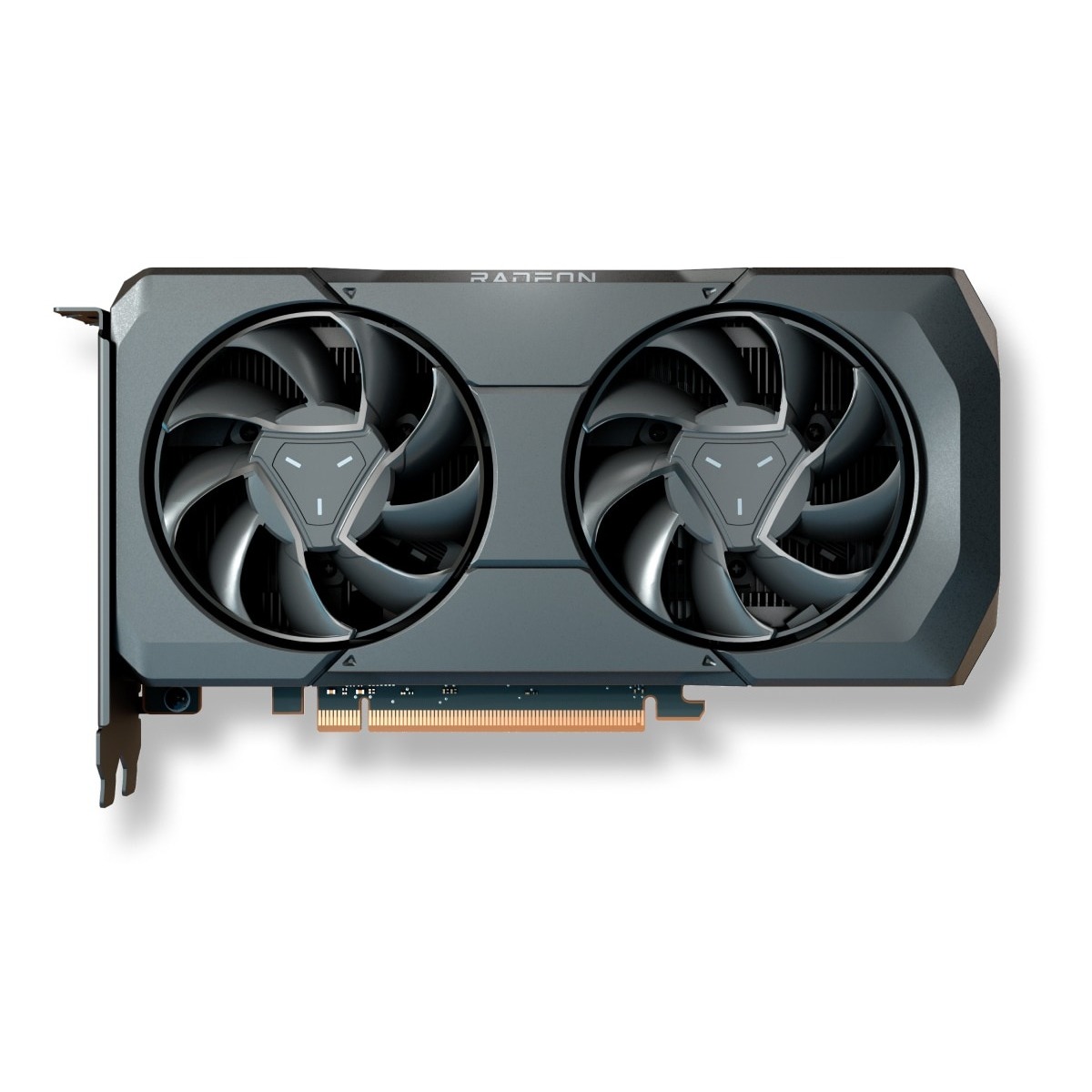
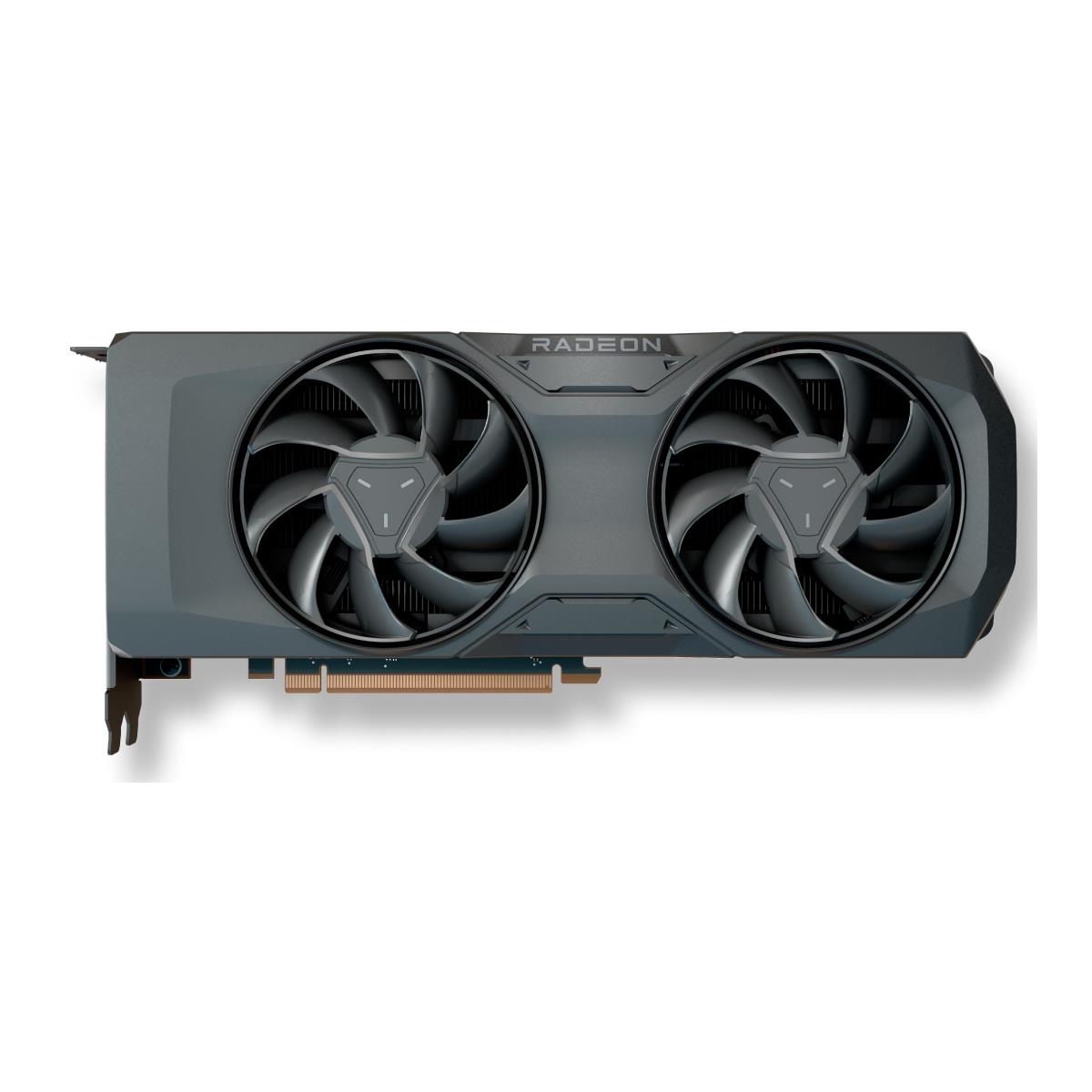
AMD Radeon RX 9070 XT
A 64-compute-unit Radeon graphics card with 16 GB of GDDR6, a 304 W typical board power and a PCIe 5.0 x16 interface.
Full Specification Sheet
| Compute Units | 64 |
|---|---|
| Stream Processors | 4,096 |
| Ray / AI Accelerators | 64 / 128 |
| Boost / Game Clock | up to 2,970 MHz / 2,400 MHz |
| Memory | 16 GB GDDR6, 256-bit, up to 20 Gbps |
| Memory Bandwidth | up to 640 GB/s |
| Infinity Cache | 64 MB |
| Typical Board Power | 304 W |
| Recommended PSU | 750 W |
| Power Connector | 2x 8-pin |
| Bus | PCIe 5.0 x16 |
| Outputs | DisplayPort 2.1a, HDMI 2.1b |
The AMD Radeon RX 9070 XT is the flagship of AMD's Radeon RX 9000 series, a generation aimed at gamers who want high frame rates at 1440p and 4K without moving to the most extreme price tier. It has 64 compute units, 4,096 stream processors and 16 GB of GDDR6 memory on a 256-bit bus, and it connects through a PCIe 5.0 x16 interface. AMD introduced the RX 9000 series in early 2025 and made the 9070 XT available in March 2025 at a manufacturer-announced starting price of 599 US dollars; street pricing has varied since. This page collects AMD's published specification, explains the important numbers and shows how the card compares with neighbouring models on this site.
The GPU and its clocks
AMD lists 64 compute units, each with a ray accelerator, so 64 ray accelerators in total, plus 128 AI accelerators. The stream processor count is 4,096. The company gives two clock figures: a boost frequency of up to 2,970 MHz, which it defines as the maximum achievable on a bursty workload and warns will vary with thermal conditions and the application, and a game frequency of 2,400 MHz, the expected clock in typical gaming at typical total graphics power. The game frequency is the more representative number for sustained play. Peak pixel fill rate is stated as up to 380.2 gigapixels per second, with 128 ROPs, and the transistor count is 53.9 billion.
On paper, peak single-precision (FP32 vector) throughput is 48.7 TFLOPS, and the same figure applies to FP16 vector work. The AI-oriented matrix numbers are much higher: 195 TFLOPS of FP16 matrix (389 with structured sparsity), 389 TFLOPS of FP8 matrix (779 with sparsity), 389 TOPS of INT8 matrix (779 with sparsity) and 779 TOPS of INT4 matrix (1,557 with sparsity). These are theoretical peaks published by AMD, not measured performance, and sparsity figures only apply when a workload can use structured sparsity. Their real value is that they show the hardware is built to run upscaling and frame-generation models locally; our guide to DLSS, FSR and frame-generation requirements explains what those features need from a card.
Memory subsystem
The card carries 16 GB of GDDR6 running at up to 20 Gbps across a 256-bit interface, for up to 640 GB/s of memory bandwidth. AMD adds 64 MB of Infinity Cache, a large on-die cache that reduces how often the GPU has to go to external memory, which is how the architecture gets by with GDDR6 rather than a newer memory type. Sixteen gigabytes is comfortable for 1440p and adequate for most 4K titles at present, and it is double the capacity of the eight-gigabyte cards that have started to struggle with recent texture packs. If you want to understand where capacity starts to matter, our VRAM capacity explainer covers the trade-offs.
Video, display and connectivity
Display outputs comply with DisplayPort 2.1a and HDMI 2.1b, so high-refresh 4K monitors are supported. The video engine handles H.264, H.265/HEVC and AV1 for both decode and encode, which is relevant to streamers and video editors, and AMD lists 4K encode and decode support. For readers choosing a monitor, the explanation of HDMI 2.1 versus DisplayPort 2.1 outputs describes the bandwidth differences. The bus is PCIe 5.0 x16; the card works in older slots at reduced bandwidth, and for this class of GPU the difference between Gen4 and Gen5 is normally small.
The software feature list includes AMD Software Adrenalin Edition, FSR Redstone, Fluid Motion Frames, Radeon Super Resolution, Smart Access Memory, Anti-Lag, Boost, Chill, Image Sharpening, Enhanced Sync, FreeSync and Virtual Super Resolution. Support for particular technologies depends on the operating system, the game and the system manufacturer's configuration. AMD supports Windows 10 and 11 in 64-bit editions as well as 64-bit Linux.
Power, cooling and the rest of the system
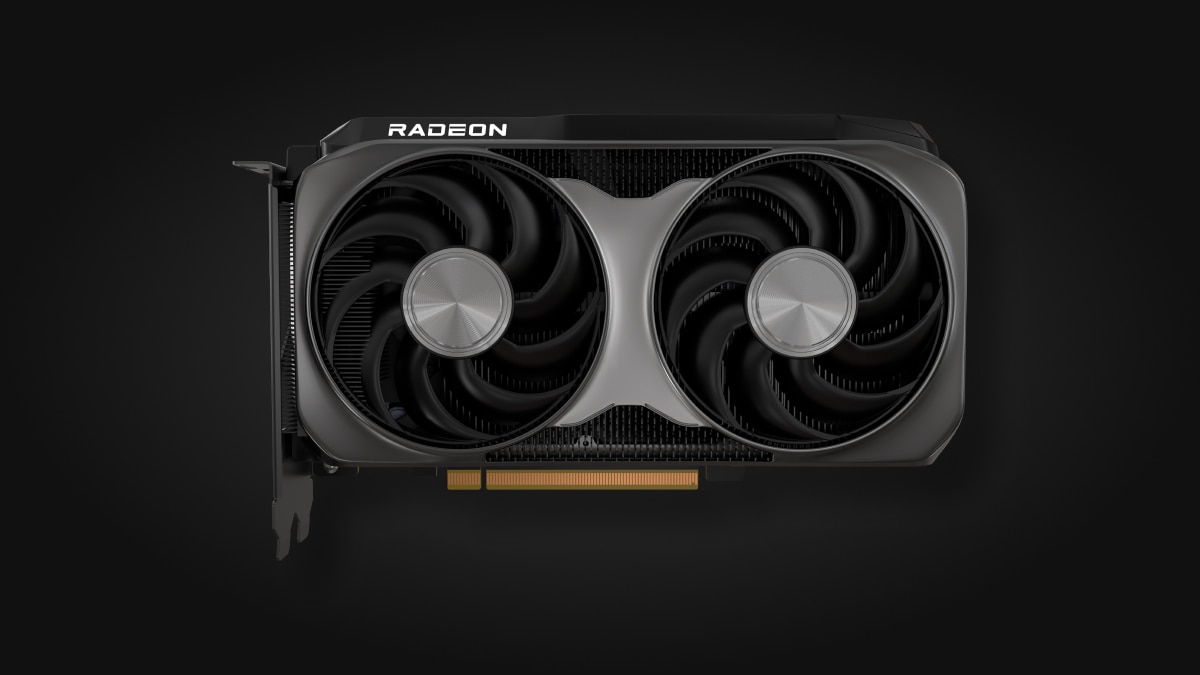
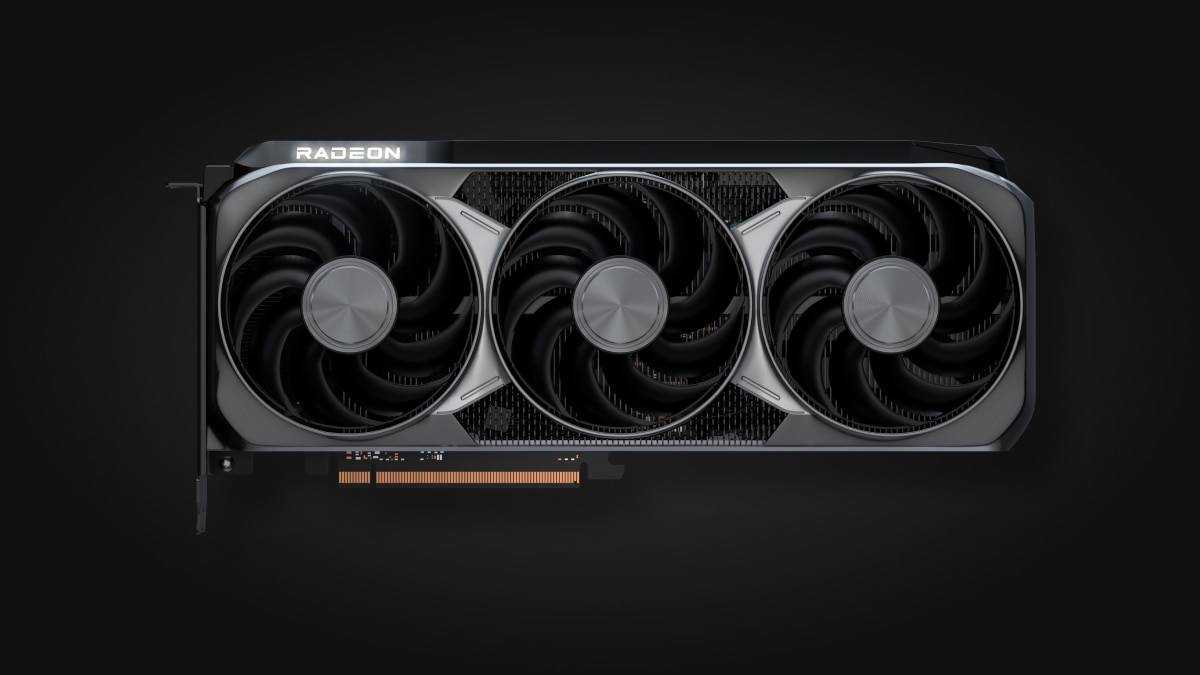
AMD's typical board power for the 9070 XT is 304 W, with a recommended minimum power supply of 750 W and two 8-pin power connectors. Partner cards may differ in clocks, board power and connectors, so always check the specific model you plan to buy. The two 8-pin arrangement avoids the newer 12-volt high-power connector, which some buyers regard as an advantage; our guide to GPU power connectors and daisy-chain adapters explains why separate cables for each connector are the safer practice. Cooling designs vary widely between add-in-board partners, from compact dual-fan models to triple-slot coolers, so check the physical dimensions against your case before ordering.
Where it sits in the market
Within AMD's own line, the 9070 XT sits above the standard RX 9070 (56 compute units) and was the top card of the 9000 series at launch. The last generation's flagship is the Radeon RX 7900 XTX; the Radeon RX 9070 XT versus RX 7900 XTX comparison sets the published specifications side by side, including the older card's larger memory. Against NVIDIA, the closest listed rival on this site is the GeForce RTX 5070, and the Radeon RX 9070 XT versus GeForce RTX 5070 comparison lays out the differences in memory, power and features. As always, actual gaming performance depends on the game, the resolution, the driver and the processor paired with the card, and we deliberately quote only manufacturer specifications on this page. AMD's own materials cite frame rates measured on a Ryzen 7 9800X3D system in May 2026 at 4K in a selection of games; those are manufacturer test results and vary with system configuration.
Practical buying considerations
A few checks make sense before ordering any 9070 XT. First, confirm that your power supply provides the two 8-pin PCIe connectors on separate cables and meets the 750 W recommendation, remembering that the recommendation covers a typical system and that a power-hungry processor raises the total. Second, measure the case: partner coolers differ in length, thickness and weight, and a heavy card benefits from a support bracket. Third, decide on the monitor: if you already own a 1440p high-refresh display, the card is a natural match, while a 4K screen makes the 16 GB of memory and the DisplayPort 2.1a output more relevant. Fourth, consider the platform: the card is PCIe 5.0 capable, but it runs perfectly well in a PCIe 4.0 slot, so there is no need to replace an otherwise sound motherboard for this reason alone.
To browse the wider field, see the graphics card category. All figures on this page come from AMD's official product specification, and the product image is an artist render supplied by AMD. Pricing, availability and partner-card details vary by market and retailer, so confirm them before purchase.
Product image: AMD product image (artist render).