NVIDIA GeForce RTX 5080
A Blackwell graphics card with 10,752 CUDA cores, 16 GB of GDDR7 on a 256-bit bus and a 360 W total graphics power.
Full Specification Sheet
| Architecture | NVIDIA Blackwell |
|---|---|
| CUDA Cores | 10,752 |
| Tensor Cores | 5th generation, 1,801 AI TOPS |
| RT Cores | 4th generation, 171 TFLOPS |
| Base / Boost Clock | 2.30 GHz / 2.62 GHz |
| Memory | 16 GB GDDR7, 256-bit |
| Total Graphics Power | 360 W |
| Recommended PSU | 850 W |
| Power Connector | 1x 450 W+ PCIe Gen 5 cable (or 3x 8-pin via adapter) |
| Dimensions (Founders Edition) | 304 x 137 mm, 2-slot |
| Interface | PCIe Gen 5, Resizable BAR |
| Encoder | 9th generation NVENC |
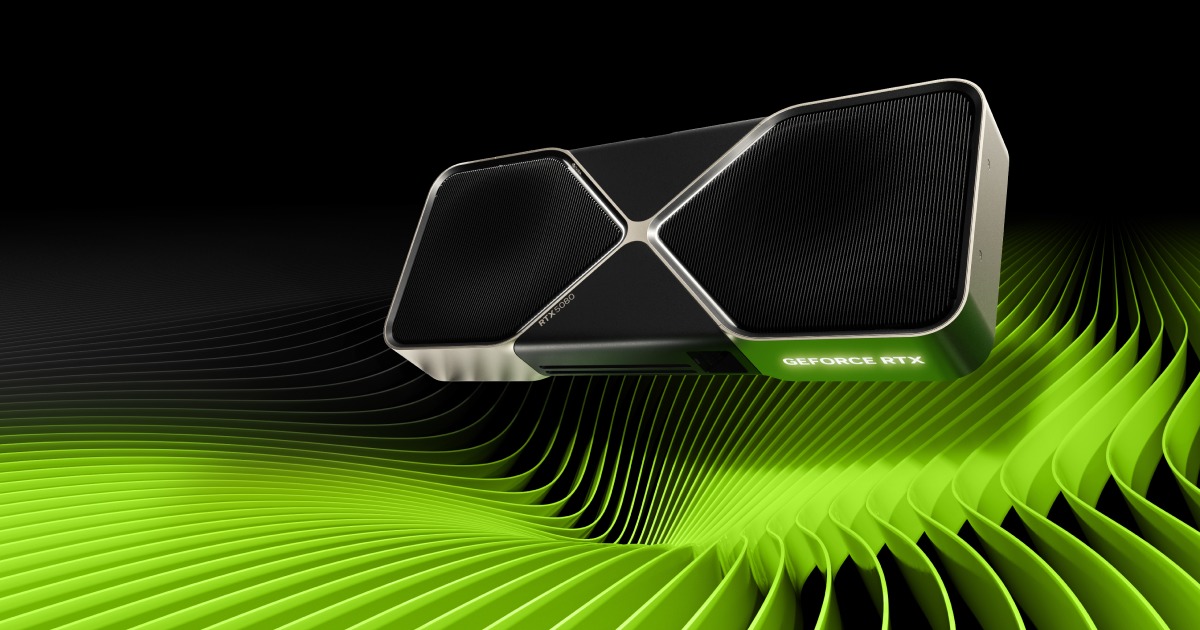
The NVIDIA GeForce RTX 5080 is the second-fastest model in the GeForce RTX 50 series, built on NVIDIA's Blackwell architecture and announced at CES in January 2025 with an announced price of 999 US dollars and availability from January 2025. NVIDIA positions it as the card for demanding gaming at high resolutions and refresh rates, with DLSS 4 and its multi-frame generation as central features, and with memory speed provided by GDDR7. It has 10,752 CUDA cores, 16 GB of memory on a 256-bit interface and a total graphics power of 360 W, and it fits a two-slot Founders Edition design. This page sets out NVIDIA's published specification, explains what the key figures mean in practice and helps you judge whether a card in this class suits your system.
GPU configuration
NVIDIA lists 10,752 CUDA cores, fifth-generation Tensor Cores delivering 1,801 AI TOPS and fourth-generation RT Cores with 171 TFLOPS of ray-tracing throughput. The base clock is 2.30 GHz and the boost clock is 2.62 GHz. Those clocks are higher than on the RTX 5090, a common pattern where a smaller chip runs at higher frequency to narrow the gap to a larger one. The AI TOPS figure is a theoretical low-precision peak for neural workloads such as DLSS and generative models, so it should not be read as a gaming benchmark. The ray-tracing TFLOPS figure has the same status: it is a manufacturer-stated maximum.
Blackwell brings features aimed at the newest rendering techniques. NVIDIA lists DLSS 4 with Super Resolution, Ray Reconstruction, Frame Generation and Multi Frame Generation, Reflex 2 with Frame Warp (announced as coming later), fourth-generation ray tracing and a ninth-generation NVENC video encoder. Whether these features help depends on the individual game: DLSS needs developer support, and multi-frame generation raises displayed frame rates without lowering the game's own input latency in the same way that true rendered frames do. Our guide to frame-generation hardware requirements discusses what to expect.
Memory: 16 GB of GDDR7
The RTX 5080 has 16 GB of GDDR7 memory on a 256-bit bus. NVIDIA's published bandwidth for the card is 960 GB/s, a large step over the GDDR6X used by the previous generation on comparable interfaces. Sixteen gigabytes is a comfortable capacity for 1440p and 4K gaming today, though some path-traced or heavily modded titles can use more, and it is the same capacity as several cards below it in the range. In other words, the RTX 5080 has faster memory than earlier 16 GB cards but not more of it, and buyers who need large amounts of video memory for creative or AI work should look at the RTX 5090. Our VRAM capacity explainer describes how to judge how much memory a given workload needs.
Interface, encoding and platform
The card uses a PCI Express Gen 5 interface and supports Resizable BAR. It works in older PCIe slots at reduced bandwidth, and for a card of this class the difference between Gen 4 and Gen 5 is generally small in games. The ninth-generation NVENC encoder supports modern codecs and is relevant to streaming and video work. As with other NVIDIA cards, the Studio and Game Ready driver branches provide the software side, and features such as Reflex and DLSS are exposed in supported games.
Power, size and thermals
NVIDIA lists a total graphics power of 360 W and recommends a system power supply of at least 850 W. Power connection is via a single PCIe Gen 5 cable capable of at least 450 W, or via three 8-pin PCIe cables and the adapter included with the card. The Founders Edition measures 304 mm by 137 mm and occupies two slots. The recommendation for 850 W is a system-level guideline; a build with a power-hungry processor should not go lower, and buying a modern ATX 3 unit with a native 16-pin cable avoids adapters. Our 12VHPWR connector explainer describes how to install this kind of connector properly and why the plug must be fully seated.
A 360 W card is a substantial heat source, though far less demanding than the RTX 5090's 575 W. Most well-ventilated mid-tower cases handle it, and partner designs range from compact two-slot coolers to large triple-fan models. Check the length and thickness of any specific model against your case before ordering, and remember that partner cards may differ in clocks, board power and connector arrangement from the reference figures given here.
Positioning against neighbours
Within the GeForce range the RTX 5080 sits between the RTX 5070 family and the flagship RTX 5090. On this site you can compare it with the GeForce RTX 5070 using the GeForce RTX 5080 versus RTX 5070 comparison, which shows how much the step up brings in cores, memory bandwidth and power. Its natural competitor from AMD is the Radeon line, and the GeForce RTX 5080 versus Radeon RX 9070 XT comparison sets NVIDIA's specification against AMD's card with 64 compute units and 16 GB of GDDR6. Prices announced at launch were 999 US dollars for the RTX 5080; retail prices vary by region and time. Browse the graphics card category for the full list.
Who the card suits
The RTX 5080 is aimed at players who run a high-refresh 1440p or a 4K display and want to enable ray tracing and upscaling together. It is less about raw memory capacity, where the 16 GB matches much cheaper cards, and more about the combination of the faster GDDR7 memory, the wider set of Blackwell features and a power target that a good 850 W supply can handle. If you mostly play esports titles at 1080p, a card of this class is more than you need, and a mid-range model will show little difference in practice because the processor becomes the limit. If you edit video or use GPU-accelerated creative software, the ninth-generation encoder and the CUDA ecosystem are the relevant advantages, and these are independent of the game-oriented features.
System pairing checklist
Before ordering, check four things: that the power supply has the right cable or that you accept the adapter, that the case has room for a two- to three-slot card of about 30 centimetres, that the motherboard has a PCIe x16 slot with a solid connection, and that your processor is not so old that it holds the card back at your chosen resolution. A modern processor from either manufacturer with six or more fast cores is a comfortable match, and pairing the card with a 1080p monitor wastes much of its capability.
All figures on this page come from NVIDIA's official specifications, and the product image is provided by NVIDIA. Availability, pricing and partner-card details vary by market and retailer, so confirm the specific model's clocks, dimensions and connectors before you buy.
Product image: NVIDIA product image.