MSI X470 Gaming Plus MAX Review: Still a Smart AM4 Motherboard in 2026
7.5/10
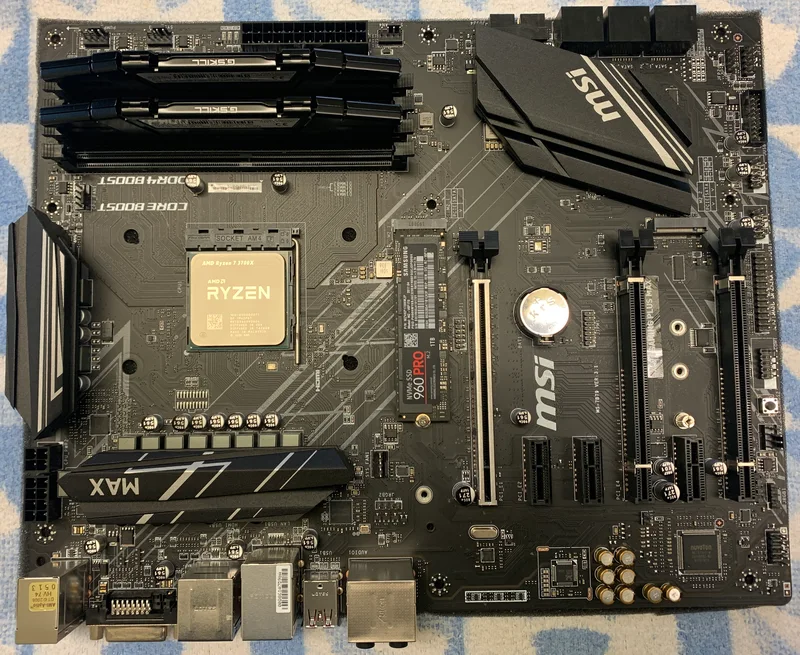
MSI's X470 Gaming Plus MAX has quietly become one of the longest-serving AM4 motherboards still worth talking about, and the reason isn't nostalgia — it's that AMD's decision to keep AM4 alive across five generations of Ryzen CPUs turned a mid-2019 mainstream board into an unusually long-lived upgrade path. At around $110, it remains a legitimate option for anyone building a budget-to-midrange AM4 system today, whether that's a first build or a value upgrade of an aging PC.
What the "MAX" refresh actually changed
The original X470 Gaming Plus launched alongside AMD's X470 chipset in 2018; the MAX revision MSI released afterward exists specifically to ship with updated firmware out of the box so the board can recognize newer Ryzen CPUs — including 3000-series and later parts — without requiring a BIOS flash on a bare system first. That sounds like a small detail, but it solves a real, common problem: buying a used or new-old-stock X470 board and a current-generation Ryzen CPU, only to discover the board's shipped BIOS predates that CPU's launch and won't even POST until you flash it using an older, compatible CPU you may not own. The MAX revision exists to remove that chicken-and-egg problem for buyers picking up this board today.
Chipset and platform fundamentals
The X470 chipset itself sits in AMD's AM4 lineup below X570 but above the B-series boards, and on this specific board that translates into a socket AM4 build with support for up to 64GB of DDR4 across four DIMM slots, two PCIe 3.0 x16-length expansion slots for graphics and add-in cards, and two M.2 slots for NVMe or SATA storage. It's a full ATX form factor, which means more consistent VRM cooling and expansion room than the micro-ATX boards often found at this price point, and enough physical space that cable routing and component clearance are rarely an issue even in mid-tower cases.
One thing worth being upfront about: X470 predates PCIe 4.0 entirely, so both the PCIe x16 slot and the M.2 slots top out at PCIe 3.0 speeds. For GPUs, this is a non-issue in practice — even high-end PCIe 4.0 graphics cards lose only a few percent of performance when run on a PCIe 3.0 x16 slot, well within margin-of-error territory for most games. For NVMe storage, it means you won't get the 5,000+ MB/s sequential speeds that PCIe 4.0 drives are rated for; you'll be capped around the ~3,500 MB/s ceiling of PCIe 3.0 x4. For a mainstream or budget build, that's still dramatically faster than any SATA SSD, so it's a real but rarely decisive limitation.
Who should actually buy this in 2026
The clearest use case is a budget AM4 build using a Ryzen 5 or Ryzen 7 CPU from the 3000, 5000, or later-compatible AM4 lineup, where the goal is maximizing CPU and GPU budget rather than chasing the newest chipset features. AM4 platforms as a whole have become one of the best value propositions in PC building specifically because the CPUs, coolers, and RAM for the platform are mature, plentiful, and often available at a discount compared to equivalent AM5/DDR5 setups — and a board like the X470 Gaming Plus MAX is what makes that value case work at the motherboard level too.
It is not the board to buy if you're starting a build from zero with no AM4 component preferences and no budget constraint pushing you toward it — a new AM5 platform will have a longer runway for future CPU upgrades. But for anyone already invested in AM4, upgrading an existing AM4 build, or specifically chasing the best possible price-per-frame on a tight budget, this remains a sound, unglamorous choice.
VRM and power delivery in practical terms
MSI's Gaming Plus series has historically targeted "comfortably sufficient" VRM designs rather than enthusiast-grade overkill, and the X470 Gaming Plus MAX follows that pattern — it handles mainstream Ryzen 5 and Ryzen 7 parts without issue, including moderate all-core overclocking, but it is not the board a Ryzen 9-class chip's owner should pair with sustained heavy all-core boost workloads if squeezing out every last percent of overclocking headroom matters. For gaming-focused builds, which rarely sustain all-core 100% loads for extended periods the way rendering or compilation workloads do, this distinction matters much less than spec sheets make it sound.
Storage and cooling considerations
Boards from the X470 generation generally predate the now-standard practice of shipping M.2 slots with dedicated aluminum heatsinks, and the Gaming Plus MAX is no exception — its two M.2 slots are bare. For SATA SSDs this is irrelevant, but for an NVMe drive under sustained heavy write loads, a bare M.2 slot can let the drive's controller thermal-throttle sooner than it would under a heatsink. In practice, for typical desktop use — OS drive, game installs, general file access — this rarely becomes a real-world bottleneck, since sustained multi-minute heavy writes are uncommon outside of large file transfers or professional workloads. Buyers planning to pair this board with a high-end PCIe 3.0 NVMe drive under heavy sustained use should budget a few dollars for an aftermarket M.2 heatsink, which is a simple, cheap add.
Chipset cooling is passive, which is standard for X470 and keeps the board silent, though it means airflow across the chipset area matters more in cases with poor front-to-back ventilation — worth a moment's thought if you're building in a particularly restrictive small-form-factor case, though the full ATX size of this board makes that a less likely pairing to begin with.
BIOS and everyday usability
MSI's Click BIOS 5 interface on this board covers the essentials well: XMP/DOCP memory profile toggling, fan curve customization per header, and straightforward voltage/multiplier access for anyone doing manual CPU or memory tuning. It isn't the deepest overclocking-focused BIOS MSI has ever shipped — that tier of feature set is reserved for its higher-priced Tomahawk and Carbon boards — but for the mainstream and budget-conscious AM4 builder this board targets, it covers every setting that's actually likely to get used, without burying basic toggles under menus built for extreme overclockers.
Verdict
The X470 Gaming Plus MAX earns its continued relevance the practical way: it's a full-featured ATX AM4 board with modern-CPU-ready firmware out of the box, sensible expansion, and a price that keeps AM4 builds genuinely competitive on value. Its PCIe 3.0 ceiling is a real limitation next to newer platforms but rarely a decisive one for the mainstream and budget builders this board is actually aimed at. For that audience, it's still one of the more sensible AM4 motherboard purchases available.
Related reading: ADATA XPG SPECTRIX D41 RAM, Core i9-14900K review, more motherboard reviews.