Intel Core i9-14900K vs AMD Ryzen 9 7950X: Which Flagship Actually Fits Your Build?
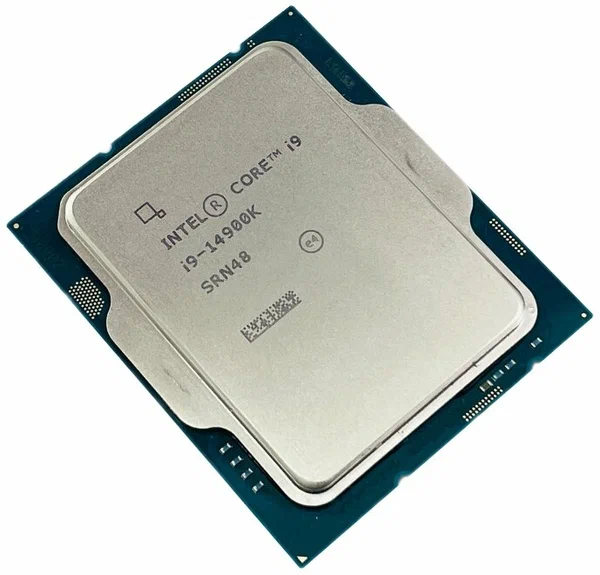
Every generation, the flagship CPU conversation gets reduced to a single number that misses the more useful question: not "which chip is faster" but "which chip is faster at the thing you personally do with a computer." The Core i9-14900K and the Ryzen 9 7950X are close enough in outright capability that the platform decision around each one matters as much as, or more than, the silicon itself.
Start with the architecture difference, because it explains almost everything downstream. The 14900K uses a hybrid design: 8 Performance-cores clocked up to 6.0GHz for latency-sensitive foreground work, plus 16 Efficient-cores handling background tasks, for 24 cores and 32 threads total. The 7950X takes the opposite approach — 16 fully symmetric cores, all identical, all capable of the same clock behavior, running from a 4.5GHz base up to 5.7GHz boost. Neither approach is objectively superior; they optimize for different things. The hybrid design tends to win in lightly-threaded, latency-sensitive scenarios like competitive gaming, since a favored P-core hitting 6.0GHz is genuinely difficult to beat. The symmetric sixteen-core design tends to win as thread count scales up, since every one of those cores is a full performance core rather than a mix of tiers.
Cache tells a similar story from a different angle. Intel packs 36MB of shared Smart Cache into the 14900K; AMD stacks 80MB total across L3 and L2 into the 7950X. That gap partly explains why AMD's chip tends to pull ahead in workloads with large, cache-sensitive working sets — big codebases, complex simulations, certain game engines with expansive open worlds — while Intel's higher clock ceiling tends to matter more in scenarios where a handful of threads need to run as fast as physically possible rather than many threads running well together.
Power and cooling requirements diverge in ways that affect real build cost, not just electricity bills. The 14900K's all-core boost can pull up to 253W, meaningfully above the 7950X's flat 170W TDP rating, which pushes the Intel build toward a larger, more expensive cooling solution if the CPU is going to be used at anything close to its ceiling on a regular basis. For a gaming-only build where all-core boost rarely engages for long, this matters less; for a mixed gaming-and-production build where the CPU spends real time under sustained multi-core load, it becomes a genuine cost and noise consideration.
The platform question is arguably the more important long-term decision. LGA1700, the 14900K's socket, is a mature platform at the peak of its supported lifespan — excellent motherboard selection, well-understood BIOS behavior, and a wide range of coolers designed specifically around it, but with Intel's next generation expected to move to a new socket. AM5, the 7950X's socket, is positioned by AMD as a multi-generation platform in the mold of AM4's five-plus years of support, meaning a motherboard bought today has a real chance of accepting a future CPU generation through nothing more than a BIOS update.
For a buyer who already owns a capable Z690 or Z790 motherboard, the 14900K is close to a free upgrade path — a BIOS flash and a chip swap, no new motherboard purchase required. For someone building from scratch with no existing platform investment, the calculation shifts toward whichever ecosystem's longer-term roadmap matters more to their upgrade habits. Buyers who replace their entire system every few years lose little by picking whichever chip benchmarks better for their specific workload today; buyers who like to upgrade a CPU mid-platform-lifecycle have a real reason to lean toward AM5's stated longevity.
The honest verdict: gaming-focused, upgrade-infrequently buyers on an existing Intel board should stay put with the 14900K and enjoy its class-leading clock speeds. Heavily-threaded, production-leaning buyers building fresh should give the 7950X serious weight for its more predictable multi-core scaling and the AM5 platform's longer stated runway. Both are excellent chips solving overlapping but genuinely different problems.
Pricing history is worth a brief, honest mention, since flagship CPU pricing rarely stays static for long. Both chips have seen their street prices soften somewhat since their respective launches as newer options approach, which means the value calculation between them shifts periodically — checking current pricing rather than relying purely on launch-era MSRP comparisons is worth the extra few minutes before a final decision, especially since a meaningful price gap can outweigh a marginal performance difference on its own.
Motherboard cost is part of the real total price of each platform, not just the CPU sticker price. LGA1700 has a wide range of boards spanning several years of releases, meaning genuinely capable boards can often be found at a discount relative to their original launch pricing. AM5 boards, being a newer platform, have historically carried a higher price floor even at the budget end, though that gap has narrowed as the platform has matured and more budget-focused board options have reached the market.
A frequently asked follow-up question: does either chip clearly win at 1080p esports titles specifically? Both chips comfortably exceed what almost any monitor refresh rate can display in the most popular competitive titles, meaning the practical difference between them at this specific, CPU-light workload is smaller than either manufacturer's marketing suggests — the decision genuinely comes down to platform and pricing more than raw esports frame rate at that point.
The bottom line, restated once more for clarity: neither chip is a wrong purchase. The right one depends on whether you already own compatible hardware, whether your workload leans toward lightly-threaded gaming or heavily-threaded production, and how much weight you place on AM5's longer stated platform runway versus LGA1700's currently mature, fully-realized state.
One last practical note for anyone still undecided: both manufacturers periodically release refreshed or discounted variants of these exact chips later in a product cycle, so it is always worth a quick price check across a few retailers immediately before purchase — flagship CPU pricing moves more than people expect, and a meaningful discount on either chip can reasonably tip a close decision in its favor regardless of which architecture otherwise appealed more on paper.
Finally, it is worth remembering that platform ecosystems evolve continuously — motherboard chipsets receive periodic firmware refinements, and pricing on both CPUs shifts as retailers respond to competition and inventory cycles. Reading a handful of recent, dated reviews immediately before purchase, rather than relying solely on launch-era comparisons, remains the single best way to confirm that the specific trade-offs described here still reflect current market conditions at the moment you are actually ready to buy.