Seagate Expansion Portable 4TB Review: Cheap, Reliable Backup Storage
8.0/10
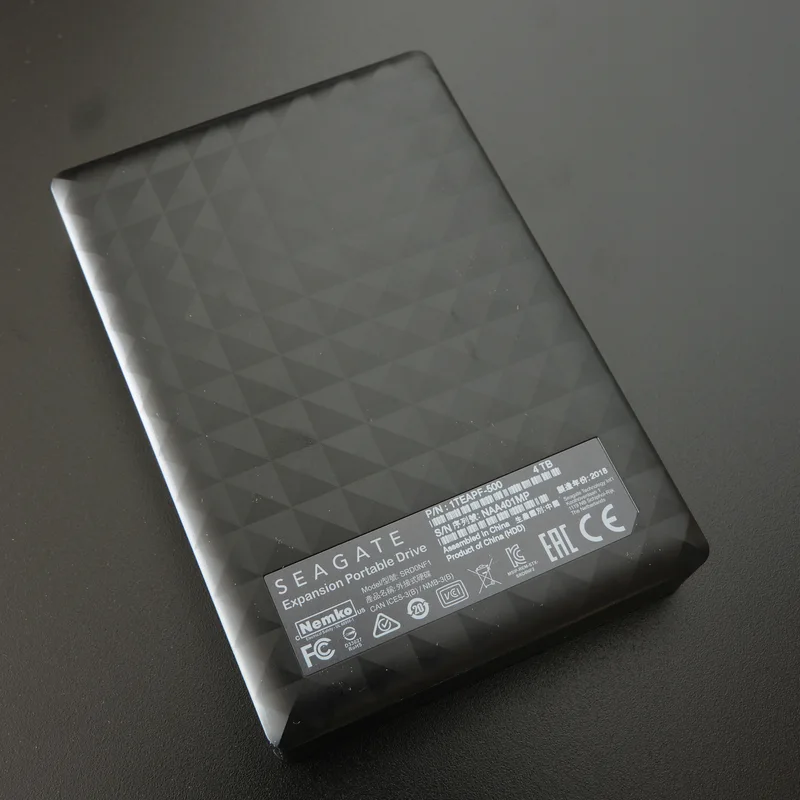
The Seagate Expansion Portable 4TB is about as unglamorous as storage gets, and that's precisely the point. There's no RGB, no NVMe speed, no flashy enclosure design — just a 2.5-inch USB 3.0 external hard drive that holds 4TB of data for around $110, which works out to roughly 2.75 cents per gigabyte. For bulk backup and archival storage, that price-per-terabyte is genuinely hard to beat, and it's why drives in this exact category remain a staple recommendation years after they first shipped.
What you're actually buying
Inside the compact plastic enclosure is a standard 2.5-inch mechanical hard drive, connected over USB 3.0 (backward compatible with USB 2.0 ports, just at reduced speed). Being bus-powered — drawing power entirely from the USB port rather than needing a separate power brick — means no extra cable to manage and no wall outlet dependency, which matters more than it sounds for a drive whose whole job is being portable and easy to grab. The tradeoff for that portability and bus-powered convenience is performance: 2.5-inch portable HDDs top out well below both desktop 3.5-inch HDDs and any SSD, typically landing in the 100-140 MB/s range for sequential transfers, with random access performance limited by mechanical seek times the way all spinning-platter drives are.
The right way to think about this drive's role
This is not a drive for your operating system, your actively-used game library, or anything where load times or application responsiveness matter — for that, an NVMe SSD like this site's own 990 PRO 4TB is the right tool, at a much higher price per gigabyte. The Expansion Portable's actual job is bulk cold storage: backups of your main drives, archives of finished projects, a library of photos or videos you access occasionally rather than constantly, or a portable way to move large files between machines without relying on cloud upload speeds. Measured against that job specifically, rather than against SSD benchmarks it was never designed to compete with, it's a genuinely good tool — reliable, simple, and priced for buying in bulk if you want redundant backup copies.
Reliability and the case for using it as a backup target
Consumer portable hard drives like this one are not rated for the same duty cycles as NAS-grade or enterprise drives, and Seagate's own documentation reflects that — this is a drive meant for regular, not constant, access. That's exactly the usage pattern a backup drive should have: plug in, sync or copy your backup, disconnect, store safely. Used this way, drives in this category have a long track record of reliably outliving their useful lifespan against changing storage needs, rather than failing outright. The bigger risk with any single external HDD used for backup isn't the drive itself — it's relying on just one copy. The classic 3-2-1 backup guidance (three copies of your data, on two different media types, with one copy off-site) still applies here: this drive makes an excellent "one of the two" local copy, but shouldn't be anyone's only backup.
Format and cross-platform notes
Seagate ships these drives pre-formatted in exFAT or NTFS depending on region and retail channel, which affects out-of-the-box compatibility — NTFS is natively writable on Windows but read-only by default on macOS without extra software, while exFAT works natively read/write on both Windows and macOS, making it the more convenient choice for anyone who moves files between operating systems. If the drive doesn't come pre-formatted the way you need, reformatting a fresh external HDD takes a few minutes and is worth doing before you start relying on it for backups, not after.
Durability and everyday handling
Because it houses a spinning platter rather than solid-state flash, this drive is meaningfully more sensitive to physical shock while operating than an external SSD would be — dropping it mid-transfer carries real risk of data loss or drive damage in a way that simply isn't true for flash storage. In practice this means treating it the way you'd treat any mechanical drive: avoid moving or jostling it while a transfer is in progress, and if it's going to live in a bag that gets tossed around regularly, a padded sleeve is a cheap, sensible precaution. Sitting still on a desk during actual use, which is how most people use a "portable" backup drive in practice, this is a non-issue.
Heat and noise are both modest and rarely worth worrying about — 2.5-inch drives draw little enough power and generate little enough heat that thermal issues are essentially unheard of, and the audible seek noise is faint enough to go unnoticed outside a completely silent room.
How it compares to stepping up to SSD-based portable storage
It's worth being direct about the alternative: a 4TB portable SSD exists, and it will be dramatically faster and more shock-resistant than this drive. It will also cost several times more per terabyte. For anyone whose actual use case is bulk backup rather than fieldwork requiring shock resistance or high-speed access on the go, that price premium buys speed and durability you likely won't use to its full extent — copying a backup overnight or over a coffee break doesn't meaningfully benefit from SSD-tier transfer speeds the way active daily file access would. Reserving SSD budget for your working storage and mechanical HDD budget for your backup storage is, for most people, the more sensible way to allocate a storage budget rather than paying SSD prices across the board.
Value verdict
At roughly $110 for 4TB — a price that has stayed competitive against newer capacity tiers for years — the Seagate Expansion Portable is priced and built for exactly one job — cheap, reliable, bus-powered bulk storage — and it does that job without pretense. It won't impress anyone on a spec sheet next to NVMe storage, and it isn't meant to. For backups, archives, and moving large files around without paying SSD prices for capacity you don't need to access quickly, it remains one of the most sensible ways to buy storage by the terabyte.
Related reading: Samsung 990 PRO 4TB review, Seagate Barracuda 500GB review, more storage reviews.