AMD Radeon RX 6600 XT Review: The Sensible 1080p Workhorse
7.6/10
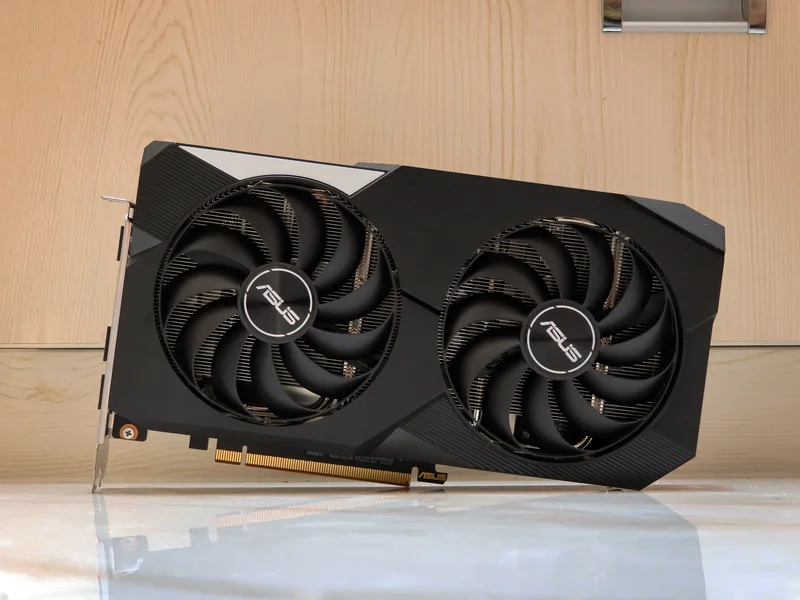
Not every GPU review needs to be about chasing the absolute ceiling. The Radeon RX 6600 XT was built for a much more common problem: driving a 1080p, and to a lesser extent 1440p, monitor at a comfortable frame rate without asking a buyer to spend flagship money to get there, and years after its debut it remains a genuinely sensible pick for exactly that job.
The core numbers are modest by current flagship standards and that is precisely the point: 2,048 stream processors, 8GB of GDDR6 memory across a 128-bit bus, and a boost clock reaching up to 2.59GHz. On paper the 128-bit bus looks like a limitation next to wider flagship designs, but AMD compensates with a sizeable on-die Infinity Cache that reduces how often the GPU needs to reach out to that narrower memory bus in the first place — the architecture is built around the bus width, not despite it.
8GB of VRAM is the right amount for this card's intended resolution. It will not comfortably run every modern title with maximum texture settings at 1440p, but at 1080p — where this card genuinely belongs — 8GB is enough headroom that texture streaming rarely becomes the limiting factor before the compute cores themselves do.
TDP is rated at 160W, a fraction of what flagship cards demand, which has two practical benefits: it is far more forgiving of a modest power supply, and it produces meaningfully less heat, which matters in smaller cases or quieter builds where a 450W card's cooler simply has no room to breathe properly.
Display outputs cover the essentials — DisplayPort and HDMI — without the flagship-tier multi-monitor ambitions of a top-end card, which again fits the audience: a single primary monitor setup, not a three-display productivity-plus-gaming rig.
The honest use case for the RX 6600 XT is a first serious gaming build, a budget-conscious upgrade from integrated graphics, or a secondary/HTPC-adjacent build where 1080p performance is the actual requirement rather than an afterthought. Esports titles and most competitive shooters run comfortably above 100fps at 1080p on this card, which is exactly the audience it was built to serve — buyers chasing high frame rates in competitive games rather than maximum visual fidelity in the newest single-player releases.
Set against a flagship 4K card, the comparison is almost unfair in the other direction: the RX 6600 XT was never meant to compete there, and judging it by 4K ray-tracing benchmarks misses what it actually does well. Judged on its own terms — 1080p, sensible power draw, a price point that does not require justifying to a budget — it remains one of the more dependable mid-range choices on the market.
Competitive and esports performance is where this card genuinely shines relative to its price point. Titles like popular tactical shooters and MOBAs are typically CPU-bound before they are GPU-bound at 1080p, meaning this card can push frame rates well past what a 144Hz or even 240Hz monitor can display in many of the most popular competitive titles, without needing anywhere near flagship-tier spending to get there. For a buyer specifically building around competitive gaming rather than single-player visual fidelity, this is close to the efficient frontier of spending versus frame rate.
Driver support and software maturity are worth a direct mention, since this generation of AMD drivers has matured considerably since launch. Features like AMD's upscaling technology and its performance-boosting frame generation tools are broadly supported across this card's driver stack, giving buyers on a budget access to many of the same frame-rate-boosting software techniques available on higher-tier cards, narrowing the practical experience gap in supported titles even where the raw hardware gap remains large.
Common questions: is 1440p realistic on this card? For less demanding or older titles, yes, comfortably; for the most demanding current releases at maximum settings, expect to lean on upscaling or accept some settings compromises rather than a flawless native experience. Does it need a high-end CPU pairing? No — because this card is rarely the bottleneck at 1080p, it pairs sensibly with a wide range of mid-range CPUs without wasting potential, making it a genuinely good match for balanced, budget-conscious builds rather than needing a flagship CPU to "keep up."
The bottom line: this card rewards buyers who value a high, consistent frame rate at 1080p over chasing 4K or maximum ray-tracing fidelity, and it does so at a price and power budget that keeps the rest of the build affordable too — a genuinely sensible, unglamorous choice that does exactly what it promises.
One more practical point: buyers considering a slightly older-generation card at a discount instead of this one should weigh driver support longevity alongside raw performance — this generation's cards typically receive new driver optimizations and feature support for several years longer than the generation before them, which matters for anyone planning to keep a mid-range card for an extended period rather than upgrading every cycle.
Upgrade timing is worth a direct, practical mention for anyone specifically shopping at this price and performance tier. Mid-range GPUs in this bracket tend to see the most frequent generational refreshes, since this is the volume segment manufacturers compete hardest on — checking whether a newer generation's equivalent-tier card is imminent, or has just launched, can meaningfully shift the value calculation on a card like this one, either toward buying now at a discount as retailers clear out inventory, or waiting a short period for a genuinely newer architecture at a similar price point. Neither choice is wrong, but it is worth a five-minute check of recent announcements before finalizing a purchase at this particular tier, more so than at the very top of the stack, where refresh cycles tend to be slower and less frequent.
Case airflow and dust filtration matter more for a long-term budget or mid-range build than people often assume, since these builds are frequently kept in service for longer stretches than flagship systems that get upgraded more aggressively. A card in this power and thermal bracket is genuinely forgiving of a modest case, but basic dust filtration and a sensible intake-to-exhaust airflow path still meaningfully extend how long a card runs at its rated boost clocks before dust buildup starts degrading cooling performance — a cheap, easily-cleaned dust filter is one of the best value upgrades available for a build expected to last several years.
For the high-end alternative, see our GeForce RTX 4090 review, browse the full graphics card comparison hub, or read our price-per-frame value guide for more context.